Get Full Government Meeting Transcripts, Videos, & Alerts Forever!
Get email alerts on the Property Tax topic
No spam. Unsubscribe anytime.
Board of Review says HOPE and PACE helped thousands; requests staff, software and one‑time equipment funding as Pay As You Stay nears sunset
Summary
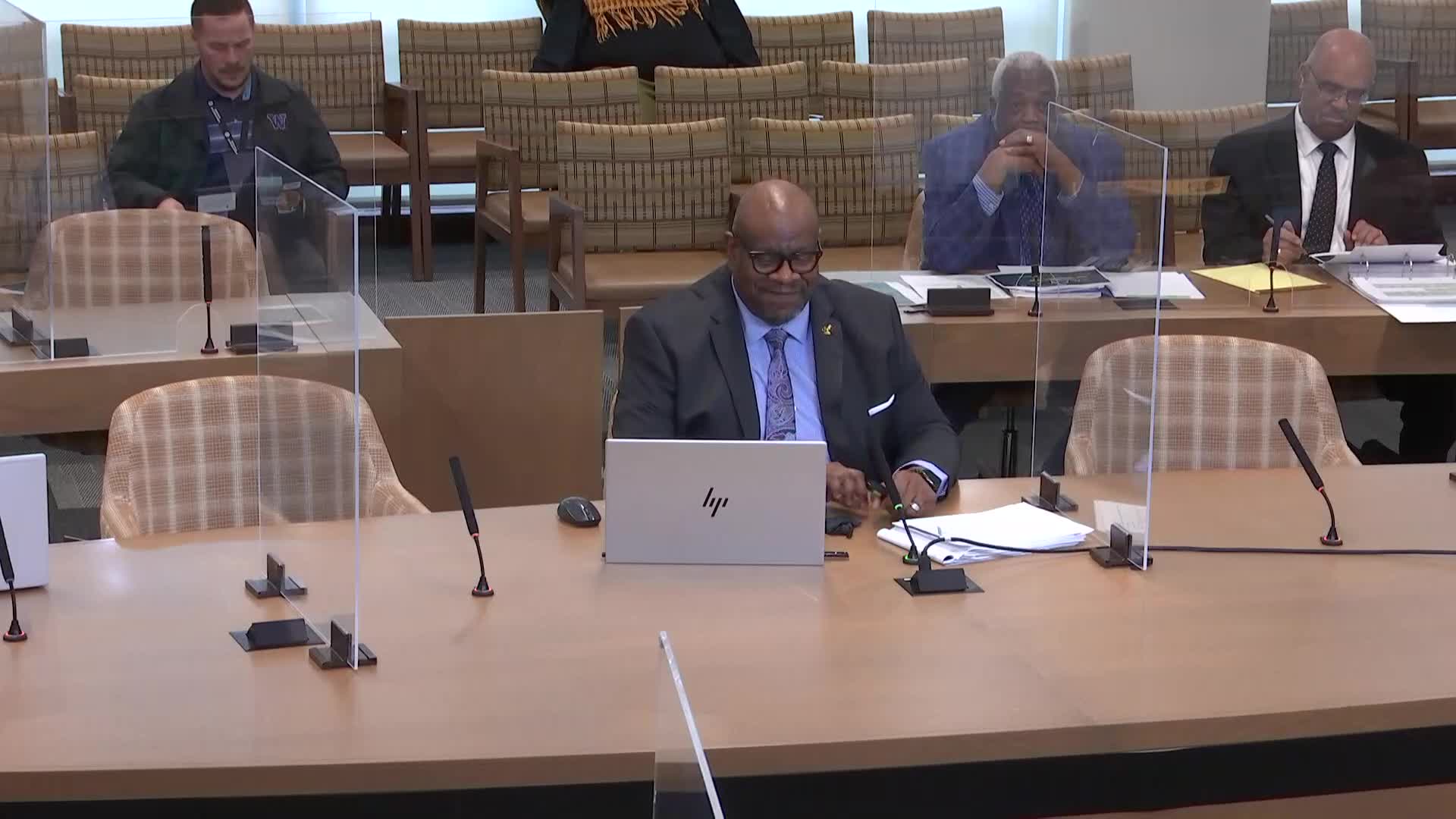
Willie Donwell, director of the City of Detroit Board of Review, told Detroit City Council the Board has used HOPE exemptions and the Pay As You Stay (PACE) program to help more than 15,900 households avoid tax foreclosure, requested $1.75 million in budget items including three clerical FTE and recurring software costs, and warned Pay As You Stay is slated to sunset on July 1, 2024.
Willie Donwell, director of the City of Detroit Board of Review, told Detroit City Council that the Board has used HOPE exemptions and the Pay As You Stay (PACE) program to reduce tax debts and keep households in their homes, and he asked Council to approve additional staff, recurring software costs and one‑time equipment to handle growing workloads.
Donwell said Pay As You Stay (also called the PACE program) has allowed 15,929 households to avoid tax foreclosure to date and that, after the March review is complete, the number could approach 17,000. He told Council the program is scheduled to sunset on July 1, 2024, and said the city needs to weigh how to sustain or replace the relief.
Donwell framed the Board of Review’s work as valuation and exemption administration under the General Property Tax Act and described the HOPE exemption (homeowners property tax exemption) as a tool that can reduce current and prior year tax liability. “If a person receives an exemption at any level … the amount of back taxes are reduced to no more than 10% of the taxable value of the property,” Donwell said, describing a case in which a property’s back taxes were reduced with assistance from legal partners and a $15 million private grant administered by Wayne Metro.
Why it matters: Council members and the board said the work preserves housing for low‑income homeowners, seniors and disabled residents and intersects with other city programs (parking discounts, Detroit Land Bank buybacks, water affordability). Donwell warned that uncapping events when properties are sold can produce sudden, large tax increases and proposed an ordinance requiring disclosure of current assessed and taxable value on sale to improve transparency.
Key details and requests - Donwell asked Council to add $231,000 to the Office of the Assessor budget to fund three additional clerical support positions for the Board of Review. - He identified a proposed total Board of Review budget package of $1,752,898 that mixes compensation, recurring and one‑time costs. - Council President Pro Tem previously added $300,000 for initial software procurement; Donwell said procurement is in final stages and that recurring licensing/service fees will be needed going forward. - Donwell described a one‑time conference room/equipment upgrade request; during the hearing Member Young referenced a one‑time figure of $8,085,000 when moving that item to executive session for further discussion.
Council actions taken during the hearing - Councilman Waters moved to add executive‑session discussions on Board of Review compensation, parking (including placards and underground/garage access) and mileage; the chair indicated no objections and the items were placed on the executive‑session calendar. - Member Young moved to place funding for three assessor support clerks ($231,000) and the Board of Review conference room equipment upgrade (figure stated in the meeting) in executive session; no objections were recorded and the items were added. - Member Young also moved to place media services support for the Board of Review and Donwell’s media budget items into executive session; the chair recorded no objections. - Member Waters additionally moved to add an arts and culture item — support for Detroit independent filmmakers — to executive session; that motion was also accepted by unanimous consent.
Discussion, debate and next steps Council members pressed for more details on how uncapping affects revenue and neighborhood retention. One council member said she will ask staff to draft a resolution urging the state legislature to permit municipalities to phase in uncapping events, and she said that transparency alone (showing assessed value at sale) might not be enough to prevent displacement.
Donwell described other operational priorities: standardizing parking access for Board members, improving continuing education and training for board appointees, creating an operational manual and investing in software that will serve both HOPE processing and valuation work. He emphasized outreach and healthy‑homes events, saying the Board runs seven such events annually (the ordinance requires at least three) and that the Board coordinates with community partners and Detroit at Work to connect residents to services.
What Donwell asked Council to consider next - An ordinance requiring sellers or buyers to receive current assessed and taxable values and a copy of Proposal A at point of sale (Donwell: “If you simply look at the current assessed value for 2025 and use that as the taxable value … that’s a reasonable estimate”). - Additional recurring funding for the chosen software solution and budget approval for recurring licensing. - Establishing a deputy director position as the Board’s workload grows.
Ending: Donwell closed with an appeal for institutional continuity and training: “What is the process and the plan, when I’m not here?” he asked, urging Council to build procedures and staffing that preserve the Board’s ability to hear appeals and administer exemptions.