Get Full Government Meeting Transcripts, Videos, & Alerts Forever!
Get email alerts on the Tax Policy topic
No spam. Unsubscribe anytime.
Council debates land-value tax and local-option sales/entertainment levies as revenue options
Summary
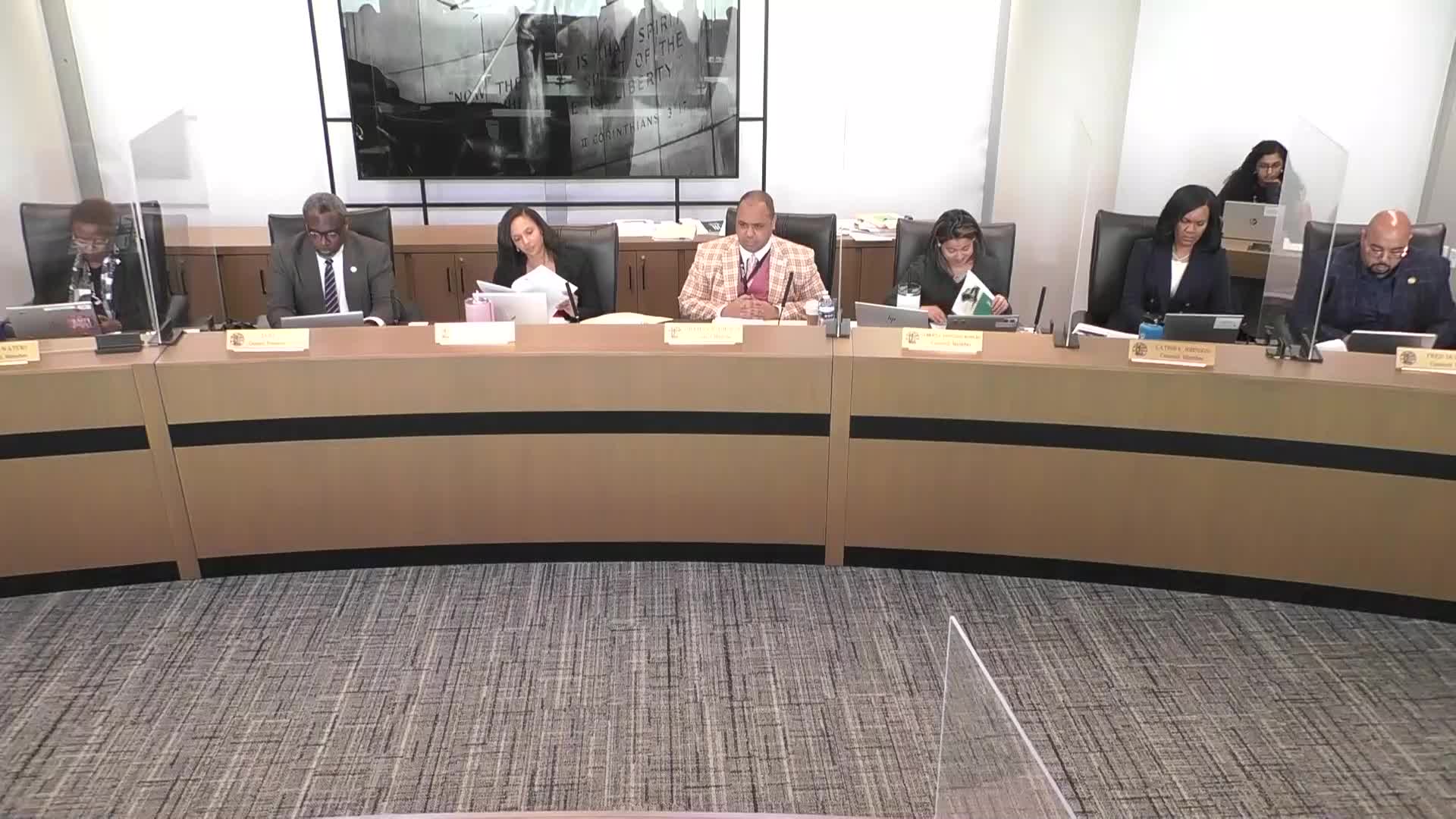
Council members pressed OCFO on a proposed land-value tax, local-option sales tax and entertainment excise taxes as ways to diversify Detroit's revenue. Council added a land-value tax study to the closing executive session and asked OCFO for a local-option sales tax analysis.
Council members used the OCFO budget hearing to challenge the administration to identify new revenue streams beyond income, property, utility-user and casino wagering taxes.
Council member Colmi Young asked OCFO for a detailed revenue estimate for a land-value tax (split-rate tax). OCFO officials said earlier LVT proposals were modeled to be initially revenue-neutral, shifting taxation from improvements to land to incentivize investment, but that an estimate of resulting additional income-tax growth would have been speculative without further modeling. "It was really a trade for lower property tax revenues in the future or higher income tax revenues," OCFO staff explained.
Young moved to add the land-value tax (split-rate tax) to the closing-session agenda for further consideration; after brief objections the motion was added to the executive session. Council President Mary Sheffield and other council members discussed the need for more detailed written analysis.
OCFO also confirmed it is preparing a local-option sales tax and excise-tax (entertainment/amusement, restaurant, lodging) study to estimate revenue and exportability effects, and said the treasurer's office aims to provide an analysis before the end of the fiscal year. Deputy Treasurer Nikhil Patel told council the team will estimate city-level receipts using models because state reporting aggregates sales tax by business headquarters rather than by city of sale.
Several council members noted state-level barriers: Michigan's Constitution and statutes limit what localities may levy without legislative authorization or statewide amendment. OCFO recommended focusing first on excise-style options that the Legislature could enable and voters could approve locally. Council members asked OCFO to provide the administration's written position on pursuing excise taxes and local-option revenue tools for use during executive-session budget negotiations.
Ending
Council directed OCFO to prepare written revenue estimates and legal analysis of land-value taxes and local-option sales/excise proposals for further discussion in executive session.