Get Full Government Meeting Transcripts, Videos, & Alerts Forever!
Get email alerts on the Urban Trees topic
No spam. Unsubscribe anytime.
Detroit officials: no new sign-ups for dead-and-dangerous tree program; city to survey existing applicants
Summary
The General Services Department told council members the one-time dead-and-dangerous tree program will not reopen to new applicants. Staff will survey every current applicant and use existing FY26 funding to address eligible trees, prioritizing emergencies.
Detroit’s General Services Department told the City Council’s expanded budget committee on Oct. 12 that the one-time dead-and-dangerous tree removal program will not reopen to new applicants and that staff will survey everyone currently on the waiting list.
Crystal Perkins, Director of the General Services Department, said the department will “survey every tree that submitted a request” to determine whether a tree is dead, dangerous or diseased and then schedule trimming or removal. She said crews face longer timelines for trees located on private property because staff must coordinate appointments with homeowners.
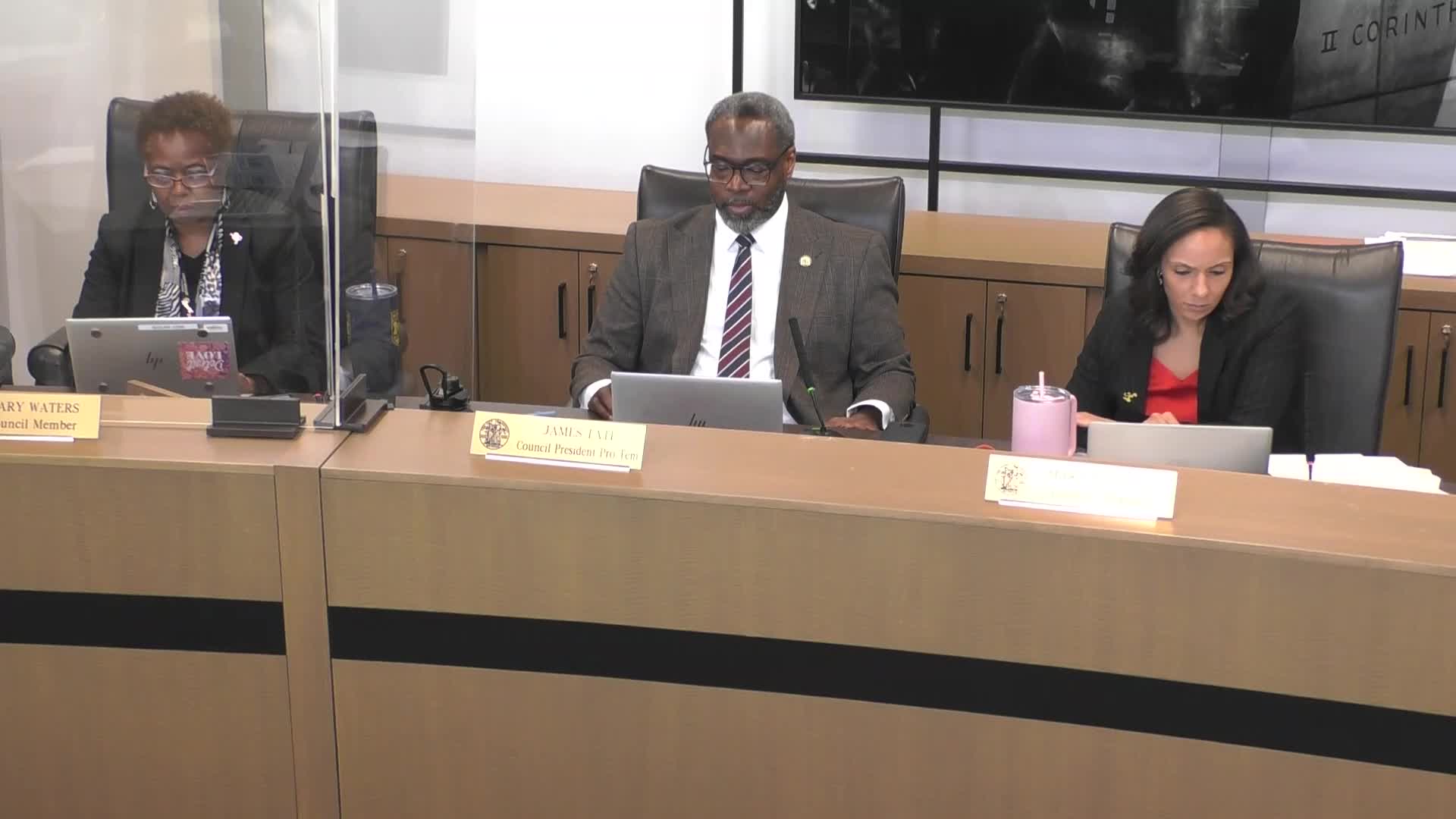
Council President Pro Tem James Tate and other council members raised the program’s backlog during the budget hearing. “We got about 7,000 requests for service,” Tate said, noting the department had surveyed about 3,000 and taken action on a portion of them.
Perkins said the program was funded as a one-time allocation for fiscal year 2026 and staff expect to use those dollars only for people who have already applied. “We are not reopening the program,” Perkins said. She added the department plans to use the current funds to serve applicants on the list, prioritize emergencies and expects to remove or trim an estimated 5,000 trees with the funding currently available. In an earlier exchange during the hearing she also said the city has “enough funding to cover about 10,500 people that are currently on the list,” a separate figure she flagged as an estimate tied to accounting for applicants who qualify after the survey.
Council members pressed for timing and for clarity about when residents on the list will be serviced. Perkins said it will likely take at least another year to work through the list because of scheduling, access and safety requirements for trees in tight spaces.
The committee agreed to add further discussion of tree-program funding to an executive session during the budget process. Council members and staff emphasized that emergency cases will be prioritized while the department completes surveys and schedules removals.
Clarifying details taken from the hearing show three figures cited in committee discussion: 7,000 total requests, roughly 3,000 trees surveyed to date, and an estimate that funding will allow crews to address about 5,000 trees in the near term; Perkins also stated at one point an estimation that the funds might cover about 10,500 people currently on the list. The department told council it will return with timing details and will not accept new applications until/unless new funding is allocated in the future.
Councilmembers recorded no vote to change program eligibility during the hearing; staff described current policy as “not reopening” and will proceed under existing FY26 resources. The department said it will prioritize emergency situations already on the list.