Get Full Government Meeting Transcripts, Videos, & Alerts Forever!
Get email alerts on the Military Ai And Crisis Risk topic
No spam. Unsubscribe anytime.
Experts tell Senate panel AI already shapes battlefield tools and complicates crisis decision-making
Summary
Panelists described current battlefield uses of AI (e.g., loitering munitions in Ukraine), risks of accelerated machine-aided decisions in crises and the need for human-in-the-loop policies, war-gaming, and exercises to detect escalation risks.
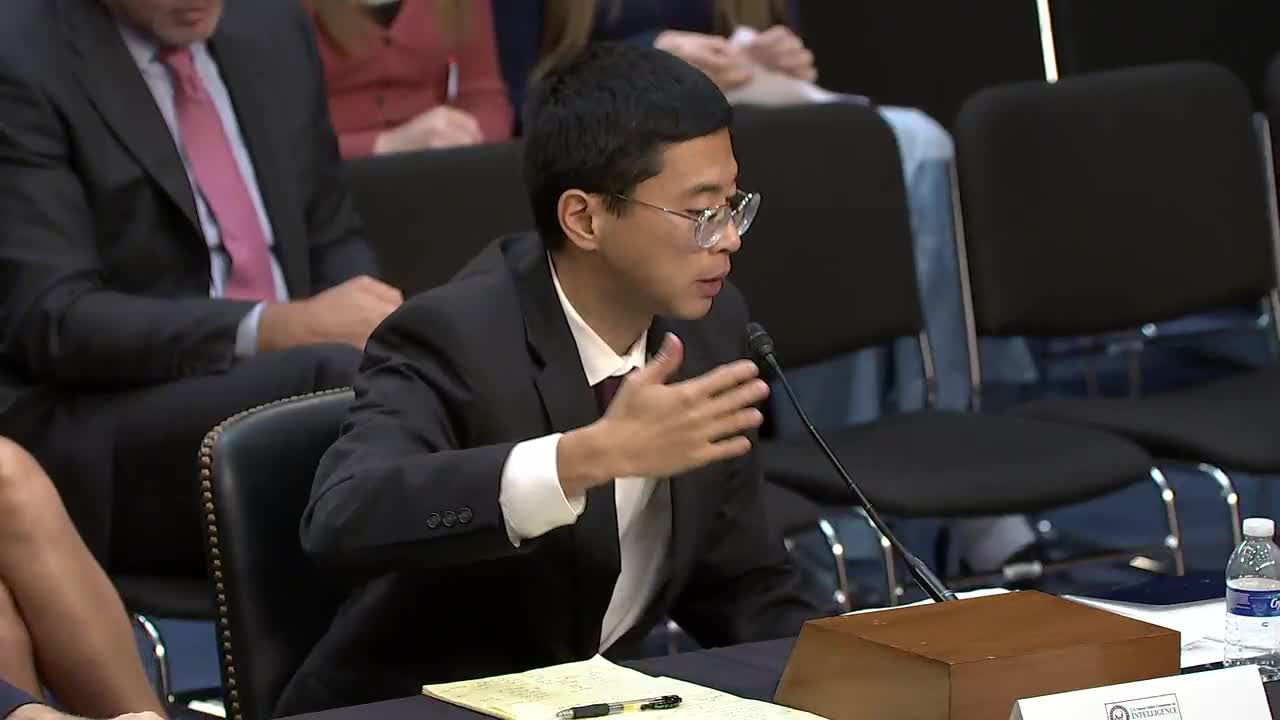
Senators and witnesses discussed military uses of AI, the risk of accidents, and how generative and perception models could change battlefield dynamics. Dr. Benjamin Jensen described battlefield adoption of low-cost imagery and loitering munitions, noting rapid local adaptation in Ukraine where nonprofits and local developers retrained image-recognition models on battlefield footage to improve targeting.
Jensen said that diffusion and tactical adaptation can make lower-cost threats widely available: "If they would have waited for a standard U.S. government certified algorithm and piece of equipment, it would not look the same." He urged the U.S. to scale safe capabilities and training for rapid calibration.
Witnesses and senators debated whether current algorithms underpinning loitering munitions are the same as the deep-learning breakthroughs in civilian LLMs. Dr. Yann LeCun said present LLMs excel at language tasks but are not yet reliable planners for mission-critical targeting; Dr. Jeffrey Ding and Jensen emphasized the need for human oversight. On lethal autonomous weapons, witnesses advocated keeping humans in the loop and stressed large-scale war-gaming and rehearsal to reveal edge-case failures before deployment.
Senators also raised concerns about inadvertent escalation if adversary decision-makers rely on flawed model outputs. Witnesses recommended tabletop exercises, interagency protocols to slow decision loops in crises, and continued international dialogue to lower accident risk.