Get Full Government Meeting Transcripts, Videos, & Alerts Forever!
Get email alerts on the Cannabis Zoning topic
No spam. Unsubscribe anytime.
Minnetrista council limits cannabis cultivation to industrial zones, overrides planning commission recommendation
Summary
Minnetrista City Council voted Feb. 3 to adopt an ordinance amending city code on cannabis and hemp businesses that restricts commercial cannabis cultivation to properties in industrial zones.
Minnetrista City Council voted Feb. 3 to adopt an ordinance amending city code on cannabis and hemp businesses that restricts commercial cannabis cultivation to properties in industrial zones, rather than allowing cultivation in agricultural-preserve parcels of 50 acres or more as the planning commission had recommended.
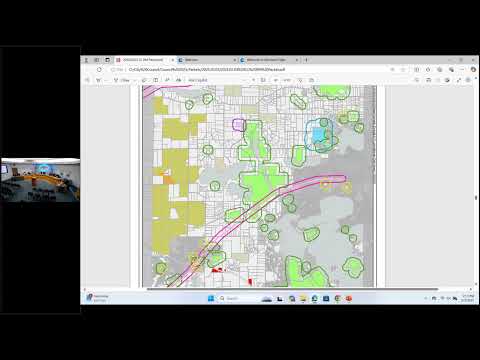
City Community Development Director David Abel told the council the draft ordinance presented at the work session remained largely unchanged from the earlier draft but the planning commission recommended allowing cultivation in agricultural-preserve districts only on parcels of at least 50 acres. Abel said staff included maps showing the limited number of parcels that would meet that 50-acre threshold. The council voted to adopt the ordinance and authorized publication by title and summary.
The planning commission had recommended agricultural-preserve cultivation with a 50-acre minimum because, officials said, allowing cultivation there could provide a new income source for struggling farmland. Council members who opposed that approach said cultivation at scale would likely require large, enclosed facilities or greenhouses, could entail significant water use, and can produce strong odors and visible lighting. Council members discussed whether indoor cultivation in enclosed structures or outdoor operations with heavy security lighting and fencing would be acceptable along Highway 7 and other corridors.
Staff described the review and approval pathway: a cultivator would need to meet the zoning standards and receive an interim use permit (IUP) or conditional use permit (CUP) for each site; the IUP would run with the property and council could include site-specific conditions. Abel told the council the state will require security measures and lighting for outdoor facilities; staff said the state’s cultivation licensing window opens Feb. 18 and closes March 14, increasing the need to have local zoning in place before licenses are issued.
Council members debated alternatives that would further limit cultivation, such as confining cultivation to existing industrial parcels, increasing the minimum parcel size above 50 acres, or requiring buildings and setback/landscape measures as part of an IUP. Several council members favored restricting cultivation to industrial zoning to reduce the likelihood of large greenhouse facilities and heavy security lighting near residential areas; others said limiting cultivation to a very small number of parcels could be revisited later if applications made a different approach necessary.
The council adopted related regulations adding sections discussed in the ordinance and separately authorized publication by title and summary; both motions passed by voice vote. City staff said they would implement the council’s direction in the ordinance language and proceed with publication so the city’s code would be in place before state cultivator licenses are issued.
The ordinance as adopted modifies Chapter 5 of Minnetrista’s code to address cannabis and hemp business licensing and zoning; the planning commission’s recommendation to allow cultivation in agricultural-preserve districts on parcels of 50 acres or more will not be included in the version the council approved. Staff said individual applicants would still be required to apply for and receive an IUP and meet any site-specific conditions council imposes during that process.
David Abel and other staff repeatedly emphasized that the council could revise the code later if needed; the council directed staff to publish the ordinance by title and summary so it would take effect following required publication steps.