Get Full Government Meeting Transcripts, Videos, & Alerts Forever!
Get email alerts on the Traffic Safety Main Street topic
No spam. Unsubscribe anytime.
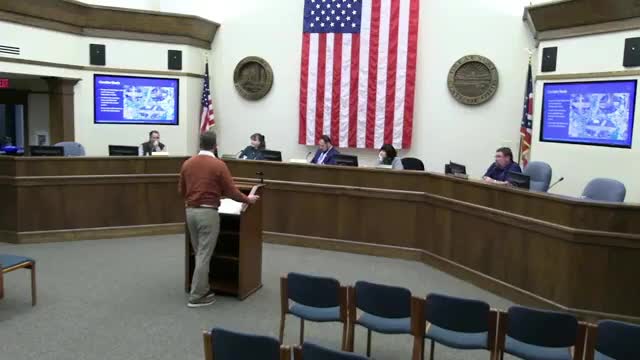
Council reviews Main Street corridor safety study; consultants urge short‑, medium‑ and long‑term fixes
Summary
City staff and a traffic engineering consultant presented a safety study for the Main Street corridor and Britain Lane intersection, recommending short‑term countermeasures and further engineering on longer‑term reconfiguration options such as a Continuous Flow Intersection (CFI) and a quadrant roadway.
City staff and consultants presented a traffic‑safety study for the Main Street corridor, highlighting a high injury rate at the Main/Britain intersection and recommending a mix of short‑term, medium‑term and long‑term measures to reduce crashes.
Albert Michael, safety engineering expert, summarized the analysis: “Your ADT is 20,000 plus,” and said the study reviewed a three‑year crash history and projected future growth based on current zoning. The consultant reported an elevated injury rate in the study area and described short‑term changes (improved signal backplates, high‑visibility crosswalk and signage, no‑turn‑on‑red restrictions, striping) and three longer‑term alternatives that warrant more detailed engineering: a quadrant roadway, a Continuous Flow Intersection (CFI) and expanded conventional intersection improvements with additional turn lanes.
Why it matters: study findings identify existing crash patterns and propose measures that could materially reduce rear‑end and angle crashes. The city has budgeted funds for near‑term work and will need further engineering and possible land acquisition to implement long‑term reconfigurations.
Council direction and funding
Council members expressed a preference for advancing the CFI concept for further study while pursuing short‑term countermeasures now. Staff said there is approximately $100,000 in the 2025 budget to begin short‑term work on the three priority intersections; striping is already included in the 2025 striping program and backplate and signage purchases will be bid. Staff also described eligibility for ODOT safety funding (noting up to 90% eligibility for safety projects in certain phases) and recommended pursuing available grant funding where possible.
Timing and next steps
Staff said short‑term countermeasures will proceed in 2025 with available budgeted funds. Medium‑term projects were characterized as multi‑year efforts (3–5 years) and long‑term options were estimated out to the 2035 horizon in the study’s high‑level cost estimates. Council requested additional engineering to define CFI footprints and feasibility before committing to a long‑term plan.
Ending: staff will finalize the study, provide the council with the full report and a copy of the presentation, begin procurement for short‑term items, and return with more detailed engineering for the long‑term alternatives.