Get Full Government Meeting Transcripts, Videos, & Alerts Forever!
Get email alerts on the Broadband Deployment topic
No spam. Unsubscribe anytime.
Committee approves expanding 'Dig Once' rules to county highway districts to coordinate broadband installs
Summary
The committee voted to send House Bill 300 to the floor with a do-pass recommendation. The bill would extend the state's "Dig Once" coordination policy to single countywide highway districts, aiming to standardize trenching rules and reduce repeated road cuts for broadband deployment.
Representative John Van der Rata (District 22) presented House Bill 300, saying the bill would expand Idaho's existing Dig Once policy to include single county highway districts so that when roads are dug for broadband installation "everybody has a chance to put their infrastructure in the same ditch that's being dug." He told the committee the measure removes microtrenching language from an earlier version and focuses on nondiscriminatory, competitively neutral rules.
Amanda Moore, senior regional director of operations for Sparklight in the Northwest, testified in support. She said Sparklight serves "more than 67,000 customers in Ada County alone" and urged consistent, nondiscriminatory deployment standards so a new entrant using microtrenching does not receive a competitive advantage. "Competition should take place on a level playing field," Moore said.
Ron Williams, an attorney and executive director of the Idaho Cable Broadband Association, said the original Dig One Act passed in 2022 sought to foster competition, create a predictable process and protect highways from repeated cuts. Williams said the committee should consider applying nondiscrimination rules retrospectively as well as prospectively so past investment by incumbent providers is respected.
Committee members asked how the bill interacts with Ada County Highway District (ACHD) practice; witnesses and members noted ACHD enforces a 30-to-36-inch burial standard for most fiber and has a five-year moratorium on cutting new roads. The bill's sponsor said the intent is to require that when a trench is dug the trench is made available to other providers and to protect prior investments in deeper, more durable installations.
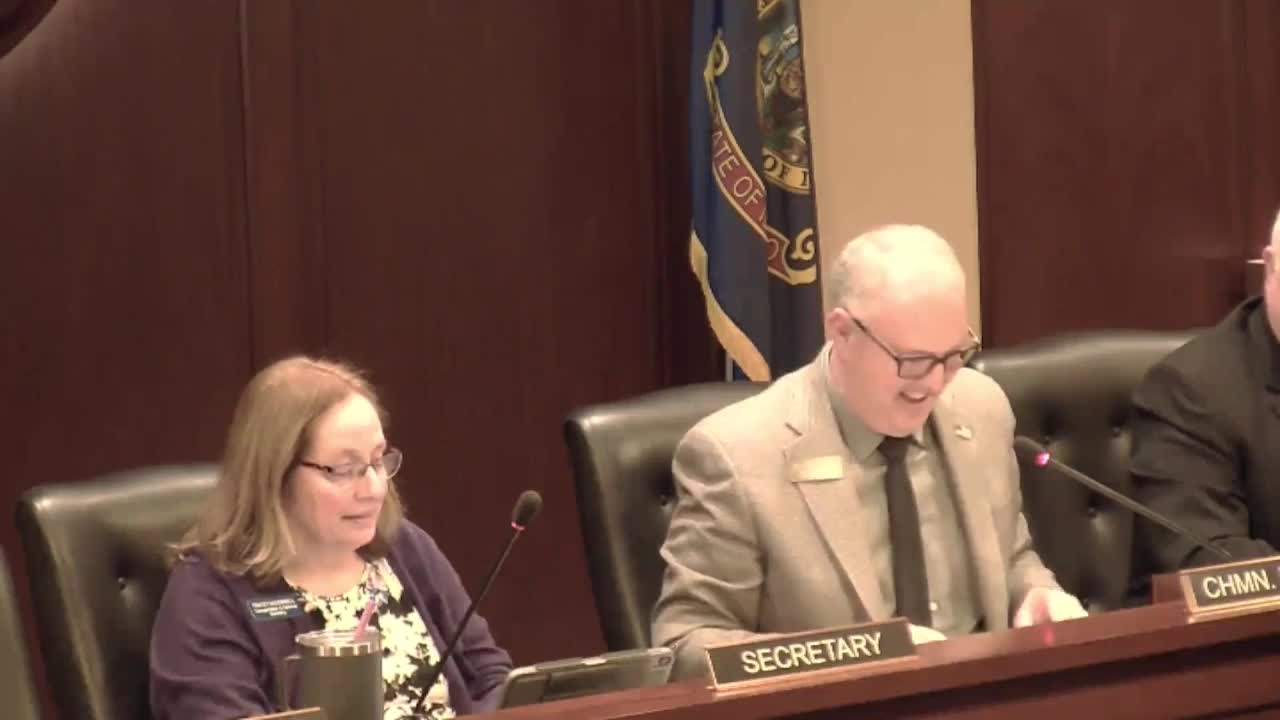
Representative Nicholson moved to send House Bill 300 to the floor with a do-pass recommendation. The committee approved the motion by voice vote; Representative Gannon was recorded as voting "nay" but said he "reserve[d] a right to change [his] vote on the floor." The chair announced the motion carried.
The bill as presented removes an explicit statutory ban on microtrenching so as not to foreclose future construction techniques, while directing county highway districts to adopt nondiscriminatory and competitively neutral rules that preserve long-term infrastructure integrity and provide equal access for providers. The committee's vote sends the bill to the House floor for further consideration.