Get Full Government Meeting Transcripts, Videos, & Alerts Forever!
Get email alerts on the Transportation And Defense topic
No spam. Unsubscribe anytime.
Idaho panel advances bills tightening "primary benefit of motor vehicles" definition, restricting highway-district lane reductions
Summary
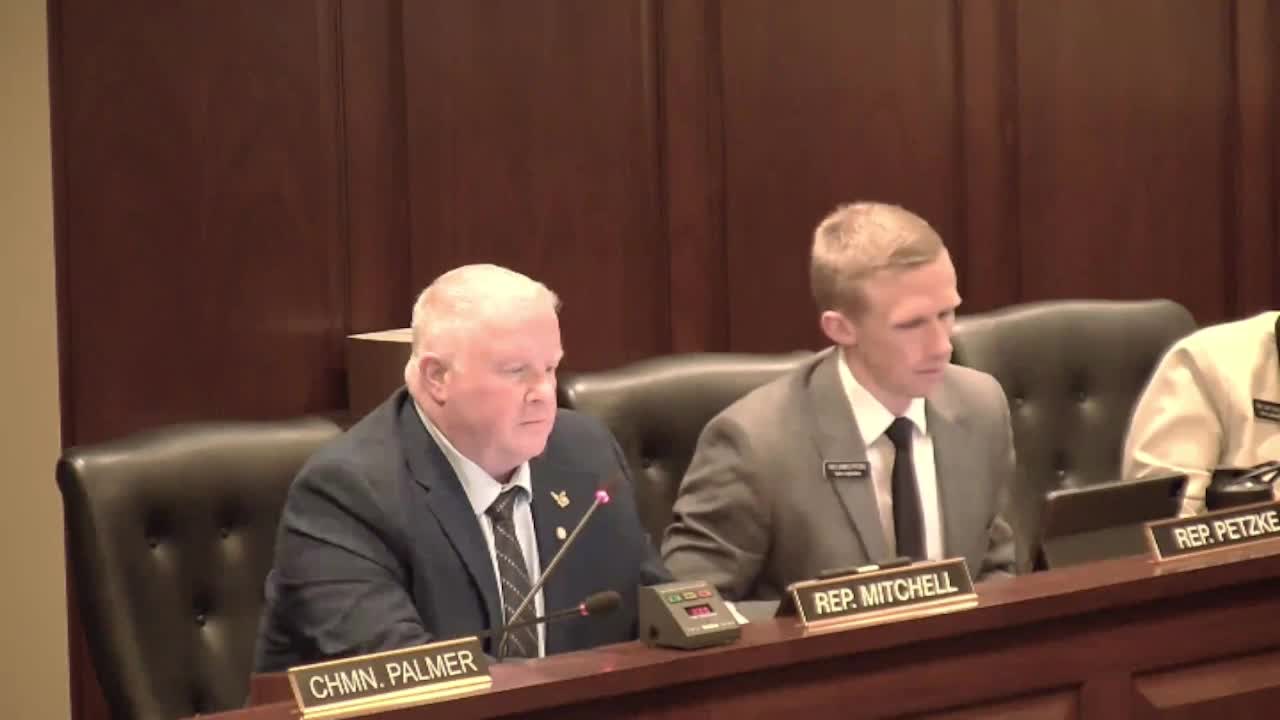
The House Transportation and Defense Committee on a voice vote sent two related measures, Senate Bill 11‑40 and Senate Bill 11‑44, to the floor with a due‑pass recommendation after more than two hours of public testimony and debate.
The House Transportation and Defense Committee on a voice vote sent two related measures, Senate Bill 11‑40 and Senate Bill 11‑44, to the floor with a due‑pass recommendation after more than two hours of public testimony and debate.
The bills revise statutory language in Title 40 to define “primary benefit of motor vehicles” and to restrict highway districts from narrowing lanes in existing rights‑of‑way except in limited circumstances (for example, to comply with federal law or to improve pedestrian/bicycle safety near schools and parks). Representative Joe Palmer (R., Meridian) sponsored both bills.
Why it matters: Supporters say the changes preserve traffic capacity, protect emergency‑vehicle access and align the law with current funding sources for roads. Opponents — including bicycling and safety advocates, conservation groups and some local developers — said the language is overly restrictive, could bar widely used safety treatments such as bulb‑outs and road diets, and would limit local governments and highway districts from tailoring streets to local safety and economic goals.
Palmer, the sponsor, framed the bills as clarifying existing code. “This bill is about definitions, current language and that's what in current language benefit primary motor vehicles, this is what it means,” he told the committee. He argued narrowing streets can create congestion and can impede emergency response in downtown areas. “If one fire truck doesn't come to deal with a hotel fire, you can have multiple fire trucks; they cannot get around each other,” Palmer said.
Multiple witnesses disagreed. Courtney Madigan, a District 17 resident and mother of a traffic‑injured child, said the projects that reduced lane widths and added sidewalks in her neighborhood made streets safer and likely would not have been allowed under the bills' wording. “That's what it looks like when we prioritize vehicles over all other road users,” Madigan said of the aftermath of a crash that badly injured her son.
Devin McComas, executive director of the Boise Bicycle Project, told the committee the bills would “restrict local government from using tools to help with safe streets” and raised statewide traffic‑fatality data to support broader safety interventions. “If we can sit with that, we're saying we're okay with the new highest year of traffic fatalities in the state of Idaho,” McComas said, referencing 2023 data and preliminary 2024 trends.
Other community voices were split. Developer Matt Nelson and business‑sector testimony warned the bills could reduce downtown investment and make some projects less attractive to outside investors. Scott Shaner, a downtown property owner and member of Mountain State Policy Center's board, said most of the time the bills make sense but cautioned against taking all local discretion away. Cynthia Gibson of the Idaho Conservation League asked the committee to hold Senate Bill 11‑44, saying it would “remove the local highway district's ability to improve road safety for every Idahoan.”
Committee discussion highlighted the tension between statewide standards and local control. Representative Gannon said she opposed the bills because they may limit constituents' ability to seek remedies from local highway districts and because statutes are sometimes used as a legal shield by local agencies. Several other committee members asked whether federal funding requirements or city ordinances would provide exceptions; the sponsor and witnesses noted federal law can require certain pedestrian or bicycle facilities as a condition of federal funding, which the bills recognize as an exception.
The committee recorded no roll‑call vote in the transcript; the chairman called for voice votes. For Senate Bill 11‑40 Representative Shepherd moved to send the bill to the floor with a due‑pass recommendation; the motion carried after voice vote. For Senate Bill 11‑44 Representative Harris moved to send the bill to the floor with a due‑pass recommendation; the motion likewise carried after a voice vote.
What happens next: Both bills will go to the House floor for further consideration. The bills’ language would affect every highway district in Idaho if enacted, and several witnesses said they expect appeals and local pushback when districts apply the new definitions to specific projects.
Ending: Committee testimony contained a mix of technical details and personal accounts. Witnesses offered specific examples — bulb‑outs, road diets and collector street redesigns — and pressed the committee to consider emergency access, pedestrian safety, local control and economic development as it advances the measures.