Get Full Government Meeting Transcripts, Videos, & Alerts Forever!
Get email alerts on the Public Lands Access topic
No spam. Unsubscribe anytime.
House panel fails to advance bill requiring replacement access before counties vacate roads to public lands
Summary
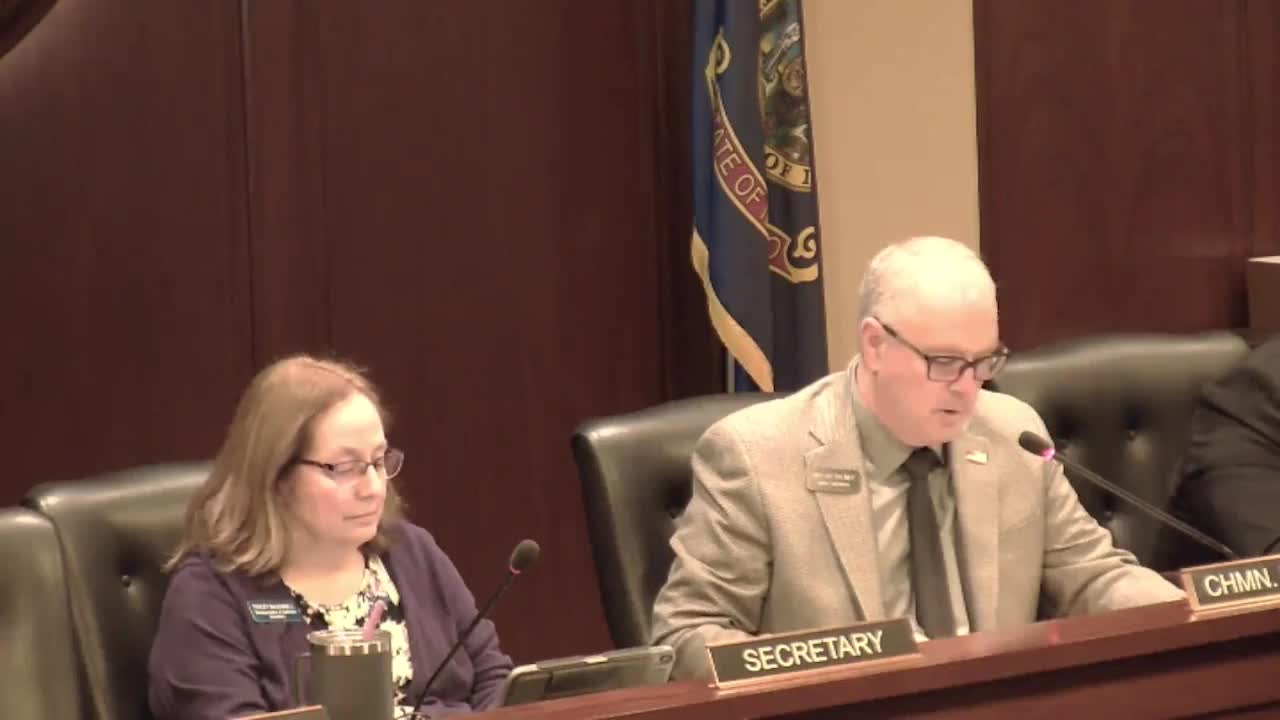
The House Transportation and Defense Committee declined to advance House Bill 101, which would have required counties and highway districts to provide replacement access to Idaho public lands before removing or vacating roads that access those lands.
Representative Cornel Rasor (Bonner and Boundary County, District 1) introduced House Bill 101, saying the measure "requires counties, road districts, etcetera, make certain that Idaho's public lands, the lands that are actually owned by the sovereign people of Idaho have access." The committee declined to advance the bill after a roll-call vote.
The bill would have amended provisions in Title 40 to require that when a county, highway district or other jurisdiction removes, abandons or vacates a road that provides access to public lands, the jurisdiction must first ensure a "suitable replacement" access is available. Rasor said the text and the bill's statement of purpose explain the provisions and referenced judicial-determination and validation language in the draft.
Opponents, including Owyhee County Commissioner Cindy Bachman, told the committee the bill was a "one-size-fits-all statewide mandate" that could be impossible to implement where federal land-management restrictions apply. "In Owyhee County we are extensively managed by the BLM," Bachman said, and the county "may not be able to do a replacement access because of the restrictions from the BLM." She added the proposal could pressure private landowners to accommodate new public rights of way.
The Idaho Wildlife Federation's executive director, Nick Fasiano, testified in support, framing the measure as a protection for hunting and fishing access: "Public access for hunting and fishing to our public lands and waters is a primary value of our organization," he said, and warned that removal of a single access point can cut off large tracts of public land. By contrast, Seth Grigg, executive director of the Idaho Association of Counties, told the committee his organization opposed the bill because it "ties our hands" when a county must vacate rights of way that cross federal lands and likely cannot secure easements from the federal agencies.
Committee members asked how federal processes would affect implementation. Grigg noted federal permits and reviews such as NEPA could apply and said his understanding is that a county would bear related costs if federal processes are required. Rasor and others cited existing procedures in Title 40 for validating historic or existing rights of way (including references to RS 2477-type issues) and said counties already have mechanisms to determine public interest and to require applicants to provide alternative access as part of a vacation decision.
On a motion to send House Bill 101 to the House floor with a do-pass recommendation, Representative Harris moved the bill but the motion failed on a roll-call vote. Recorded votes in the committee's roll call included: Chairman Palmer—No; Representative Holtzclaw—No; Representative Shepherd—Yes; Representative Crane—Yes; Representative Handy—No; Representative Hill—No; Representative Petzke—No; Representative Boyle—No; Representative Clow—Yes; Representative Harris—Yes; Representative Mickelson—No; Representative Gannon—Yes. Representative Green was recorded as absent. Based on the recorded entries the tally from the transcript was 5 yes, 7 no and 1 absent; the motion failed.
The discussion at committee emphasized the tension between protecting public access to state lands and the practical limits counties face when access crosses federally managed land; several county representatives said federal agencies often do not grant new easements or demand numerous stipulations. The bill remains on file and did not advance from committee at this hearing.