Get Full Government Meeting Transcripts, Videos, & Alerts Forever!
Get email alerts on the Lobbying topic
No spam. Unsubscribe anytime.
Committee sends lobbying recodification (HB 398) to floor with due-pass; expands indirect-lobbying reporting
Summary
The State Affairs Committee voted to send House Bill 398 to the floor with a due-pass recommendation after adopting updated reporting and disclosure rules that expand the definition of "indirect lobbying" and add rapid reporting requirements for some expenditures.
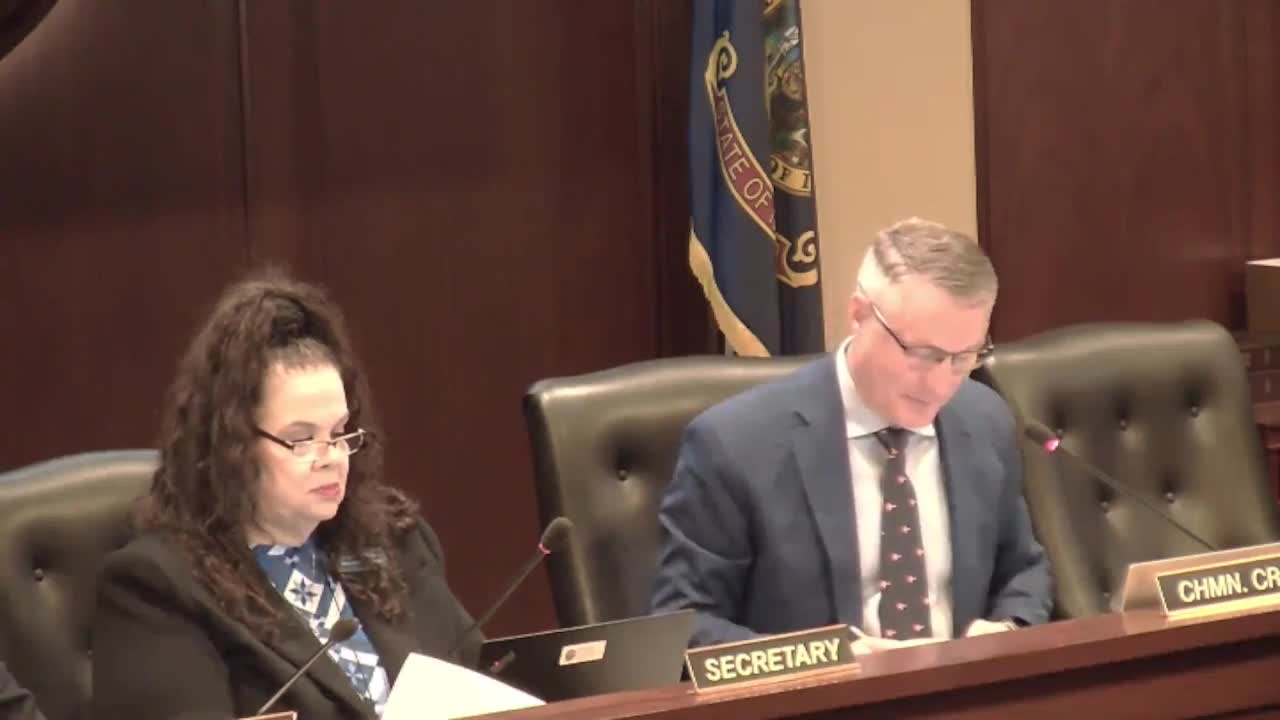
The State Affairs Committee voted to send House Bill 398 to the floor with a due-pass recommendation after a presentation and public testimony that focused on modernizing Idaho's lobbying laws for current communications practices.
Representative Skog introduced the bill as a reorganization of existing lobbying code and explained that the measure clarifies long-standing concepts and updates reporting to reflect new forms of outreach. The bill explicitly defines "indirect lobbying" to cover attempts to influence legislators by affecting public opinion and encouraging constituents to act, and it lists examples including email, text messaging, direct messaging, billboards, door-to-door activity, radio, TV, online ads and social media.
Key provisions - Indirect lobbying definition: The bill adds a clear statutory definition for indirect lobbying and enumerates communication formats commonly used today. - Reporting cadence: Registered lobbyists would move to monthly reporting year-round (rather than seasonal reporting tied to session cycles). - Rapid disclosure: The draft requires 48-hour reporting for indirect lobbying expenditures of $100 or more; the 48-hour clock begins when the expenditure is paid or when the communication is first publicly viewable. - State-entity reporting: The measure would require state entities, including public universities, to report subjects of their lobbying activities rather than only expenditures. - Paid-for disclosure: Public communications sent by lobbyists or organizations with registered lobbyists must include a paid-for statement and, when applicable, a statement that the communication is intended to solicit funds.
Testimony and concerns Jonathan Oppenheimer, government relations director for the Idaho Conservation League, testified in favor of transparency but cautioned that the Legislature must tailor any speech restrictions to constitutional requirements. He asked the committee to ensure statutory language is narrowly tailored to the government's interest in disclosure, and he flagged a probable typographical error in the bill text (page 11, line 15: "combination" likely intended to read "communication").
Representative Hostetler and others questioned how the bill would be enforced for ad hoc activities and how state agencies and universities would be required to report. Secretary McGrane explained that routine presence in the Capitol would not trigger lobbying registration; the focus is on compensated activity or expenditures intended to influence public officials.
Committee action Representative Barbieri moved to send HB 398 to the floor with a due-pass recommendation; the motion carried. Representative Hostetler and Representative Scott were recorded as voting no.
Next steps HB 398 will move to the floor with a due-pass recommendation. Committee members asked legislative staff and the Secretary of State's office to review drafting details, including the flagged typographical error and the operational guidance for enforcement and exemptions.