Get Full Government Meeting Transcripts, Videos, & Alerts Forever!
Get email alerts on the Energy Ratepayer Protection topic
No spam. Unsubscribe anytime.
House State Affairs advances bill letting large power users competitively source energy, citing ratepayer protections
Summary
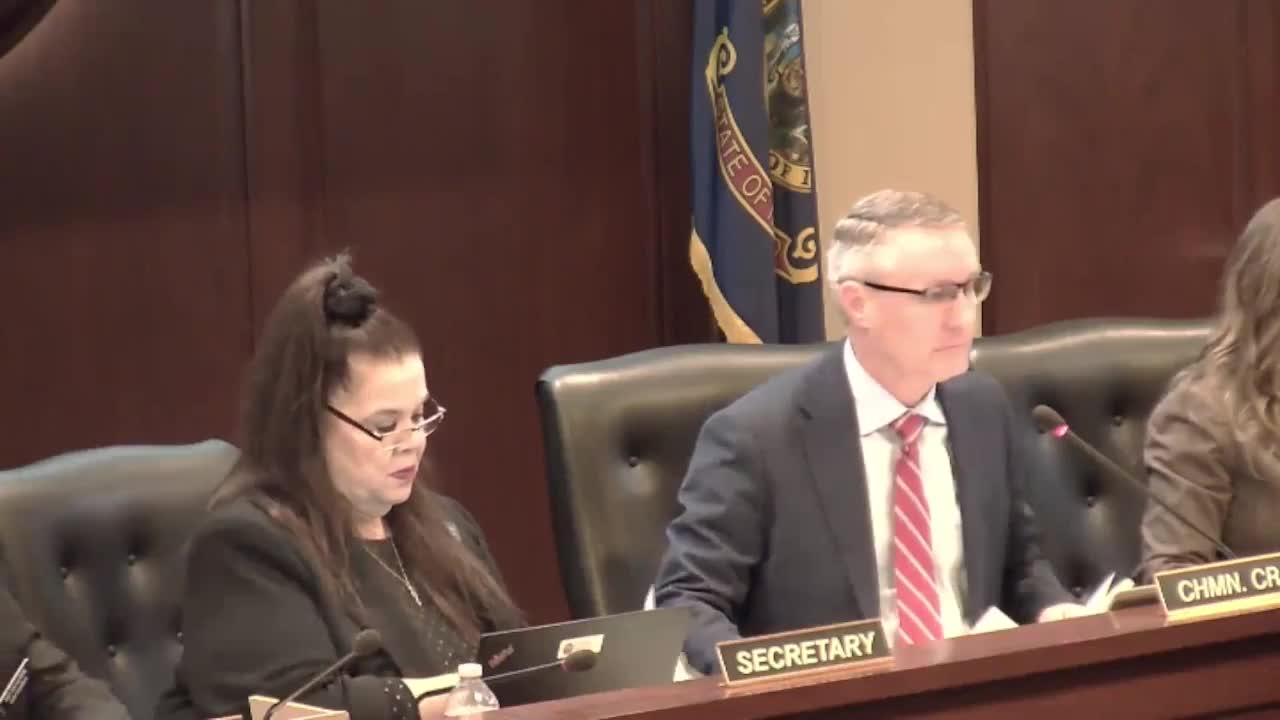
After hours of testimony, the House State Affairs Committee advanced House Bill 395, which would let large commercial power users competitively source electricity and assign upfront grid costs to those users. Supporters call it a ratepayer protection; utilities and industry warn it could hinder large economic development projects.
Representative Dan Garner, sponsor of House Bill 395, told the House State Affairs Committee the bill would require new large electricity users to secure power on the competitive market and bear the costs of any new generation or grid upgrades needed to serve them.
"What you have before you today is House Bill 395. It's a ratepayer protection bill that requires any large energy user over 10 megawatts to basically do like we have developers do. They pay their own way," Representative Garner said.
The bill would set a 10-megawatt threshold for the special sourcing option and includes a planning horizon Garner described as 10 years for utilities to adjust. Garner and other supporters said the measure aims to prevent existing customers from absorbing the cost of new, very large loads.
Opponents including Alex Laboy, president of the Idaho Association of Commerce and Industry, said the proposal risks blocking economic development that requires large and reliable supply. "This would effectively end economic development in Idaho by locking down the orderly management and well planned process of power supply," Laboy testified, citing facilities such as Micron and large food-processing plants as examples of projects that can exceed the proposed threshold.
Idaho Power's Megan Ronk explained the current process for large customers: the utility negotiates special contracts or energy services agreements subject to review by the Idaho Public Utilities Commission (PUC). "We are also required to develop unique rate structures ... and we have to do what is specifically called a no-harm analysis where we have to demonstrate that there is no harm to other Idaho Power customers," Ronk said.
Rocky Mountain Power and other utility witnesses opposed the bill, arguing existing tariff and PUC processes already assign costs to large new users. Tom Carter of Rocky Mountain Power said the state already has "a very good process in place and protects the company [and] protects the customers." Several agricultural and irrigation witnesses, including representatives of Idaho Irrigation Pumpers Association and farmers, testified they are experiencing rising retail rates and are concerned new large loads will increase consumer costs.
Public commenters supporting the bill argued that very large data centers and similar projects impose large, continuous demand and may not create proportionate local jobs. Justine Kravanek, president of Rural Community Advocates, said some new high-demand facilities could consume enough energy to serve hundreds of thousands of homes and risk displacing farmland when new generation is built.
Committee members questioned the choice of a 10-megawatt threshold and the 10-year planning horizon. Garner said the 10-megawatt figure appears in other regional practice and BPA guidance and that the 10-year horizon reflects planning timelines used by Idaho Power.
After discussion and a substitute motion, the committee voted by voice to send House Bill 395 to the floor with a do-pass (due pass) recommendation. The vote was taken by voice; no roll-call tally was recorded in the committee transcript.
The measure will proceed to the full House for consideration.