Get Full Government Meeting Transcripts, Videos, & Alerts Forever!
Get email alerts on the Emergency Management topic
No spam. Unsubscribe anytime.
Committee deadlocks on bill requiring legislative convening to end state disaster declarations
Summary
Representative Elaine Price presented House Bill 344 to limit state disaster emergencies to 60 days unless the legislature, convened in special session, acts to continue them; county and emergency-management officials warned the requirement could delay urgent response and access to assistance.
Representative Elaine Price, R-District 4, presented House Bill 344 to clarify that a state disaster emergency declared under Idaho Code would not continue beyond 60 days from the date of the declaration unless the legislature, convened in a special session, acts to continue it. Price said the bill is intended to preserve the legislature’s coequal authority by ensuring the legislature may end a declaration.
Committee members raised concerns about practical consequences. Representative Mickelson and others asked whether the governor would retain authority to mobilize resources and whether requiring legislative reconvening could delay access to state and federal assistance. Price said the bill does not prevent the governor from declaring an emergency but requires the legislature be included when the state disaster emergency is to be continued beyond 60 days.
Testimony opposing the bill came from county and emergency-management representatives. Seth Griggs, executive director of the Idaho Association of Counties, said counties rely on timely state disaster declarations to access state and federal assistance and that requiring the legislature to reconvene could impede responsiveness. Chris Corwin, president of the Idaho Emergency Managers Association, said convening the legislature for every disaster would delay critical response and suggested alternative approaches such as a legislatively authorized initial spending authority for the governor and later legislative approval for larger sums.
Representatives debated practical issues including whether affected legislators could attend special sessions, whether remote participation would be permitted, and whether the 60-day limit would interfere with ongoing longer disasters such as fires and floods.
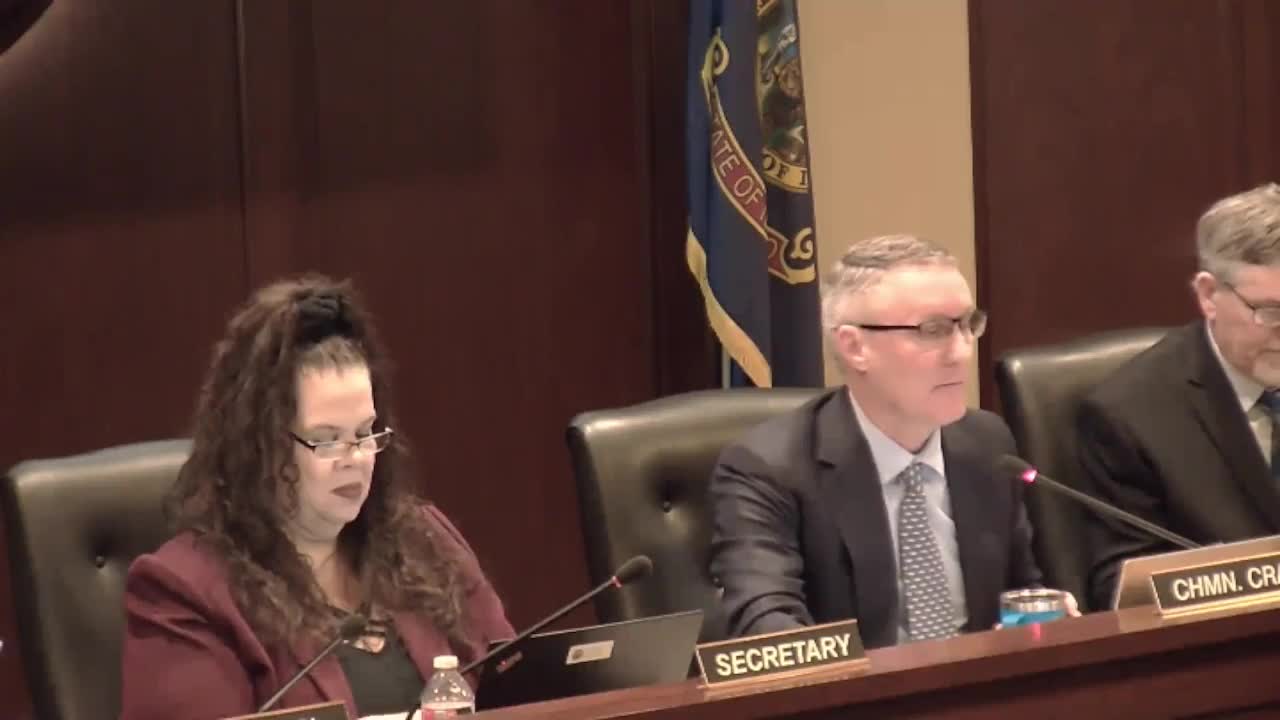
The committee held a roll-call vote on the motion to send House Bill 344 to the floor with a do-pass recommendation. The roll call recorded seven yes votes and seven no votes; the motion failed, and House Bill 344 remains in committee.
Roll-call tally (as recorded in committee): Chairman Crane — yes; Representative Andrew — yes; Representative Palmer — yes; Representative Barbieri — yes; Representative Holtzclaw — no; Representative Skog — no; Representative Alfieri — yes; Representative Crane (12) — yes; Representative Boyle — no; Representative Deigert — no; Representative Hostetler — yes; Representative Mickelson — no; Representative Pohanka — no; Representative Achilles — no. Motion failed 7–7; bill remains in committee.