Get Full Government Meeting Transcripts, Videos, & Alerts Forever!
Get email alerts on the Drug Policy Legislative Authority topic
No spam. Unsubscribe anytime.
House panel sends constitutional amendment to voters to give legislature sole authority over marijuana and other psychoactive substances
Summary
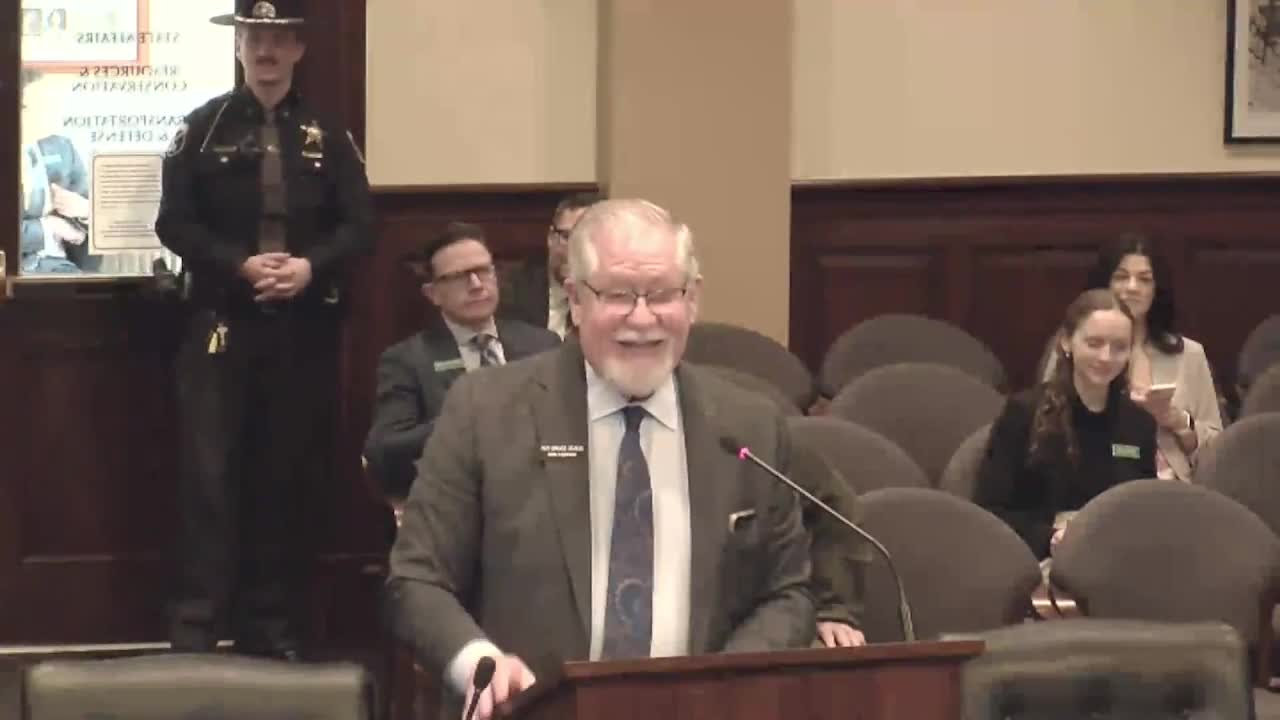
Representative Bruce Skog, R-District 10, told the House State Affairs Committee the proposed constitutional amendment would give the Legislature sole authority to legalize marijuana, narcotics and other psychoactive substances and asked the committee to send House Joint Resolution 4 to the floor with a due-pass recommendation.
Representative Bruce Skog, R-District 10, told the House State Affairs Committee the proposed constitutional amendment would give the Legislature sole authority to legalize "the growing, producing, manufacturing, transporting, selling, delivering, dispensing, administering, prescribing, distributing, possessing, or using of marijuana, narcotics, or other psychoactive substances." He asked the committee to send House Joint Resolution 4 to the floor with a due-pass recommendation.
Skog said the resolution would place a question before Idaho voters asking to amend the state constitution so that those categories of drugs would be governed only by the Legislature. He described the step as a way to prevent out-of-state initiative campaigns from changing state drug policy by ballot measure.
The nut of the matter, Skog said, is to "be proactive" and keep the power to legalize those substances at the legislative level rather than through citizen initiative. He told the committee, "We seek to give the legislature the same power over these drugs as we have on liquor."
Supporters who testified during public comment reinforced that rationale. Christian Brown, a former teacher from Boise, described drug-related problems he said he witnessed in schools outside Idaho and urged lawmakers to keep strict limits in place: "Marijuana was as prolific as chewing gum. Fentanyl from Mexico took over our schools." Grace Howitt, policy analyst for the Idaho Family Policy Center, said the amendment would align with the state constitution's language that the "first concern of all good government is the virtue and sobriety of the people and the purity of the home." Fred Birnbaum of the Freedom Foundation called the amendment "transparent" and said it would prevent what he described as initiative-driven, well-funded campaigns in other states.
Opponents urged preserving the initiative route for drug-policy changes. Joseph Evans, a U.S. veteran speaking for KIND Idaho, said medical research and veteran experiences argue for retaining ballot initiatives as an access pathway for medicinal substances: "I'd like to see this continue to be accessible by the initiative process so that we can take care of our veterans." Evans said the Legislature has at times stigmatized therapeutic uses and that voter-directed steps have been used elsewhere to expand medical access.
Several witnesses and members touched on the practical effect of the amendment. Supporters said it would not require the Legislature to review every new medicine; rather, it would reserve policy decisions about legalization for the legislative process. Opponents warned the change would remove the public's ability to use the initiative process on this subject.
Representative Mike Scott moved to send HJR 4 to the floor with a due-pass recommendation. The motion carried; Representatives Green and Achilles asked to be recorded as voting no. No roll-call tally was recorded on the transcript.
The resolution, if approved by the Legislature, would still need voter approval to amend the Idaho Constitution.