Get Full Government Meeting Transcripts, Videos, & Alerts Forever!
Get email alerts on the Foreign Ownership Agricultural Land topic
No spam. Unsubscribe anytime.
Idaho committee advances new language to force sale or foreclose on land owned by foreign adversaries; sponsor keeps House Bill 221 in committee
Summary
Rep. Ted Hill outlined proposed language that would require identified foreign-adversary owners of agricultural land, mining claims or mineral rights to sell within 180 days or face foreclosure; the committee voted to hold House Bill 221 and to introduce RS 32,510 for further consideration and a public hearing.
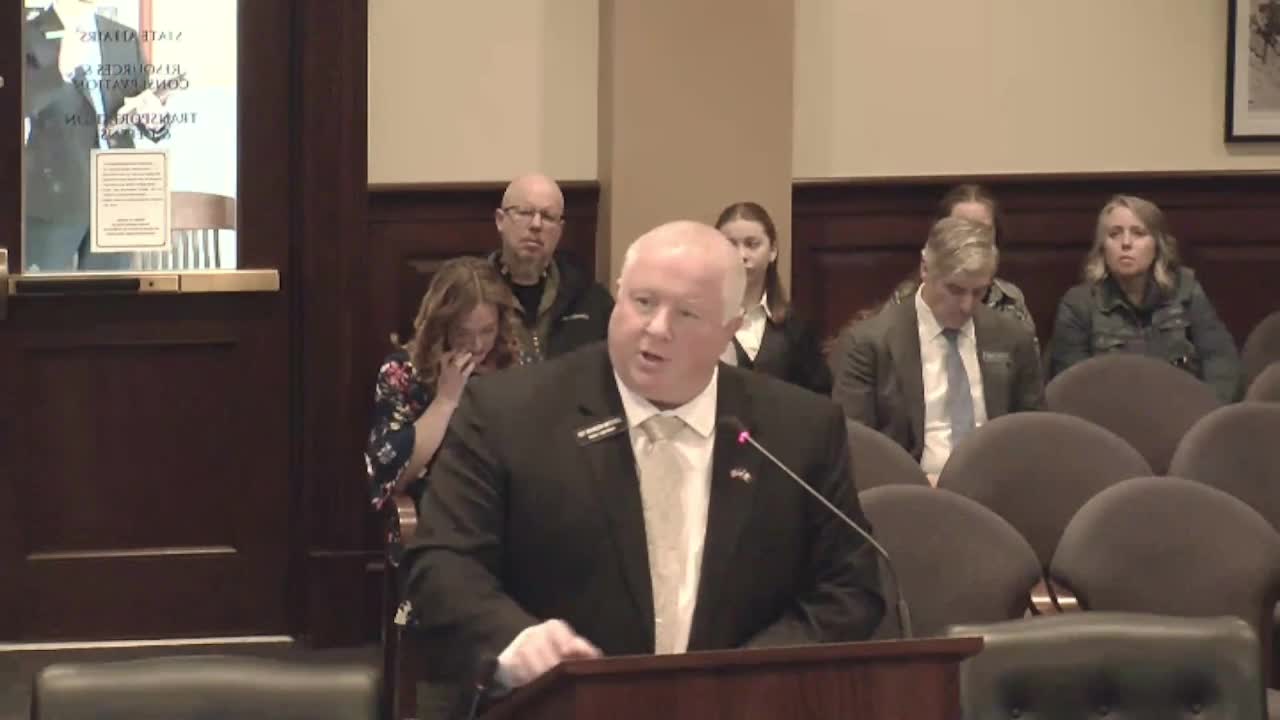
Representative Ted Hill, sponsor of the proposal, told the State Affairs Committee that the draft would require any foreign adversary that owns agricultural land, mining claims or mineral rights to sell within 180 days or face foreclosure. “If they don't sell within a hundred and 80 days, we'll foreclose,” Hill said, describing the enforcement mechanism and a whistleblower incentive.
Why it matters: Hill framed the measure as a national-security and supply-chain protection step, saying foreign ownership of seed and other ag inputs creates vulnerabilities. The draft would exempt entities that had a national-security agreement with the Committee on Foreign Investment in the United States as of July 1, 2025, but would otherwise bar and permit foreclosure of land held by defined foreign adversaries.
Details of the proposal and enforcement: Hill identified China, Russia, Iran, North Korea, Syria and Cuba as the bill's defined foreign adversaries and said the draft draws on federal authorities and Title 15 federal regulations. The draft includes a whistleblower provision; Hill said whistleblowers would be “someone who's been in proximity” and could receive 30% of net proceeds if a sale or enforcement action follows. He described the CFIUS waiver that currently covers some firms as a “pimp arrangement,” meaning it limits the state's ability to act when the waiver exists.
Hill pointed to several targeted policy tools: a 180-day forced-sale deadline, foreclosure authority, and geographic exclusions tied to military-operational areas. He described a map of southwest Idaho — a so-called Military Operations Area — and said the aim was to deter foreign adversaries from buying or renting property near bases and training ranges. He recounted an instance in which a foreign-owned mine near a training range was not discovered for years.
Committee action and next steps: Representative Crane moved to hold House Bill 221 in committee; the motion carried. After discussion and objections from several members who requested a broader hearing in affected counties, the committee instead voted to introduce replacement RS 32,510 so the matter can be scheduled for further consideration and public testimony. Representative Boyle offered the substitute motion to introduce RS 32,510; the motion to introduce carried.
Points of dissent and questions: Several members urged a fuller hearing for ranchers and other local stakeholders, particularly in Owyhee County and in areas with seed-production acreage. Representative Boyle and others said a public hearing should include local ranchers and Mountain Home Air Force Base representatives. Committee members also sought clarity about the July 1, 2025, cutoff and how existing CFIUS waivers would be treated. Representative Barbieri and others pressed Hill for specifics on the waiver carve-out and on the property-ownership verification mechanism; Hill said existing federal reporting rules and a whistleblower mechanism were intended to fill enforcement gaps.
What the committee did not decide: The committee did not adopt the bill as written, did not change the CFIUS exemption language, and did not order a vote on final passage. RS 32,510 was introduced for further action and a public hearing was requested by multiple members.