Get Full Government Meeting Transcripts, Videos, & Alerts Forever!
Get email alerts on the Environment topic
No spam. Unsubscribe anytime.
Committee approves forest-carbon registry bill with recording and penalties requirements
Summary
A committee substitute for Senate Bill 730 establishing a forest carbon registry administered by the Division of Forestry was agreed to; the bill requires recording of offset agreements with the registry and county courthouses and sets civil penalties for noncompliance.
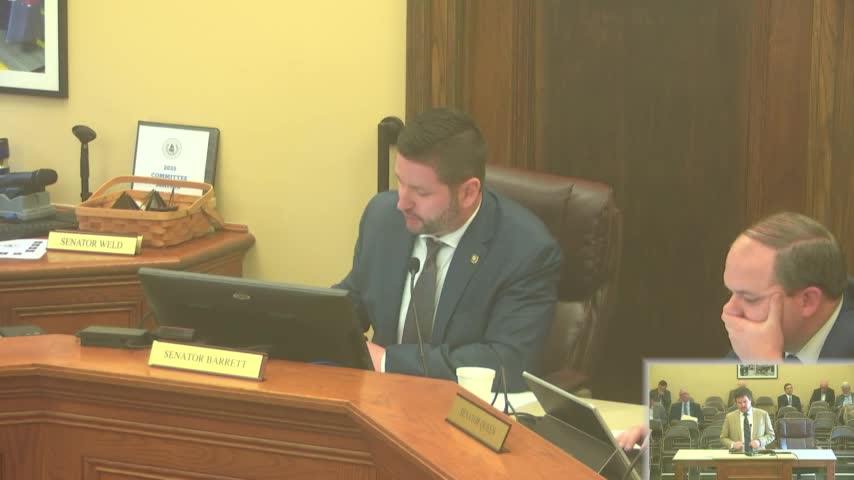
The Senate Finance Committee voted March 27 to report committee substitute for Senate Bill 730 to the full Senate with a recommendation that it pass.
The bill would establish a forest carbon registry administered by the West Virginia Division of Forestry under the Department of Commerce. The registry would track properties encumbered by forest carbon offset agreements or projects and collect a legal description (with tax-map reference), the date the agreement was executed or the project initiated, and the duration and management obligations of the carbon encumbrance. Committee counsel told the committee that only forestry management obligations need to be reported—not the full contractual terms.
Under the committee substitute, both the purchaser of an offset agreement and the landowner or developer who initiates or sells an offset must record the agreement with the registry and also file a memorandum with the county courthouse within 60 days of execution or project initiation. For existing agreements, the transcript indicates parties must record the agreement with the registry and relevant courthouses by July 1, 2027. The Division of Forestry would have authority to promulgate rules and set reasonable fees to administer the registry.
The substitute retains county courthouse filing requirements and establishes civil penalties for failure to record: $2,500 for the first offense, $5,000 for the second offense; continued noncompliance for 30 days after an initial deadline can lead to permanent suspension of the developer's or landowner's business license, counsel said. The committee agreed to the committee substitute and voted to report it to the full Senate; the vote was recorded as a voice vote in which the chair said "the ayes have it."