
Debate over automated enforcement: LB616 would allow license‑plate readers for red‑light enforcement with civil penalties
Get AI-powered insights, summaries, and transcripts
Subscribe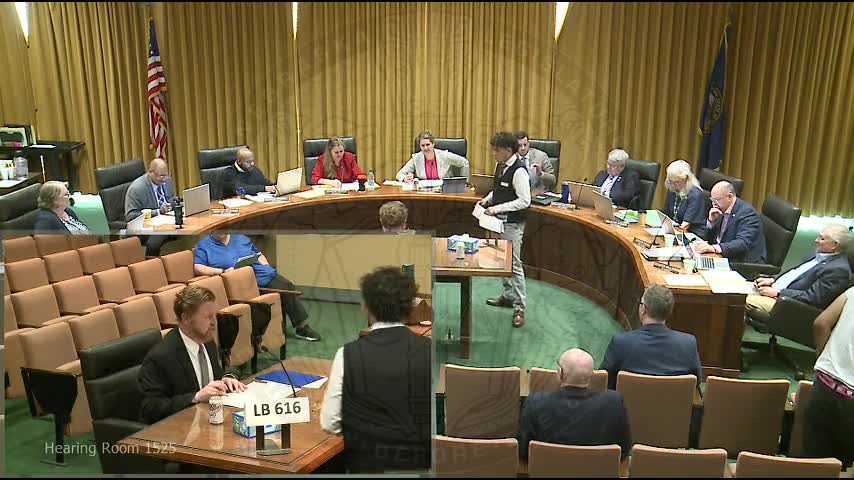
Summary
Sen. Kavanaugh’s LB616 would permit automatic license‑plate readers on red‑light cameras and impose a civil fee or driver safety class in lieu of criminal penalties; proponents cited safety gains, opponents raised constitutional, privacy and technology concerns.
Senator John Kavanaugh introduced LB616 as an effort to allow automated red‑light enforcement that avoids criminal penalties, saying he wanted a “non criminal infraction, if possible” to address due‑process concerns the Nebraska Supreme Court has raised about photographic enforcement.
Under Kavanaugh’s proposal, automatic license‑plate readers would be used only for this enforcement and violations would lead to a civil fee or a required driver safety program. “No points would be assessed, and no warrant would be issued for a violation,” he told the committee, and the bill would not result in points against a driver’s license.
Proponents testified about traffic safety and crash reductions. Tim Adams, a roadway safety professional, said red‑light running “is one of the leading causes of urban crashes” and pointed to research his testimony described as showing fatal‑crash reductions in jurisdictions that used photo enforcement. Julie Harris of Bike Walk Nebraska urged cameras as an equitable way to enforce safety laws and reduce fatalities for vulnerable road users.
Opponents included Spike Eicholt for the ACLU of Nebraska and the Nebraska Criminal Defense Attorneys Association. Eicholt said Nebraska case law treats traffic infractions as criminal and that “the ACLU has significant concerns about those … companies, the contracts that they have currently in the state, how they harvest and collect and sell that data.” He also said the state’s uniform citation and court‑process rules require criminal procedural protections that the automated approach would bypass.
Law‑enforcement witnesses also opposed the bill, warning that diverting license‑plate reader systems to routine traffic enforcement risks undercutting law‑enforcement use of the same systems for investigations. Bryan Waugh of the Kearney Police Department and representatives of Douglas County said the cameras are an important crime‑fighting tool and urged caution about expanding their use.
Why it matters: Supporters said automated enforcement reduces dangerous behaviors and saves lives; opponents said Nebraska’s court precedent and privacy concerns require stronger statutory guardrails and that automated enforcement risks unequal enforcement and data‑harvesting by private vendors.
What’s next: Committee discussion focused on due‑process questions, vehicle‑owner liability for violations, and technology reliability. No committee vote was taken during the hearing.