Get Full Government Meeting Transcripts, Videos, & Alerts Forever!
Get email alerts on the Land Bank topic
No spam. Unsubscribe anytime.
Dimmit County commissioners approve nonbinding letter of support for proposed land bank
Summary
After a presentation from a land-bank representative and questions about tax-delinquent properties, commissioners voted to issue a nonbinding, umbrella letter of support that will allow multiple nonprofits to coordinate with the county on redevelopment of tax-delinquent parcels.
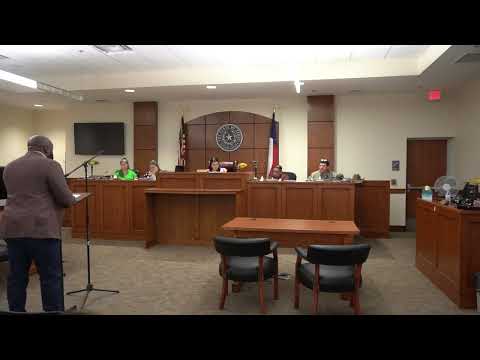
Dimmit County commissioners voted to authorize a nonbinding “umbrella” letter of support for a proposed land bank partnership on a motion that carried by voice vote.
The vote followed a presentation by a land-bank representative, who asked the court for a letter to help coordinate local and state partners while the group prepares a formal budget request. Commissioners and the county’s delinquent-tax attorney pressed for language that would not commit the county to convey tax-delinquent property without separate court approval.
The request came from a nonprofit representative identified in the meeting as Mr. Coates, who told the court the group has already secured a letter from the city and is seeking county communication and coordination to pursue grant funding and property transfer options. Commissioners raised several concerns: that a letter should not obligate the county to transfer tax-delinquent parcels, that other local nonprofits should not be disadvantaged, and that any conveyances must be coordinated with taxing entities and the county’s delinquent-tax attorneys.
A tax delinquent attorney who identified himself to the court as Jose explained the county’s resale and foreclosure processes, noting some struck-off properties have been on the tax roll for many years and that the county typically publicizes resale opportunities and coordinates with cities and school districts. He suggested a case-by-case approach rather than blanket commitments to a single nonprofit.
Commissioners discussed the statutory framework cited during the presentation (meeting speakers referred to “379 e” in the context of Texas land-bank or tax-delinquent property procedures) and asked that any county letter clearly state it was nonbinding and did not convey or promise county property. The court’s eventual motion—described by commissioners as an “umbrella” letter of support for the general cause of establishing a land bank and coordinating with qualified nonprofits—was moved and seconded on the record and approved by voice vote with no recorded roll-call against it.
Why it matters: Land banks are a tool counties and cities sometimes use to rehabilitate abandoned or tax-delinquent properties and convert them to housing or other community uses. Commissioners said they want to support the concept without binding the county to property conveyances or appearing to favor one nonprofit over another.
Clarifying details recorded at the meeting: the presenter said one struck-off property noted in the county records had an assessed tax amount of about $22,000; he cited an estimated rehabilitation cost of about $90,000 for one example parcel and said the nonprofit’s target resale would be in the mid-hundreds of thousands (presenter’s stated figure). Commissioners repeatedly requested that any letter avoid language that would commit the county to convey property without subsequent Commissioner's Court approval and coordination with taxing entities and delinquent-tax counsel.
The court did not authorize any property transfers, budget allocations, or grants at the meeting; the letter approved was expressly nonbinding and intended only to support outreach and coordination. Commissioners said they expect to review specific property lists and any conveyance proposals on a case-by-case basis in future meetings.
The court discussion included multiple references to continuing coordination with the city, county delinquent-tax attorneys, and potential grant funders. Commissioners said the item would be revisited as specific properties or budget requests are presented.