Get Full Government Meeting Transcripts, Videos, & Alerts Forever!
Get email alerts on the Workplace Safety Drug Policy topic
No spam. Unsubscribe anytime.
Dimmit County delays overhaul of drug-testing and safety policy after insurers advise legal review
Summary
County officials heard a multi-hour presentation from insurance and safety consultants about updating Dimmit County's drug-testing and workplace-safety policy. Commissioners directed staff to review legal language and training options and voted to table formal approval until legal and HR questions are resolved.
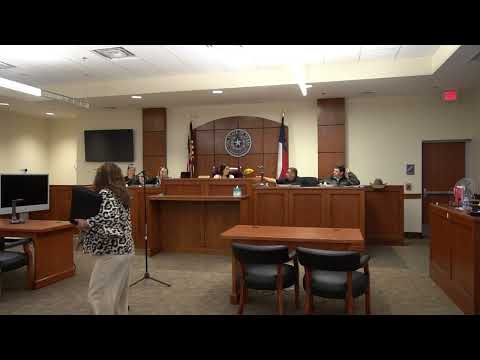
Dimmit County commissioners on Tuesday paused consideration of a proposed update to the county's drug-testing and safety policy after presentations by insurance and safety vendors highlighted legal and operational questions.
The county received a presentation from Jaime Rodriguez, a consultant who said he and his team reviewed the county's personnel policy handbook and identified inconsistencies between current practice and the handbook's March 2023 language on preemployment and post-accident testing. Rodriguez noted the handbook calls for preemployment screening and permits hair-follicle testing as well as urinalysis and blood testing in some post-accident situations.
Why it matters: Commissioners and county staff said the policy governs hiring, random and post-accident testing, discipline, and training for employees and volunteers who drive county vehicles. Several commissioners expressed concern that the county has not consistently implemented preemployment testing the handbook appears to require, and they said any policy change must be consistent with state law to minimize legal risk.
During the discussion, the county's insurer representatives and a safety consultant described available training courses, point-based performance systems for repeated driving incidents, and the pros and cons of urine versus hair-follicle testing. Rodriguez and an insurer representative warned that hair-follicle testing can detect drug use over a longer look-back period and that the handbook's present wording could create retroactive-test issues if the county sought to apply follicle testing after hire.
Commissioners asked several procedural and legal questions: who may initiate a test, whether elected officials are included, whether volunteers who drive county vehicles (for example, volunteer firefighters) are covered, and whether the county would capture any insurance premium credits for running training programs. Insurance staff said they would research whether training would yield premium credits and that the county's insurer would supply schedules for recommended trainings at no cost to the county.
Before taking final action, commissioners directed staff to meet with the county HR officer, the county attorney (or outside counsel), the county auditor, and TAC (Texas Association of Counties) or other legal advisers to clarify statutory limits on random and preemployment testing, recommended language, and how to treat volunteers in county vehicles.
Formal action: County officials voted to table the item and bring back a revised proposal after the requested legal and HR review. The motion to table was made from the bench and seconded; the court voted in favor and the motion carried.
The judge and several commissioners emphasized they want a policy that reduces claims and liability while protecting employees' and the county's legal position. Commissioners also requested that insurer and training vendors provide a schedule of training offerings and cost/benefit information to distribute to elected officials and department heads.
What happens next: Staff and legal counsel will review the existing handbook language, the state law framework referenced in the meeting, and insurer recommendations; they will return to commissioners with a revised policy and a schedule of trainings and implementation steps.
Ending: The court did not adopt a new drug-testing or safety policy at the meeting; the item is tabled pending a staff and legal review and a follow-up presentation to the court.