Get Full Government Meeting Transcripts, Videos, & Alerts Forever!
Get email alerts on the Education Funding Equalization topic
No spam. Unsubscribe anytime.
House approves lower threshold for school equalization eligibility, adds penalty for deep millage cuts
Summary
The Georgia House voted to lower the equalization threshold from 14 to 10 mills and added a 25% penalty for school systems that roll back millage rates below 10; the bill passed amid debate about effects on the QBE funding formula and district contributions.
The Georgia House on Friday approved Senate Bill 44, which lowers the threshold for school equalization eligibility from 14 mills to 10 mills and adds a 25% penalty on equalization funds for systems that roll back their millage below the new threshold. The chamber passed the measure with a recorded vote of 138-23.
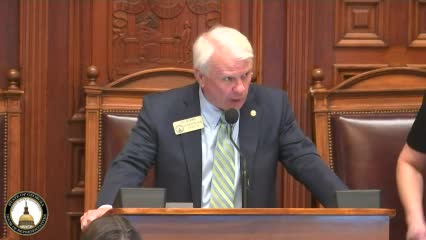
Sponsor remarks: The member presenting the bill said the change does not alter the equalization formula itself or the local five‑mill share but would allow — not require — local school systems that receive equalization to roll back millage to the new, lower minimum over time. The presenter described the penalty as a “stick” to discourage precipitous drops in local effort: if a system goes below 10 mills it would incur a 25% penalty on equalization funds under the new provision.
Debate and concerns: Representative Martin voiced reservations, asking for a broader review of the Quality Basic Education (QBE) funding formula before making changes to a single component. Martin said QBE is a “complicated” formula built on many pillars and cautioned that differential millage actions by some counties could shift burdens across the system. Other members supported the bill, saying it preserves local control while offering a pathway for millage reductions.
Vote and next steps: The bill passed the House 138-23 and will proceed in the legislative process. Lawmakers did not provide a detailed fiscal note on the floor; technical details and potential fiscal impacts on individual school systems would be clarified in committee reports and the bill text.
Who spoke on the floor: The bill’s floor presentation and explanation came from the member representing the bill’s sponsors; Representative Martin spoke in opposition and asked colleagues to consider a comprehensive review of QBE before adjusting thresholds.
Context: Supporters said the bill will give some systems flexibility to reduce local millage; opponents warned the change could have unintended consequences for statewide school funding without concurrent review of QBE and local effort calculations. The statute referenced on the floor relates to state equalization grants and annual calculations.