Get Full Government Meeting Transcripts, Videos, & Alerts Forever!
Get email alerts on the Jail Mental Health topic
No spam. Unsubscribe anytime.
Camino Real outlines grant‑funded jail‑diversion and mental‑health services for Frio County
Summary
Camino Real Community Services representatives described a grant‑funded multidisciplinary jail‑diversion team and a medical service agreement to provide psychiatric care to Frio County Jail inmates; the court approved the jail medical agreement and discussed operational details and invoices.
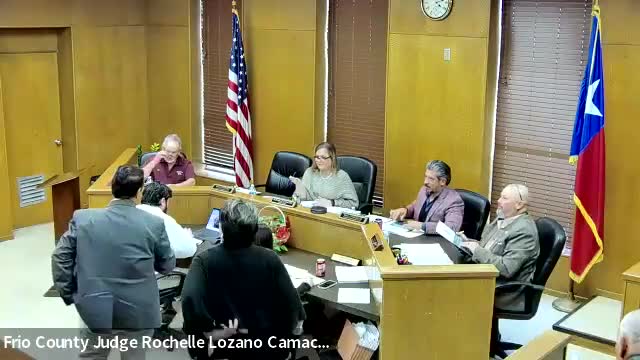
Camino Real Community Services representatives presented a grant‑funded jail‑diversion model and a separate jail medical services agreement to the Frio County Commissioner's Court during its January 2024 meeting.
The program described by Camino Real includes a multidisciplinary team of two case managers and two law‑enforcement peace officers to focus on "high utilizers" — people who repeatedly use emergency services or are frequently booked into jail — with an emphasis on prevention, follow‑up and linkage to services.
"Ultimately, in the long run, what this does, it's it reduces law enforcement's role in the mental‑health crisis," said a Camino Real presenter (identified in the meeting as a program representative). She said the grant will fund salaries for the caseworkers and contracted peace officers and provide one patrol vehicle for the initiative during the grant term.
The court voted to enter into a medical services agreement with Camino Real to provide psychiatric services to inmates of the Frio County Jail. Under the agreement described during the meeting, the initial psychiatric evaluation is $200 and follow‑up psychiatric visits are $80.
Camino Real and the sheriff's office discussed practical details: selecting Frio County officers for deputization or commission to staff the team, establishing a memorandum of understanding to allow the team to operate across county lines (Frio, La Salle and Atascosa counties are mentioned), and handling follow‑up care after transport or jail placement.
The court and Camino Real also discussed billing and operational logistics. A Camino Real representative told the court invoices would be submitted to the county contact the court designates; the jail or county would be responsible for authorizing services and handling any required lab work tied to psychiatric medications.
Why it matters: County leaders said a follow‑up requirement built into the grant was a key benefit. The presenter noted county law enforcement often transports people for psychiatric care but lacks resources for continuity of care, and the program aims to reduce unnecessary arrests, improve public safety, and reduce recidivism.
Next steps: The court approved the medical service agreement and asked staff to identify invoice routing and workflow for prescriptions and lab monitoring. The Camino Real pilot and the jail medical agreement are grant‑funded and time‑limited, with the potential for extension based on performance.
Speakers quoted are drawn from meeting participants listed below.