Get Full Government Meeting Transcripts, Videos, & Alerts Forever!
Get email alerts on the Public Safety Drug Policy topic
No spam. Unsubscribe anytime.
Georgia House approves tougher fentanyl trafficking penalties after hours of debate
Summary
The Georgia House passed Senate Bill 79 on Friday, increasing mandatory minimum penalties tied to amounts of fentanyl and creating enhanced trafficking thresholds. The measure passed 131–31 and was immediately transmitted to the Senate after a separate 99–62 vote on transmittal.
The Georgia House on Friday approved a measure that raises trafficking thresholds and mandatory minimums for fentanyl-related offenses, following more than an hour of debate on the role of mandatory sentences in drug policy.
Supporters said stiffer penalties are needed to curb an opioid threat that has killed thousands; opponents urged caution about mandatory minimums and urged alternative, evidence-based responses.
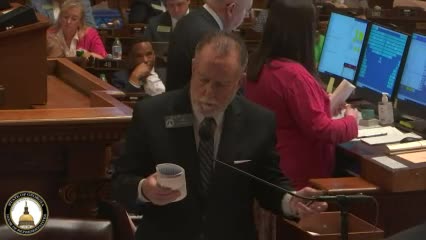
Sponsor Representative James Burchett, who spoke as the bill’s House presenter, said the strength of fentanyl makes the penalties necessary and repeatedly cited the substance’s lethality. “This amount right here would kill everybody in this chamber,” Burchett said while holding a prop he said illustrated how small a lethal quantity can be. Burchett described the bill as strengthening trafficking penalties tied to weight and purity and said the measure includes a limited mechanism for courts to depart from mandatory minimums under certain conditions.
The bill drew extended opposition focused on its mandatory minimums. Representative Scott Holcomb said: “But the reason why I oppose this bill is because of the mandatory minimums.” Holcomb urged lawmakers to prioritize interventions that raise the probability of detection and invest in prevention and treatment, saying mandatory minimums do not deter crime and risk long sentences that courts cannot tailor.
Other members who spoke included Representative Tran, who emphasized local overdose counts and the effect on teenagers, and Chairman Tyler Paul Smith, who described personal experience with early fentanyl cases while working in a district attorney’s office.
After debate the House adopted the committee substitute and passed the bill 131–31. Members then voted 99–62 to immediately transmit the bill to the Senate. The clerk recorded the passage and the return-transmittal votes on the floor.
Votes at a glance
- Senate Bill 79 (fentanyl trafficking penalties): Passed 131–31; immediate transmittal approved 99–62. - House Bill 428 (in vitro fertilization rights; agree to senate substitute): Agreed to 160–0. - Senate Bill 180 (high-demand apprenticeship program technical colleges): Passed 158–0. - Senate Bill 245 (grandparents’ visitation revisions): Passed 160–1. - Senate Bill 44 (equalization grant threshold for school funding): Passed 138–23. - Senate Bill 147 (reentry documents for inmates): Passed 163–0. - House Bill 584 (move certain regulated facilities oversight from DCH to DBHDD): House agreed to senate substitute 163–0. - Local calendar (multiple local homestead-exemption bills): Passed 160–0. - House motion disagreeing to Senate amendment on House Bill 86 and immediate transmittal back to the Senate: House disagreed and transmitted (floor action recorded).
Why it matters
Fentanyl-related overdoses have driven a large share of the recent rise in drug deaths across the country; supporters said enhanced trafficking penalties will remove large-scale distributors and deter organized importation. Opponents countered that mandatory minimums are poor public policy, that they do not deter and can overburden courts and corrections, and that prevention, treatment and detection must be prioritized.
What the bill does (as described on the floor)
- Raises trafficking thresholds and increases mandatory minimum ranges as amounts increase (sponsor described stepped penalties including multi-year mandatory terms at higher weight tiers). - Includes a statutory mechanism allowing judicial departure from mandatory minimums where enumerated conditions are met.
What happened next
Following passage and immediate transmittal, the bill was sent to the Senate for its consideration. The House memorialized votes on the clerk’s roll; the transcript records the yeas and nays for both passage and immediate transmittal.
Ending
The floor debate illustrated the session’s broader tension between punitive and public-health approaches to the opioid crisis; supporters framed the bill as a necessary tool against deadly synthetic opioids, while opponents urged investment in prevention, testing and treatment and removal of mandatory minimums.