Get Full Government Meeting Transcripts, Videos, & Alerts Forever!
Get email alerts on the Labor Policy Package topic
No spam. Unsubscribe anytime.
Labor & Workplace Standards Committee reports eight bills out with due-pass recommendations
Summary
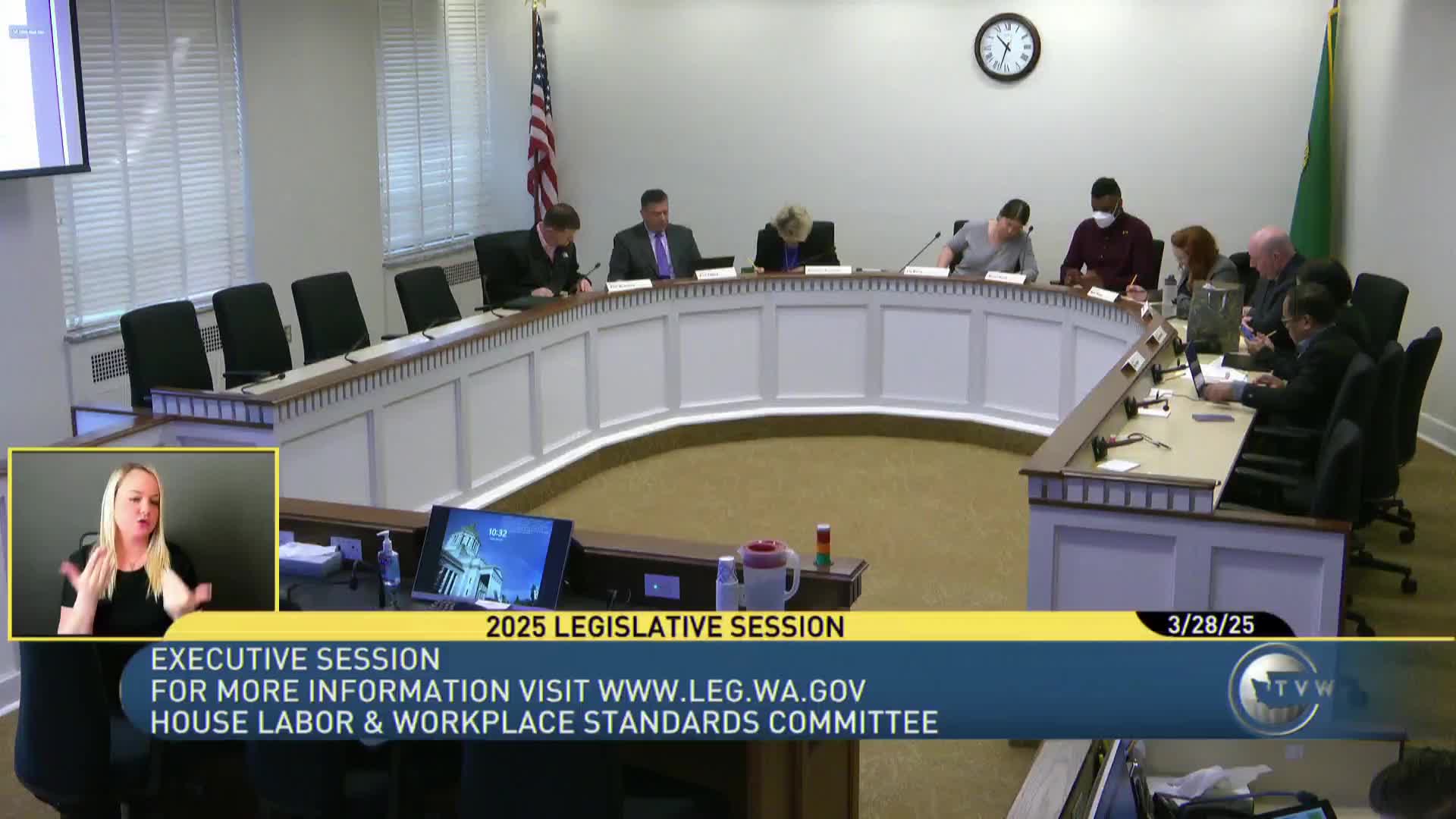
The Labor & Workplace Standards Committee met March 28 and voted to report eight Senate bills out of committee with due-pass recommendations, advancing measures that would create new protections for domestic workers, change prevailing-wage adjustments on public works, revise job-posting enforcement, require mass‑layoff notices, and set boiler-operator certification rules.
The Labor & Workplace Standards Committee met March 28 and voted to report eight Senate bills out of committee with due-pass recommendations, advancing measures on domestic worker protections, prevailing-wage adjustments for public works, wage-disclosure enforcement changes, a mass-layoff notice requirement, boiler-operator certification rules, and several other labor-related items.
The committee reported each bill with a recommendation to pass after debate and amendments. Several items drew substantive discussion about implementation, employer burdens, and small-business impacts. Representative Ortiz Self urged support for the domestic worker protections bill, saying, “I love this bill and urge support. This bill impacts mostly women, who are domestic workers, who deserve the clarity and protection of knowing what they're being contracted for.” Representative Barra opposed that bill during debate, saying the proposal “could discourage employers from hiring these folks” and asking lawmakers to refine it over the summer. Vice Chair Scott framed the public-works prevailing-wage bill as protection for working people: “this is about making sure that working people are not on the short end of those changes, and have prevailing wage standards that keep up with changing socioeconomic patterns and trends.”
Key measures advanced
- Engrossed substitute Senate Bill 50 23 (domestic workers): The bill imposes employment and labor requirements on anyone providing compensation to domestic workers — including minimum wage and overtime, meal and rest breaks, written terms and expectations, and notice before termination — and creates a rebuttable presumption of retaliation in certain circumstances. The bill directs the Department of Labor and Industries (L&I) to conduct enforcement and establishes a private right of action; it also makes certain hiring entities of domestic workers subject to Washington’s law against discrimination. The committee voted to report the bill out with a due-pass recommendation (6 ayes, 3 nays).
- Engrossed second substitute Senate Bill 50 61 (public-works prevailing wage adjustments): The bill would require public-works contracts to include annual adjustments to the minimum hourly wage for laborers, workers, and mechanics based on the latest prevailing wage rate, with specified exceptions. An amendment (Leon 157) offered contractor relief by allowing change orders in certain circumstances where a wage adjustment exceeds the state’s recent average annual wage increase or is 5% or more. Debate focused on contractor administrative burden and project delays; the bill was reported out with a due-pass recommendation (7 ayes, 2 nays).
- Substitute Senate Bill 52 65 (electrical inspector reciprocity): The bill expands who may qualify as an electrical inspector to include people with out‑of‑state experience (specifically called out: Oregon). It was reported out unanimously (9 ayes).
- Substitute Senate Bill 54 08 (wage and salary disclosure/job-posting enforcement): The committee adopted a negotiated amendment that removes the 14-day cure period from the underlying bill and instead establishes separate administrative enforcement and civil-action provisions for job-posting disclosures. Key changes include a statutory damages range of $100–$5,000 per violation (with factors for determining an award), clarifications about when third‑party platforms bear responsibility for postings, limits on actual-damages remedies for job-posting violations, and authority for L&I to adopt implementing rules. Representative Fosse described the amendment as the product of stakeholder negotiations; Representative Schmidt warned that removing the right to cure could harm small businesses. The bill was reported out as amended (7 ayes, 2 nays).
- Substitute Senate Bill 55 03 (PERC procedures and grievance settlements): The bill changes the Public Employment Relations Commission’s (PERC) unit-certification and adjudicative hearing processes and prohibits public employers from requiring employees to waive claims under state or federal law as a condition of settling a grievance. Committee debate included concerns that the bill removes a bargaining tool; the bill was reported out with a due-pass recommendation (6 ayes, 3 nays).
- Engrossed substitute Senate Bill 55 25 (mass-layoff/business-closing notices): A statewide analogue to the federal WARN Act, the bill creates notice requirements for employers with 50 or more employees who order a business closing or mass layoff. An amendment narrowed notice exceptions for construction projects to avoid capturing short-term project completions; sponsors said the change protects temporary and seasonal construction employment from triggering notices. The bill was reported out as amended (6 ayes, 3 nays).
- Senate Bill 56 53 (interest arbitration for Fish & Wildlife captains/lieutenants): The bill allows captains and lieutenants at the Department of Fish and Wildlife to access interest arbitration and removes them from a small-unit coalition bargaining requirement. The committee reported the bill out unanimously (9 ayes).
- Engrossed substitute Senate Bill 56 94 (boiler-operator certification): The committee adopted a striking amendment that (1) transfers most rulemaking authority in the bill to L&I, (2) exempts employees of electric-generating facilities, and (3) delays the effective date that would make operating a boiler without certification unlawful from July 2025 to 07/01/2029 (one year after the certification program becomes available). The adopted amendment also requires L&I rules to include duties and responsibilities of boiler operators and requires initial program fees be set by L&I, with later fee rulemaking transferred to the board and limited to covering program costs. The bill was reported out as amended (9 ayes).
Votes at a glance
- Engrossed substitute Senate Bill 50 23 (domestic workers): reported out, due pass (6 ayes, 3 nays). - Engrossed second substitute Senate Bill 50 61 (public-works prevailing wage adjustments): reported out, due pass (7 ayes, 2 nays). - Substitute Senate Bill 52 65 (electrical inspector reciprocity): reported out, due pass (9 ayes, 0 nays). - Substitute Senate Bill 54 08 (wage-posting enforcement, as amended): reported out, due pass as amended (7 ayes, 2 nays). - Substitute Senate Bill 55 03 (PERC processes/grievance settlements): reported out, due pass (6 ayes, 3 nays). - Engrossed substitute Senate Bill 55 25 (mass-layoff/business-closing notices, as amended): reported out, due pass as amended (6 ayes, 3 nays). - Senate Bill 56 53 (Fish & Wildlife captains/lieutenants arbitration): reported out, due pass (9 ayes, 0 nays). - Engrossed substitute Senate Bill 56 94 (boiler-operator certification, as amended): reported out, due pass as amended (9 ayes, 0 nays).
Why it matters
The package advances changes that would affect hiring entities and employers across the state, change enforcement avenues for job-posting violations, modify how public-works contracts adjust wages over the life of a contract, create notification duties around mass layoffs, and set a statewide boiler-operator certification program with a transition period. Lawmakers signaled continued negotiation on several items (notably the domestic-worker bill and the wage-posting enforcement language) as the bills move toward floor consideration.
The committee adjourned after reporting the eight bills out; members said staff and stakeholder negotiations would continue as bills proceed to the next steps.