Get Full Government Meeting Transcripts, Videos, & Alerts Forever!
Get email alerts on the Brownfield Restoration topic
No spam. Unsubscribe anytime.
Commission directs contractor to crush boulders, plant cover crop and coordinate longer-term restoration at Breakneck Hill Farm dump site
Summary
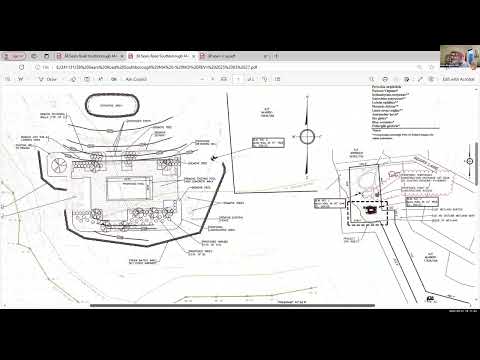
The Conservation Commission directed the contractor working at Breakneck Hill Farm to crush most on‑site boulders for subgrade use, seed an interim cover crop, maintain a protective fence and coordinate staged restoration and meadow replacement with the Stewardship Committee.
The Conservation Commission and stewardship volunteers reached a consensus on a restoration approach for the former dump area at Breakneck Hill Farm during a March 27 meeting. The Commission accepted stewardship’s recommendation to prioritize an initial cover-crop approach and active invasive-species management before large-scale shrub/ tree plantings, and directed the contractor to crush most on-site boulders for use as subgrade fill rather than placing a continuous boulder boundary along the property line.
Stewardship (Joyce Greenlee and Freddie Gillespie) told the Commission a rapid planting of shrubs risks being overwhelmed by the seed bank and invasive regrowth; they recommended a staged restoration that begins with a cover crop, monitoring and invasive treatments, then the planting of permanent natives once conditions are stable. They also flagged the loss of a previously established meadow area where construction access had cut through and requested the contractor restore that meadow area to pre-disturbance condition.
Commissioners discussed budget and practical options. Staff said the regulatory completion report required by the Massachusetts Contingency Plan (MCP) remains pending and the contractor is under an obligation to complete restoration-related tasks; the Commission asked that the contractor: (1) crush and reuse most boulders as subgrade fill (leaving a small number — agreed informally to roughly three or four — for landscape features), (2) implement a cover-crop seeding program and maintain the cover with mowing/management to prevent seeding of undesirable species, (3) keep the rental perimeter fencing in place during the early restoration period to limit public trampling and protect the site while vegetation is establishing, and (4) restore the area of meadow that was damaged by construction to its prior condition via a combination of planted plugs and seed appropriate to the original meadow composition, coordinated with Stewardship.
The Commission voted to send the agreed guidance to the project engineers (TRC/Strategic) and the contractor as a change order; staff will document the change order and track the contractor’s completion schedule. The Commission asked stewardship to prepare a short cover-crop seed recommendation and a prioritized list of long‑term plantings to be funded from any remaining restoration budget; Commission staff said they will confirm available funds after the change order is finalized.