Get Full Government Meeting Transcripts, Videos, & Alerts Forever!
Catoosa County leaders say state health, mandated costs are eroding QBE gains even as property values boost local revenue
Summary
Catoosa County Schools Director of Finance Austin Carter told a community cohort meeting that the district’s recent increase in gross state allotments has been largely absorbed by state‑mandated health and other costs, leaving fewer flexible dollars for classroom needs even as local property values and ESPLOST revenue grow.
Catoosa County Schools Director of Finance Austin Carter told a community cohort meeting that the district’s recent increase in gross state allotments has been largely eaten by state-mandated health and other costs, leaving fewer flexible dollars for classroom needs even as local property values and ESPLOST revenue grow.
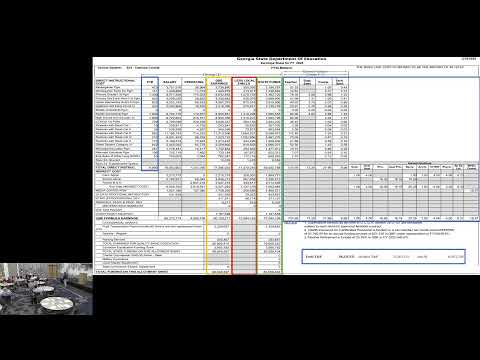
Carter told attendees the district “just completed our FY ’24 audit…no findings, no misstatements,” and then walked the group through how federal, state and local revenue streams interact under Georgia’s Quality Basic Education (QBE) formula. He said the district’s midterm FTE count was 9,890 and that the QBE midterm calculation produced an amount the state describes as needed for a basic education of $90,128,271; after the state’s local “fair share” adjustment the state-funded column on the allotment sheet was $77,044,108.
Why it matters: Carter said state-driven increases — chiefly the state health insurance contribution for school employees and other mandated supplements — have raised costs faster than the flexible revenue the district can spend on instruction. “Insurance for all staff costs on the employer side went from about $15,000,000 to about 29 and a half million dollars in just 4 years,” Carter said, describing the fiscal pressure on locally controlled funds.
The program picture: Carter reviewed federal and categorical funding the district receives: roughly $2.9 million in Title grants (Title I–IV) distributed by school poverty rank, about $2.9 million in IDEA funding for special education, and roughly $48,000–$49,000 for homeless student services. He said IDEA pays for paraprofessionals, therapists and preschool-disability services; Title funds support parent coordinators, academic coaches and interventions.
State versus local mechanics: Carter explained the QBE formula’s mechanics — FTE counts, weighted categories and…
Already have an account? Log in
Subscribe to keep reading
Unlock the rest of this article — and every article on Citizen Portal.
- Unlimited articles
- AI-powered breakdowns of topics, speakers, decisions, and budgets
- Instant alerts when your location has a new meeting
- Follow topics and more locations
- 1,000 AI Insights / month, plus AI Chat