Get Full Government Meeting Transcripts, Videos, & Alerts Forever!
Get email alerts on the Automated License Plate Readers topic
No spam. Unsubscribe anytime.
Committee deadlocks on bill setting rules for automated license-plate readers, front-plate change fails
Summary
A legislative committee considered Senate Bill 1180, which would set use limits, privacy protections, audits and training for automated license-plate readers (ALPRs) and remove the requirement to retrofit vehicles without front license-plate brackets. A motion to send the bill to the floor failed on an 8-8 tie.
A legislative committee considered Senate Bill 1180 on rules for automated license-plate readers and a provision that would exempt vehicles without factory front-plate mounting brackets from a front-plate requirement, but a motion to send the bill to the floor failed on an 8-8 tie.
Representative Monks, the bill’s presenter, told the committee the bill “attempts to provide some guidelines and directions as far as how they could be used, the uses they can be used for, and what they cannot be used for.” He said the bill defines “agency” as a political subdivision of the state of Idaho and limits government use of ALPRs to law-enforcement purposes, traffic-flow analysis, investigations of felonies and misdemeanors, crash reconstruction and searches for missing or endangered persons.
The bill would bar use of ALPR data for non–law-enforcement purposes, require privacy protections, mandate training, and provide for audits. Representative Monks said audits would be conducted twice a year. He also described the change to front-plate law in the bill: “If the vehicle is equipped with a front license-plate mounting bracket, that's when you have to have one. So, if your vehicle is equipped with that front bracket, then you got to put one on. If your vehicle is not equipped with one, then you do not have to go and try to retrofit it.”
Why it matters: supporters and opponents framed the debate around public safety and privacy. Sheriff Andy Creek of Payette County, representing the Idaho Sheriffs’ Association, said removing the front-plate requirement would reduce law enforcement’s ability to locate vehicles at highway speeds: “When we look at people that are lost or missing, runaways, suicidal subjects, wanted subjects, we put out an attempt to locate on a vehicle and it's the front plate that we use to identify those vehicles as we're passing vehicles on highways at high speeds.” He said distinguishing which vehicles were manufactured with front brackets and which had brackets removed would be difficult for officers.
Jonathan Wheatley, deputy director of the Association of Idaho Cities, asked the committee to consider amendments and flagged what he described as “overbroad definitions” in the bill. He pointed to the bill’s definition of automated license-plate reader and said “there's no definition for the word record,” warning the language could sweep in ordinary private surveillance cameras and could complicate the transfer of footage from private owners to police for enforcement.
Several legislators voiced practical concerns and policy positions. Some members said ALPRs have helped locate abducted children and solve crimes; others said the bill’s exemption for vehicles without front-mount brackets risks public safety. Representative Shepherd asked whether other states that have eliminated front plates produced evidence of harm; Sheriff Creek said he had not seen conclusive data from other states. Representative Handy and others proposed exploring alternatives such as a decal or other less-invasive front identification, but the bill before the committee did not include such a decal option.
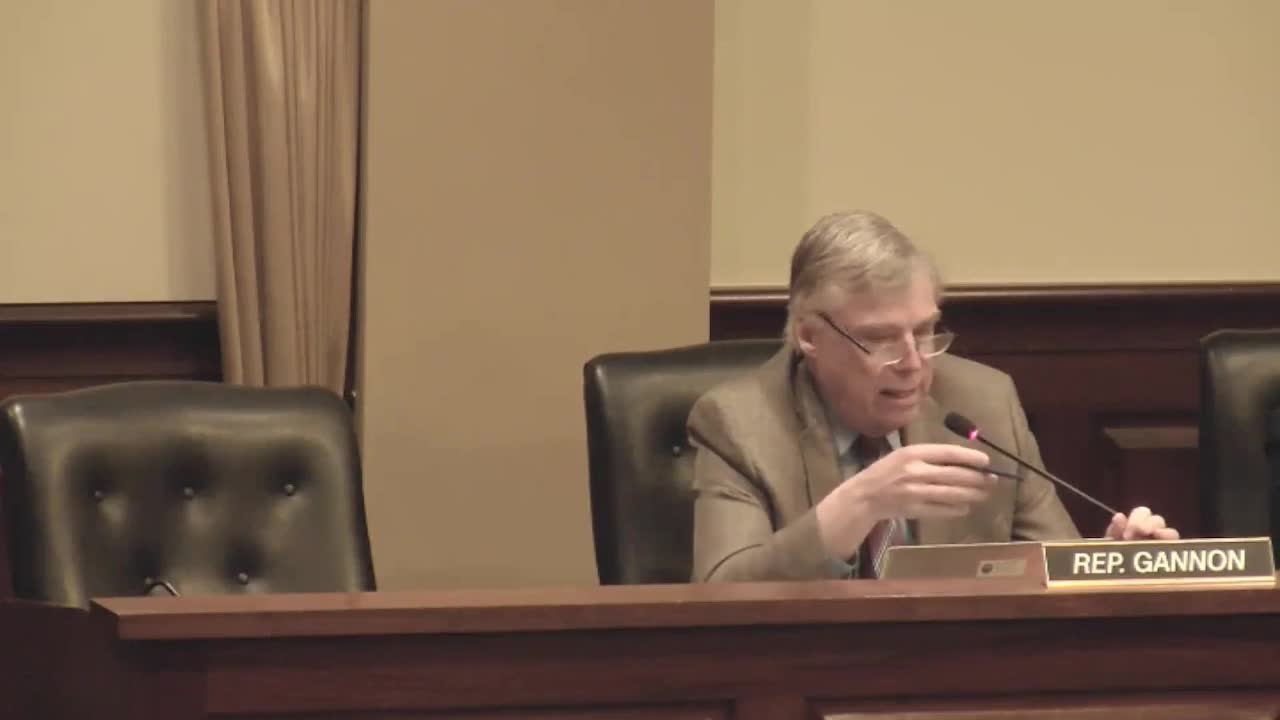
Formal action: Representative Crane moved to send Senate Bill 1180 to the floor with a do-pass recommendation. The roll call produced eight yes votes and eight no votes and the motion failed. The roll call in the transcript recorded the following votes: Yes — Chairman Palmer; Vice Chairman Mitchell; Representative Holtzclaw; Representative Monks; Representative Shepherd; Representative Crane; Representative Hill; Representative Harris. No — Representative Handy; Representative Petsky; Representative Boyle; Representative Clow; Representative Mickelson; Representative Pohanka; Representative Gannon; Representative Green. The committee chair stated, “Motion fails on a tie, 8 to 8.”
What the bill says (as described in the hearing): it limits ALPR use to specified law-enforcement purposes and traffic-flow analysis; it prohibits using ALPR data to enforce traffic infractions; it includes privacy protections, training requirements and semiannual audits; and it exempts vehicles that are not equipped with front license-plate mounting brackets from a retrofit requirement. Representative Monks said the bill, as drafted, does not specify a data-retention period: “I don't see in the legislation, maybe I'm wrong, it, but I didn't see anything where it was a specific timeframe on that.”
Next steps: The motion to send the bill to the floor failed in committee. Committee members said the matter may return in a different form; the chair noted there could be another, revised bill in a future meeting.