Get Full Government Meeting Transcripts, Videos, & Alerts Forever!
Get email alerts on the Tax Policy topic
No spam. Unsubscribe anytime.
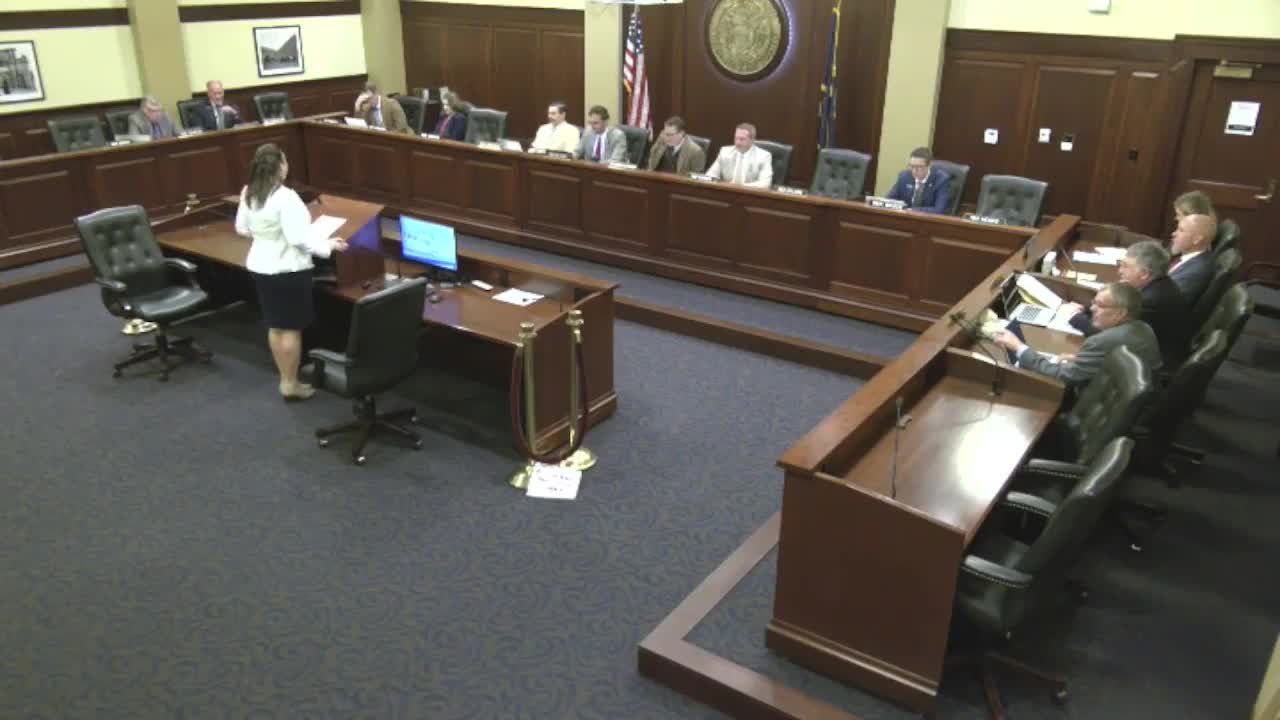
House Revenue and Taxation committee introduces bill to let parents deduct embryo-adoption expenses
Summary
Lawmakers introduced RS 32,732 to expand Idaho’s existing adoption tax deduction to cover legal and medical expenses tied to donated embryos that result in a live birth; sponsors said the change is intended to increase affordability and awareness, and a fiscal note estimates roughly $60,000 in state tax impact.
The House Revenue and Taxation Committee on March 27 introduced RS 32,732, a proposal to expand Idaho’s existing adoption tax deduction to allow taxpayers to deduct up to $10,000 in legal and medical expenses related to the acquisition and transfer of a donated embryo that results in a live birth.
The bill was presented by Representative Brook Green (R., District 18, Southeast Boise), who is carrying the legislation with Representative Jeff Ehlers (R., District 21, Meridian) as a cosponsor. Representative Raymond moved to introduce the request session (RS) bill; the committee voted to introduce RS 32,732.
The measure would permit the deduction in the year a live birth occurs and allow filers to carry eligible expenses back up to three years, language sponsors said was intended to accommodate the lengthy timeline of assisted-reproduction processes. Sponsors said the deduction would be capped at the same $10,000 limit that applies to the state’s traditional adoption deduction and would apply only if the embryo adoption results in a live birth.
“Those donated embryos are the results of other families that have gone through the IVF process and in the end, they have extra embryos and they want to put them out there for adoption,” Representative Green said in committee. She described the process as similar to an adoption agency but for embryos, and said the bill is intended both to highlight the option and to expand affordability for families who pursue embryo adoption.
Representative Ehlers described the tax mechanics in more detail, noting Idaho’s flat income tax rate of 5.3 percent. “The benefit here of a $10,000 deduction is that you multiply that by your tax rate, which is a flat rate now, 5.3. So it’s about $530 of lower taxes, per filer that gets this,” he said. Ehlers also said the fiscal-note estimate reflects that relatively few filers would use the provision: he estimated on the order of “a hundred or so” potential filers statewide.
Committee members asked technical and scope questions. Representative Cheatham asked whether expenses from failed cycles would qualify; sponsors said the deduction is limited to cases that result in live birth and that the language could be clarified. Representative Raybould and others suggested the committee could consider applying the same three-year lookback to traditional adoptions in future drafts. Representative Ayers raised whether costs related to surrogacy would be covered and said that would require additional review.
Lawmakers and sponsors also discussed the costs and success rates of assisted-reproduction procedures. Committee members and sponsors gave a range of typical per-cycle costs and outcomes: Representative Ayers estimated per-cycle expenses “probably minimum, more like 12,000, per cycle” with lower-end estimates of several thousand dollars; Representative Green said her own IVF cycle cost approximately $32,000 and that medication alone can run “almost up to $12,000” per cycle. Representative Ehlers and Representative Green cited a rough success rate of about 50 to 60 percent, with success correlated to maternal age and embryo age.
Representative Ehlers emphasized that the RS introduction was intended to solicit public feedback and that sponsors did not plan to carry the bill forward this session. The committee approved introduction of RS 32,732 by voice vote and did not record a roll-call tally in the transcript.
The committee did not take further legislative action on the policy during the March 27 meeting; sponsors said they will seek input and consider technical clarifications, including how the $10,000 cap should be applied and whether surrogacy or failed-cycle expenses should be covered.