Get Full Government Meeting Transcripts, Videos, & Alerts Forever!
Get email alerts on the Idoc Leadership And Operations topic
No spam. Unsubscribe anytime.
Incoming Idaho corrections director outlines priorities: staff wellness, contraband, bed shortfall and transparency
Summary
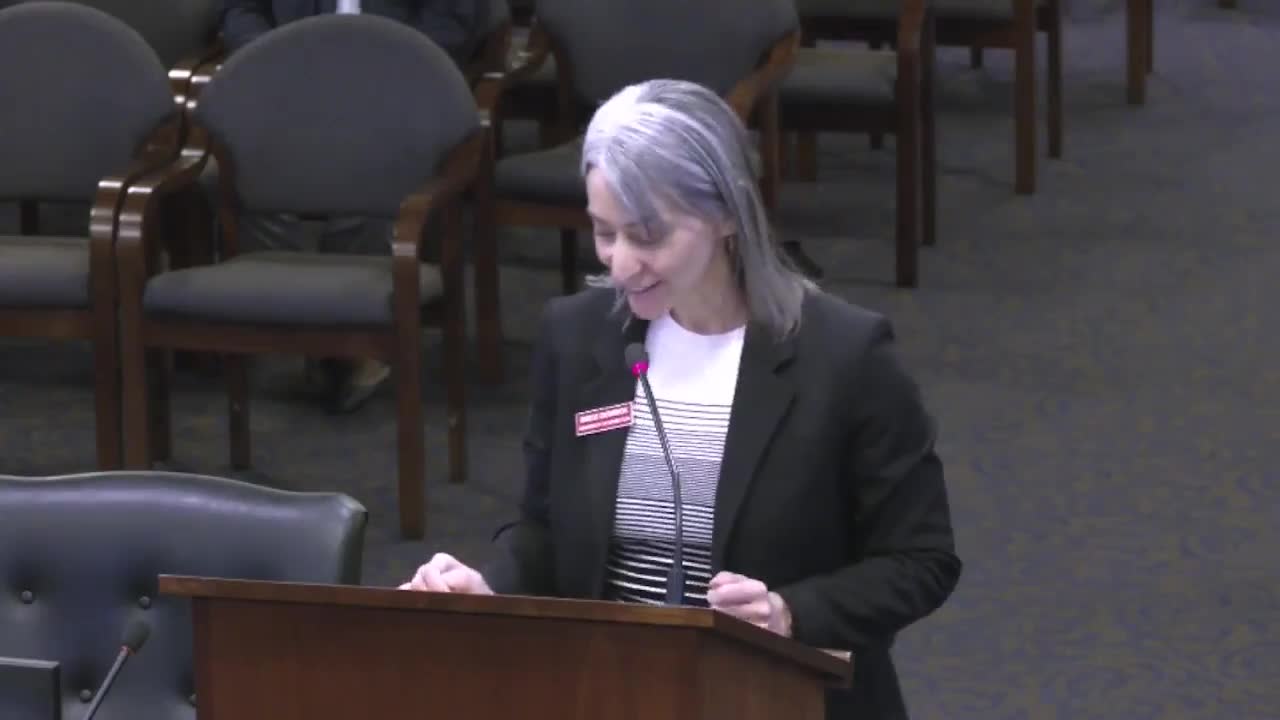
Bree Derrick, the incoming director of the Idaho Department of Correction, told the House Judiciary and Rules Committee she will prioritize partnerships with local law enforcement, staff wellness, transparency and addressing a roughly 1,500-person bed shortfall as she assumes the post in April.
Good afternoon, Chairman Skog and members of the committee. My name is Bree Derrick and as the chairman said I'm the incoming director for the Idaho Department of Correction, the incoming director told the House Judiciary and Rules Committee, adding she will take the helm officially in April.
Derrick said the Idaho Department of Correction employs about 2,200 people and supervises roughly 9,800 people in 10 state prisons and five community reentry centers, plus people on felony supervision and others housed out of state. "We have more than 16,000 people who are currently on supervision," she said.
The nut graf: Derrick outlined what she described as the agency's primary challenges and several areas of progress — a staff-recruitment success she called notable, a rise in contraband brought into facilities, and a continuing shortfall of beds that leaves about 1,500 people under IDOC jurisdiction without a state bed and often held in county jails or sent to contracted facilities in Arizona.
Derrick said improving relations with local law enforcement is one of her "very first priorities," saying she will "be aggressively working to have outreach with their offices to set up meetings, to come to the table, to understand what the pain points are." She argued better intelligence-sharing with local partners could help disrupt criminal networks that span communities and prisons.
Derrick described an uptick in drugs entering facilities by mail and legal mail and new concealment methods, and she said unmanned aircraft are increasingly used to drop contraband over secure perimeters. She told the committee that some technological responses requested in the department's budget this year are intended to disrupt those flows.
On capacity, Derrick said the department has several construction projects under way — including a women's facility and a community reentry center in Pocatello — that she expects to come online over one to three years. In the short term, she acknowledged, the state is continuing to use out-of-state contracts and county holding because the new facilities are not yet complete.
Derrick highlighted staffing as a statewide strength: Idaho was not experiencing the high vacancy rates seen in other states, and she said the agency has had "less than 5% vacancy in our CEO ranks for more than 18 months." She also flagged the health toll on correctional staff — "correctional officers have an average lifespan of 59 years old," she said — and described a new internal staff-wellness coordinator role to connect struggling employees with resources.
She described low-cost peer-to-peer support services inside facilities as promising for reentry outcomes and said the department plans to invest in public-facing dashboards to increase transparency about population, capacity and other measures.
On the state's execution chamber remodel known as the F Block project, Derrick said designers are rescoping changes needed to accommodate the firing squad instead of lethal injection and that the department is "confident that we will be able to make that happen in advance of the July 1 effective date next year," while noting the construction timetable will be set after design rescoping.
Ending: Derrick closed by saying she is honored to serve and reiterated a commitment to "maintaining the safety of Idaho and actively working to partner with local law enforcement to drive down crime even further than we are today." Committee members thanked her and posed follow-up questions about female incarceration rates, county programming for people awaiting transfer, escorts of inmates, and the F Block remodeling timeline.