Get Full Government Meeting Transcripts, Videos, & Alerts Forever!
Get email alerts on the Veterinary Education topic
No spam. Unsubscribe anytime.
Idaho committee hears plan to secure veterinary school seats at Utah State to ease vet shortage
Summary
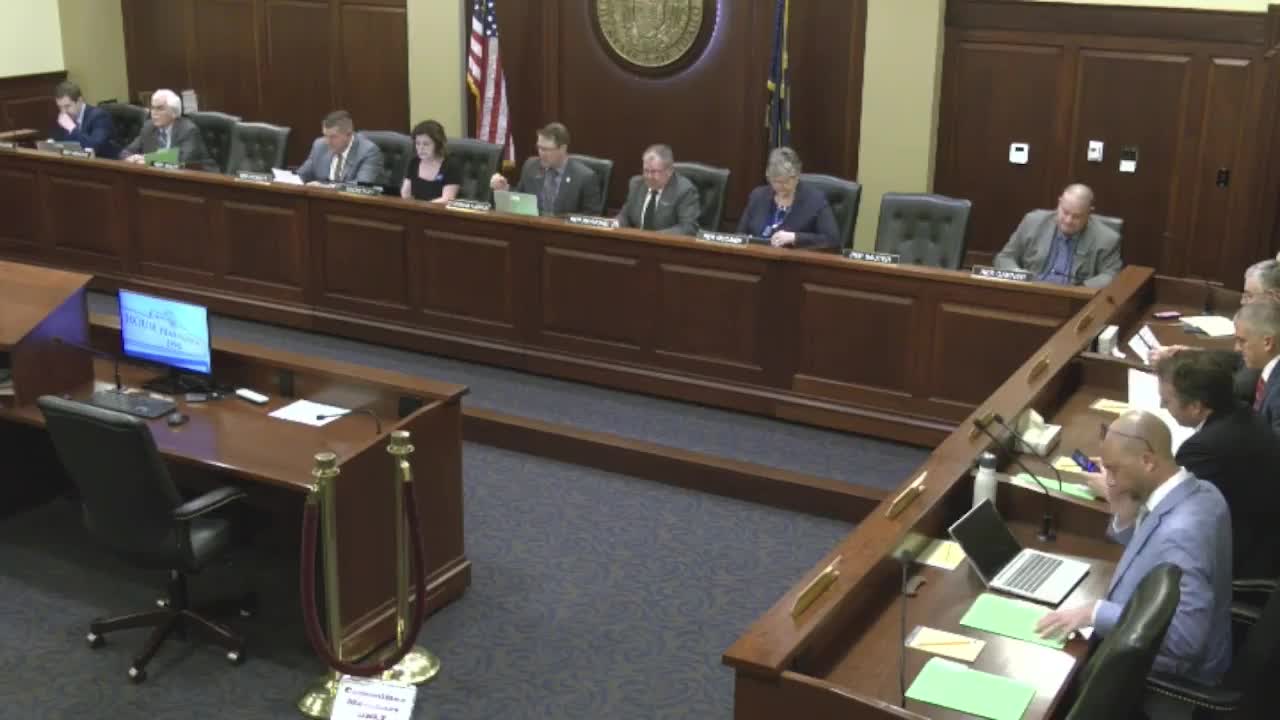
The House Agriculture Affairs Committee received a State Board of Education report on exploring an operating agreement with Utah State University to reserve seats for Idaho residents in USU's new veterinary program, citing statewide shortages and a Nevada funding precedent.
The House Agriculture Affairs Committee received a report from the State Board of Education on expanding opportunities for Idaho students to attend veterinary school through an operating agreement with Utah State University.
TJ Bliss, chief academic officer for the State Board of Education, told the committee that Senate Concurrent Resolution 111 from the 2024 regular session authorized preliminary talks with Utah and Utah State University about admitting Idaho students into Utah State’s new veterinary program. “The resolution also requires the State Board of Education to report back to the legislature their findings and outcomes from the conversations with the State of Utah and Utah State University,” Bliss said.
The report explained that Idaho currently pays to reserve 11 resident slots each year in the Washington State University College of Veterinary Medicine under the WIMU regional program. Bliss said Utah State indicated willingness to establish a similar operating agreement if the Idaho Legislature authorizes funding to support Idaho students at a level similar to WIMU. “Utah State is agreeable to establishing an operating agreement with Idaho should our legislature authorize funding to support Idaho students similar to the WEMU program,” Bliss said.
Committee members and presenters discussed why Washington State’s program has shifted toward companion‑animal training and whether an Idaho arrangement with Utah State could increase training in large‑animal medicine. Rachel Bickerton of the University of Idaho College of Agricultural and Life Sciences said Washington State’s curriculum makes large‑animal practice optional, while Utah State’s program will require large‑animal coursework. “Whereas at Utah State, it will be a mandatory course,” Bickerton said.
Presenters estimated that adding Utah State seats could raise annual admission of Idaho veterinary students from about 11 to 22 or more. Bliss said published tuition figures show substantial variation between programs: he described Washington State resident tuition at about $32,400 and nonresident at $41,300 and Utah State resident tuition at about $27,600 and nonresident at about $52,600. Bliss also cited Nevada’s arrangement as a working example: Nevada allocated $8 million for 70 seats over 10 years, an amount Nevada’s documents show averages roughly $27,000 per student per year.
Committee members pressed presenters on workforce incentives and recruitment. Dexton Lake of the Farm Bureau summarized market pressures: small‑animal veterinary practice brings higher compensation and lifestyle advantages, which he said draws graduates away from large‑animal work. “The incentive is definitely there, to work in small animal veterinary medicine,” Lake said, adding that some USDA programs require veterinarians to work a minimum number of hours in large‑animal practice to qualify for certain loan programs.
Panelists and lawmakers discussed non‑degree entry paths and clinical rotations. Bliss noted Utah State’s program requires fewer prerequisite years and that USU’s first class is scheduled for fall 2026 at 40 students, expanding to an 80‑student class in 2027 when a new building opens. Presenters said expanding clinical rotations—including through the Idaho Center for Agriculture, Food, and the Environment (CAFE) dairy facility in Rupert and other Idaho sites—could help train veterinarians who will practice in Idaho.
No formal action was taken on a bill; the only recorded committee motion during the session approved the previous meeting’s minutes. Committee members asked staff to provide additional cost and statutory information, including details of Nevada’s agreement, WIMU funding and tuition estimates, and data on application and acceptance rates for veterinary programs.
The session closed with committee members asking the State Board and University of Idaho representatives to continue developing an operating‑agreement proposal and to return with cost and implementation details that could inform possible legislation or appropriations in a future session.