Get Full Government Meeting Transcripts, Videos, & Alerts Forever!
Get email alerts on the Education Budget topic
No spam. Unsubscribe anytime.
Milton Public Schools faces $2.83 million FY25 gap; officials weigh sports cuts, staffing and fee increases
Summary
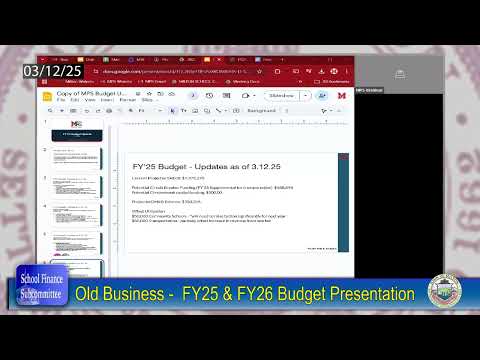
District staff told the School Committee the operating gap for FY25 stands at about $2.83 million and presented a menu of temporary and structural options — from a substitute coverage model to increased community‑school tuition and possible cuts to noncontract positions — as they race to provide a funding number to the Select Board this week.
Milton Public Schools officials told the School Committee that the district currently projects an operating shortfall of approximately $2.83 million for fiscal year 2025 and are preparing a list of possible reductions and offsets to present to the town Select Board before it reconvenes later this week.
District staff described several near‑term options that would reduce costs but carry operational or student‑impact consequences. Those options include moving to a centralized substitute coverage model at the middle and high schools (students supervised in a single space for one class period rather than an individual classroom substitute), prorating or freezing stipends, temporarily cutting or furloughing noncontracted HRS positions, raising community‑school tuition, negotiating lower out‑of‑district special‑education transportation rates and, as a last resort, canceling spring athletics.
District staff said the substitute coverage plan — negotiated with the union as a temporary measure — would place up to one teacher overseeing as many as 50 students for a single class period and would typically be used at the middle and high schools. Staff estimated the measure might reduce daily substitute costs from roughly $1,200 to a lower per‑day amount; using a rough implementation window to the end of the year the committee estimated that savings from the coverage change would be in the low tens of thousands of dollars (district staff gave an illustrative calculation of about $300 per day times the remaining days, yielding roughly $30,000–$40,000 across sites). The committee and several members expressed concern about the learning impact of larger supervised groups even when limited to one period.
Special education costs were repeatedly identified as the main driver of the deficit. Staff said the district is projecting additional, unanticipated special‑education expenses that continue to move the needle on the gap. The committee was briefed on a possible supplemental statewide adjustment to the Circuit Breaker reimbursement for transportation costs: staff said there is one‑time supplemental funding being discussed at the state level and that the district’s current projection for that supplemental payment would translate to about $488,000 to the district if the full estimated share is approved and made available for FY25. Staff emphasized that the supplemental payment was not confirmed and that timing and final approval remain uncertain.
District leaders also described capital‑funding options that would require town approval. Staff said they will recommend rescinding a prior capital request for Chromebooks and rooftop HVAC units and ask the Select Board or town meeting to reallocate free cash for those items; that reallocation would require support from the town’s capital planning process and a town‑meeting vote.
Community schools programs and tuition are another lever under consideration. Staff said community schools currently rely on a chargeback of roughly $200,000 built into district budgeting and that, even with a 10% increase recently adopted for summer programs, the regular‑year community‑school programs still risk running at a deficit without further rate increases. Staff projected that maintaining the program as self‑sustaining could require a 10%–15% tuition increase next year and noted that a larger, one‑time use of community‑schools funds this year would increase pressure to raise rates for FY26.
Committee members asked staff for a master list of actionable options with dollar estimates and the likely student impact for each item. Specific figures discussed in the meeting included: an outstanding gap reported at about $2.83 million; a potential one‑time circuit‑breaker supplemental payment of roughly $488,000 pending state action; an illustrative substitute coverage savings on the order of $30,000–$40,000 through the remainder of the year; possible community‑schools offsets near $50,000 tied to tuition changes; and a remaining structural shortfall the district described as in the low hundreds of thousands even after measures being pursued.
Committee members and staff emphasized the timing pressure: the Select Board voted a budget direction the night before and is scheduled to reconvene on Friday to reconsider its allocation if it is not satisfied with the district’s progress toward closing the gap. Staff said they will return updated line‑level reports and a prioritized list of cut/offset options to the School Committee within about 24 hours so the committee can take a position to present to the Select Board.
On procedural business at the end of the meeting the committee approved a group of meeting minutes that were motioned, seconded and adopted by voice vote; the motion text and the committee’s approval were recorded in the meeting minutes but individual roll‑call tallies were not given during the recorded discussion.
District staff and committee members warned that many potential savings are one‑time or carry forward impacts to instructional time and student support. Staff repeatedly framed measures as temporary or emergency responses and said they are continuing to seek long‑term structural solutions for future fiscal years.