Get Full Government Meeting Transcripts, Videos, & Alerts Forever!
Get email alerts on the Municipal Courts topic
No spam. Unsubscribe anytime.
Bill would let municipal judges ask DOR to suspend driver’s licenses after repeated failure-to-appear; supporters and opponents debate fairness and public-safet
Summary
House Bill 206 would let municipal courts notify the Department of Revenue to suspend a driver’s license after two failures to appear for minor traffic violations; supporters called the change a public-safety tool, opponents said it risks disproportionate penalties for working people and could become a revenue driver for municipal courts.
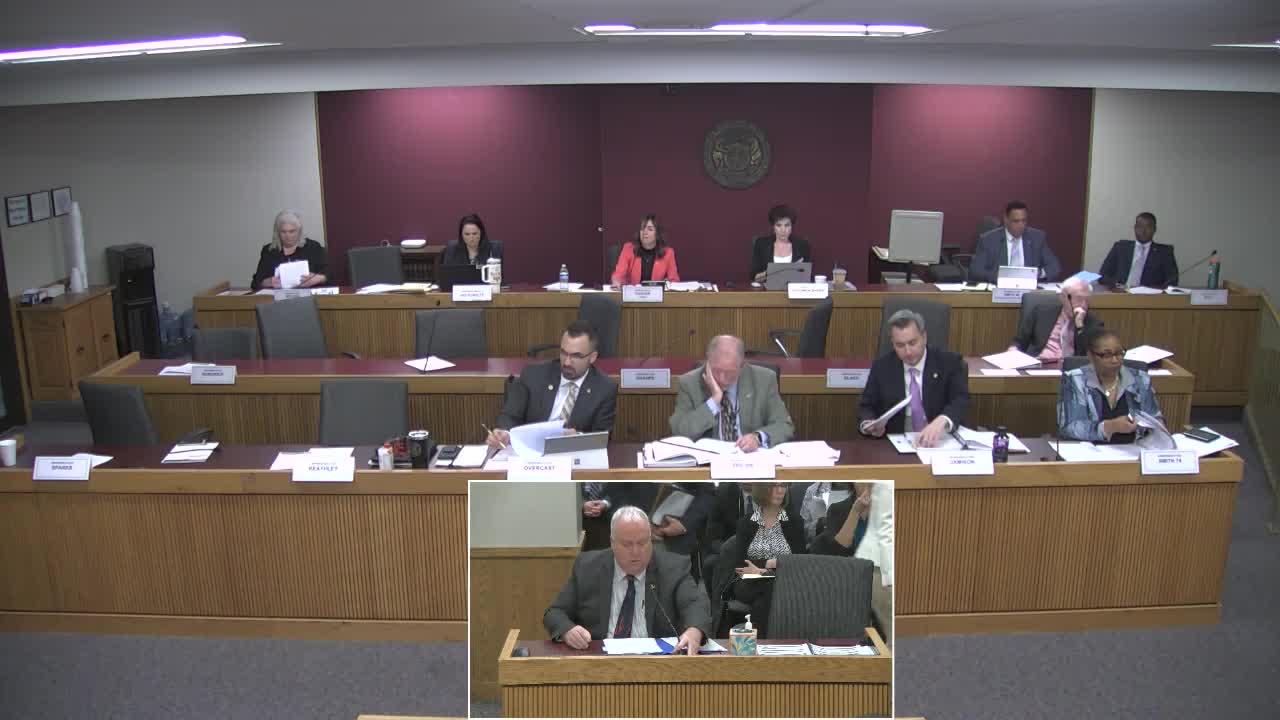
Representative Dave Hinman presented House Bill 206, which would allow municipal courts to tell the Department of Revenue to suspend a Missouri driver’s license if a defendant charged only with a minor traffic violation fails to dispose of the charge and fails to appear on two return dates without good cause. The bill would also allow a 30-day temporary driving permit in some circumstances.
Supporters — including Jeff Chappell, court administrator for O'Fallon — said removing the suspension tool under earlier municipal court reforms has reduced compliance: "The tool was a great resource in helping get compliance with the violations written," Chappell said. Major Troy Hanukkrat of the Independence Police Department testified that the reform went "too far" and that suspension-authority would improve compliance and public safety; he cited local data showing a drop in traffic citations and an increase in failures to appear: in Independence, tickets dropped from about 36,500 in 2014 to about 22,000 in 2024, a decline of roughly 40 percent, while failure-to-appear cases increased by over 50 percent.
Opponents, including Arnie C. A. Dinos, the state public advocate, called the measure harsh and criticized municipal practices in some jurisdictions, saying aggressive warrant tactics and towing fees can punish low-income residents for minor traffic violations. He characterized the proposal as likely to be used for revenue generation in some municipalities and urged alternative steps such as improved notice procedures and customer-service approaches.
Committee members discussed trade-offs between accountability and accessibility, including whether courts offer evening or remote appearances. Representative Hinman and supporters said the measure would restore judicial discretion rather than automatically impose suspensions.
No committee vote was recorded at the end of the hearing; the committee closed the public hearing after receiving both supportive and opposing testimony.