Get Full Government Meeting Transcripts, Videos, & Alerts Forever!
Get email alerts on the Court Administration topic
No spam. Unsubscribe anytime.
Committee hears support for raising circuit-clerk salaries, witnesses cite retention and workload increases
Summary
Supporters of House Bill 756 told the Judiciary Committee that circuit clerks’ duties have expanded since statutory salaries were set, citing retention losses and growing financial responsibilities; sponsors proposed tiered increases with an estimated fiscal impact around $1.2 million.
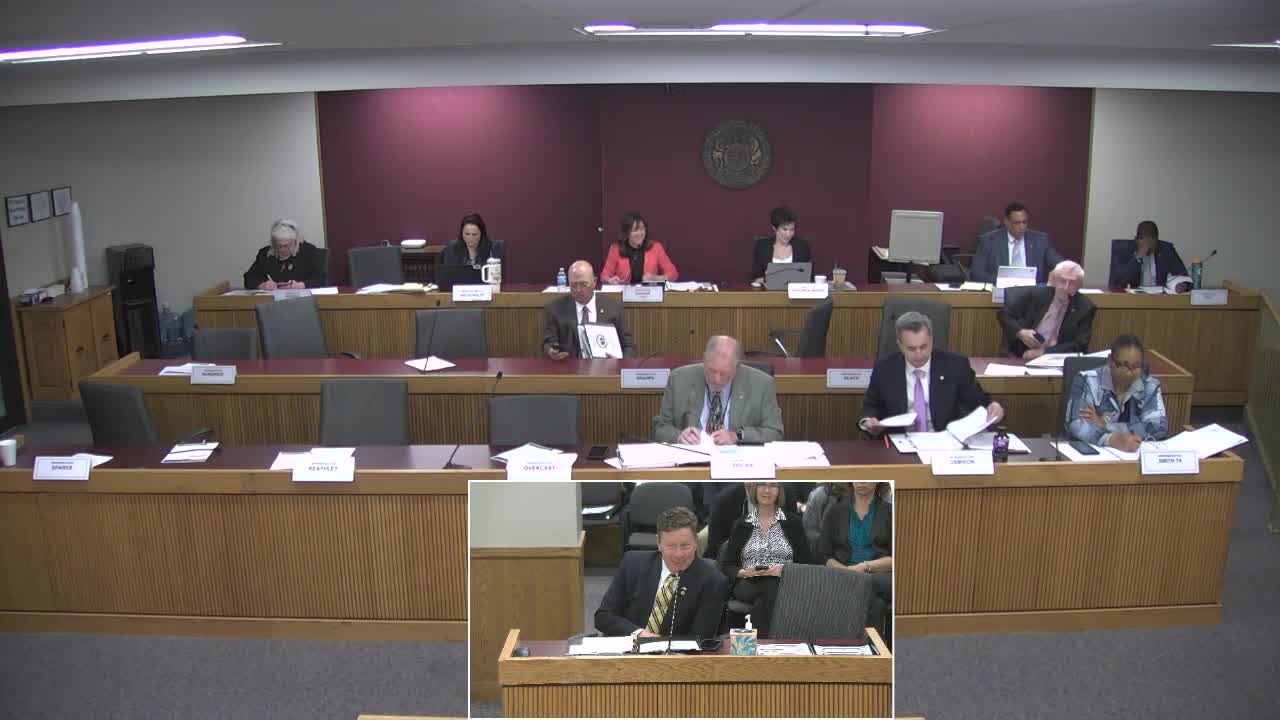
Representative Sean Boucher presented House Bill 756 to the House Judiciary Committee, saying the bill would raise statutory salary levels for circuit clerks across classifications because current pay scales date largely to the 1990s and produce retention problems in rural counties.
Circuit clerks and recorders who testified described expanded duties and heavier workloads. Eric Salo, circuit clerk and recorder for Sheridan County, told the committee: "The circuit clerk statewide collected and distributed over $200,000,000 in 2023," and described reconciling collections and distributing funds to municipalities, counties and the state. Salo gave current-salary examples and asked the committee to support increases tied to classification; the transcript records present salary levels such as $89,300 for first-class counties and requests for increases by class.
Tiffany Phillips, circuit clerk in Polk County, described modern responsibilities that include administration, HR, accounting reconciliations, IT and 24/7 emergency filings under Supreme Court Rule 4501. She said those duties and on-call requirements contributed to experienced clerks leaving: "In the last 3 months alone, 3 circuit clerks have left or taken early retirement to a less stressful job."
Committee members asked about attaching training or experience to the pay schedule; witnesses said they would support linking pay to training but framed the bill as a starting point to correct base pay disparities. The fiscal note for the proposal presented in testimony was described around $1.2 million; the state public advocate, Arnie C. A. Dinos, testified in opposition on equity grounds and highlighted county-level pay disparities and the impact on deputy clerks as a separate but related concern.
The committee completed the public hearing without a committee vote; sponsors and clerks asked for follow-up work on training-based pay adjustments and on how county-funded positions interface with state-set salaries.