Get Full Government Meeting Transcripts, Videos, & Alerts Forever!
Get email alerts on the Medical Licensure Assistant Physicians topic
No spam. Unsubscribe anytime.
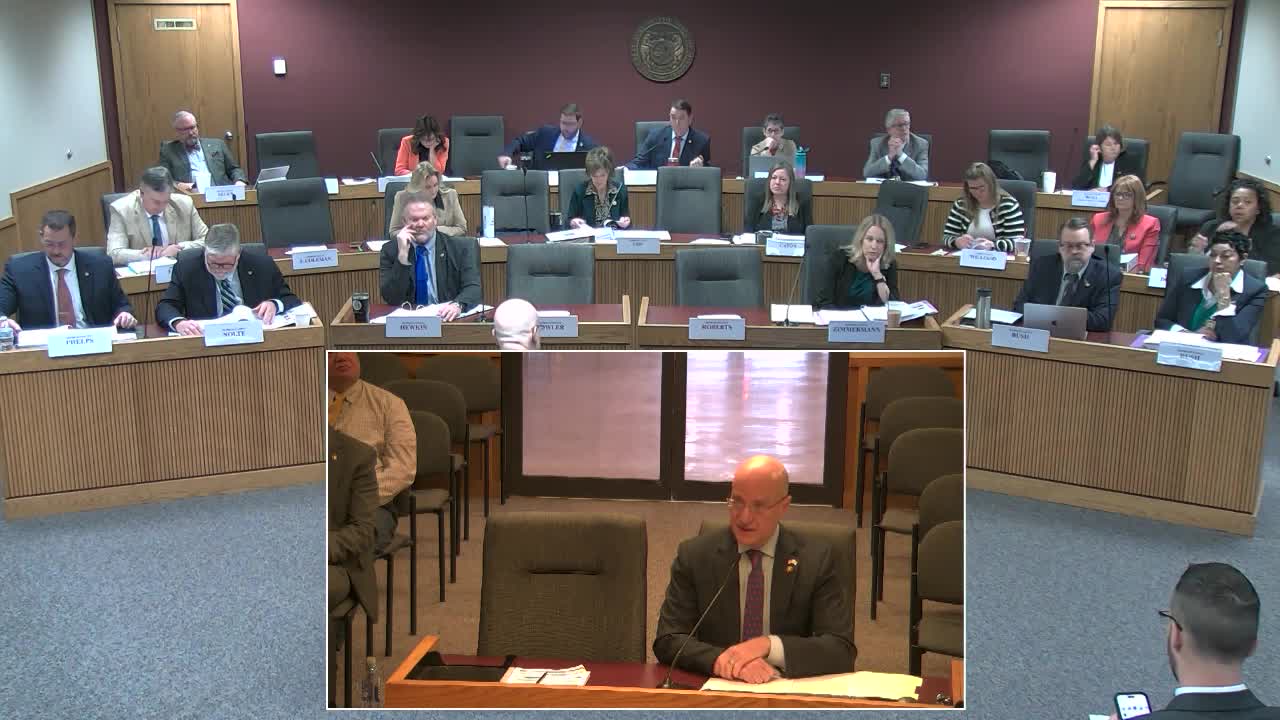
Heated committee hearing on bill to broaden practice for assistant physicians exposes split between workforce relief and training standards
Summary
A Missouri House committee held an extended hearing on House Bill 1010, which would expand practice pathways for assistant physicians and create alternate routes for medical‑school graduates who lack residency placements.
A Missouri House committee held an extended, at‑times emotional hearing on House Bill 1010, which would modify provisions governing assistant physicians and create alternate pathways for medical-school graduates without residency placements to practice in primary care settings after supervised practice and other conditions.
Representative Matthew Overcast (District 155) framed the bill as a response to physician shortages in rural areas: "If you're from a rural district...you know that there's a provider shortage. 70% of our counties are designated health care shortage provider areas," Overcast said. He described provisions that would allow qualified medical‑school graduates who serve under supervision for an extended period, and who meet specified training and competency checks, to practice family medicine in underserved communities; he added he included a five‑year sunset on the measure to allow reevaluation.
The nut graf: supporters argued the bill would place trained, motivated graduates into underserved clinics and short‑term help fill gaps; opponents — including residency-trained physicians and major physician organizations — said residency training and ACGME accreditation provide essential, hands‑on graduated responsibility that the bill does not replicate and that lowering training standards would risk patient safety.
Supporters included assistant physicians who said they have passed national licensing exams and are already providing care in underserved areas. Dr. Trevor Cook, an assistant physician who trained at an international medical school and has practiced for several years in the state, testified about local workforce needs and said many qualified graduates are unused because they cannot secure residency slots: "You have this literal towns of doctors that are not being used. And on the other end of the choke point, there are people that need doctors the most," Cook said.
Opponents included multiple medical groups and residency‑trained physicians. Joni Lathan, an internal medicine and pediatrics physician in Kansas City, testified for the Missouri State Medical Association in opposition, saying the Association and its members were concerned the bill would undercut standards for clinical competency and professional oversight. "ACGME does not recognize assistant physician programs," she told the committee. Dr. Joseph Glazer (representing the Missouri Academy of Family Physicians) described residency training as "graduated responsibility" and said residency provides indispensable experience that cannot be replaced by work experience alone.
Committee members pressed both sides on details. Lawmakers asked how many residency spots remain unfilled; one committee member cited a figure of 2,521 unfilled positions nationally for the most recent year (a figure raised during oral testimony), and a witness described broader match statistics and timing challenges for applicants. Overcast said the bill includes multiple safeguards: required supervised practice under a collaborator, specified clinical-hour and elective requirements (including 60 months of supervised service for some pathways), and a five‑year sunset on the expanded pathway.
Medical‑education and hospital representatives warned the committee that experience is not the same as accredited residency training. Several speakers recommended boosting residency capacity and federal funding for graduate medical education as a priority solution rather than changing licensure pathways. Washington University and other academic representatives urged caution and argued the proposal risks patient safety by qualifying physicians without ACGME residency training to practice independently.
Multiple witnesses and lawmakers used practical examples: supporters emphasized local clinics' unmet needs and the difficulty of expanding federally funded residency slots; opponents emphasized the depth and structure of residency training and the risk of substituting quantity for quality.
No formal committee vote occurred during the hearing. The committee heard multiple witnesses for and against the bill and asked sponsors to work further with stakeholders on training requirements, scope of practice limits and safety protections before advancing legislation.
Ending: The hearing ended for the day with the committee taking testimony and laying the record open for further work; members expressed divergent views and asked the sponsor to continue negotiating with medical organizations and education bodies.