Get Full Government Meeting Transcripts, Videos, & Alerts Forever!
Get email alerts on the Workplace Safety And Gun Policy topic
No spam. Unsubscribe anytime.
Committee hears measure to prohibit employers from firing workers for locked firearms kept in vehicles
Summary
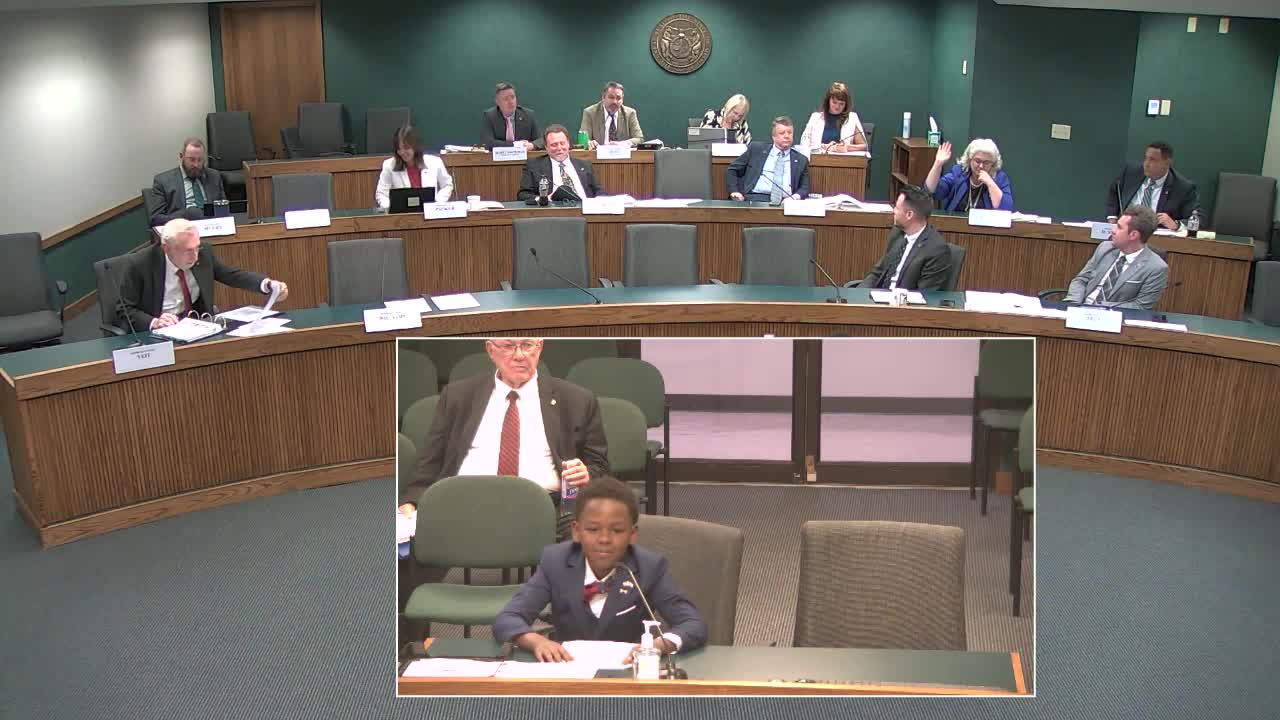
House Bill 39 would bar employers from firing employees solely because a locked, concealed firearm is stored in the employee's vehicle on employer property while the employee is arriving to or leaving from work, sponsor Hardy Billington told the Missouri House General Laws Committee.
Representative Hardy Billington introduced House Bill 39 to the Missouri House Committee on General Laws, saying the bill would prohibit employers from discharging an employee solely because the employee has a firearm stored in a locked vehicle on employer property while arriving at or leaving from work or while conducting work‑related activities.
"This bill is about responsible law‑abiding people ... set the minimum while without fear of losing livelihood," Billington said in the committee hearing. He and supporters described scenarios in which employees felt vulnerable when required to park offsite or otherwise be unable to keep a locked firearm with them during travel to and from work.
Committee members pressed the sponsor on scope and unintended consequences. Representative Engel asked whether the bill would override employers' property rights, noting many employers set policies, and whether the measure would allow firearms in employee vehicles at places such as daycares, hospitals or schools. Billington said the bill is intended to cover locked firearms in vehicles and to exclude felons; he did not identify statutory exceptions for sensitive employer types in the language on the table.
Several committee members raised questions about civil‑liability language in the bill. The draft states an employer "shall not be civilly liable" for injuries or damages resulting from the use of firearms stored in compliance with the section; members asked how that immunity would apply and whether it was appropriate to preempt standard civil remedies. Representative Dean queried how the measure would interact with at‑will employment and whether employees could simply seek other work rather than rely on statutory protection.
Witnesses who testified in favor included advocates and the state public advocate. Susan Myers, who said she volunteers with Women for Gun Rights, argued women are a growing demographic of firearm owners and that some women are being disarmed while off the clock by employer policies that restrict firearms on parking premises. Arnie C. ACDinos said the bill does not apply to felons and argued that vehicle storage of firearms is treated differently in other states such as Illinois.
No vote was taken; committee members suggested drafting clarifications on scope (for example, whether the rule applies during company‑sponsored events, in parking areas used by visitors, or while employees are not on the clock) and on the proposed civil‑liability language. Sponsors and staff said they would consider amendments.
Ending: The hearing highlighted tensions between employer property‑management rights and worker safety concerns. Members asked for clearer statutory definitions and for precise liability language; the bill remains in committee while staff and the sponsor consider revisions.