Get Full Government Meeting Transcripts, Videos, & Alerts Forever!
Get email alerts on the Underground Facility Law 811 topic
No spam. Unsubscribe anytime.
Committee hears bill to update Missouri 811 law; sponsors, contractors back tracer-wire requirement
Summary
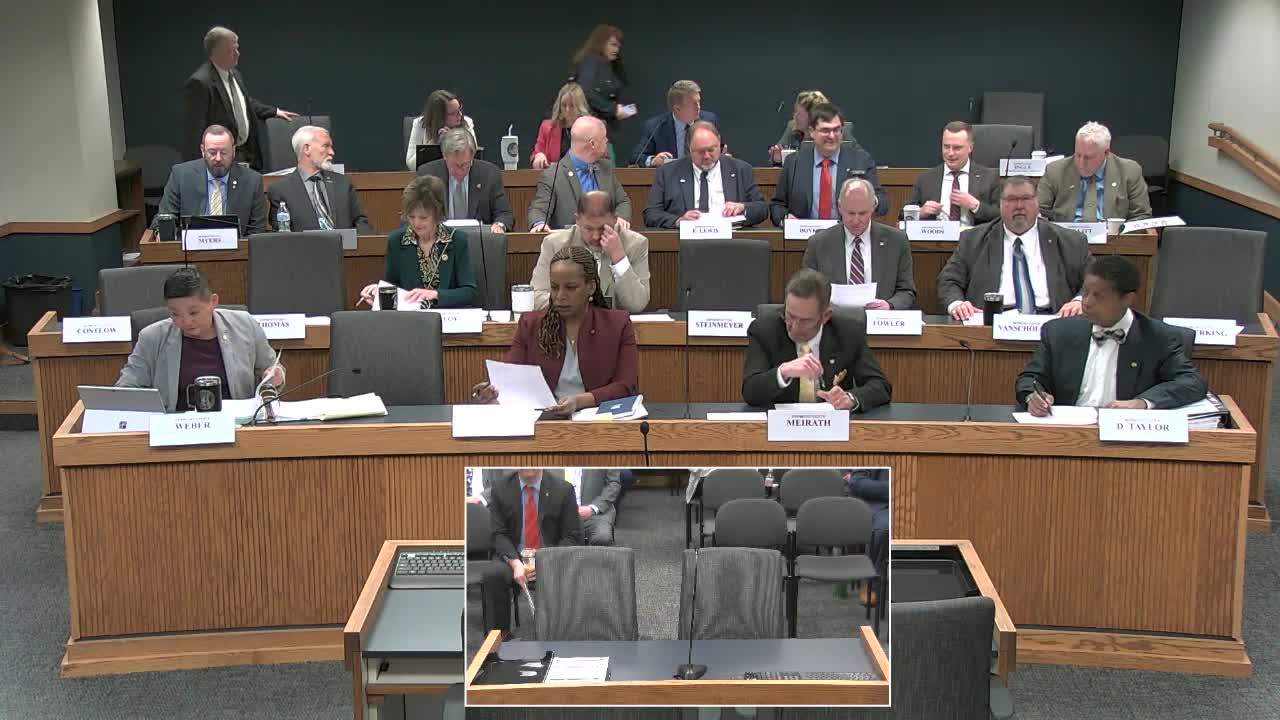
The Missouri House Committee on Utilities heard testimony on House Bill 752, a proposal to update the state’s underground facility damage‑prevention statute (commonly known as 811).
The Missouri House Committee on Utilities heard testimony on House Bill 752, a proposal to update the state’s underground facility damage‑prevention statute (commonly known as 811). Representative Josh Herbert (R., District 8), speaking as sponsor, described the bill as “a long overdue update on Missouri’s underground facility law” and said it would require tracer wire on most new underground installations, add seats for excavators on the 811 board and change some liability rules for strikes of mismarked lines.
Supporters told the committee the measure is intended to reduce repair costs and improve worker and public safety. Ed Tweedhaus, vice president of Tweedhaus Excavating and representing the Associated General Contractors of Missouri, said Missouri’s current system has lagged industry practice and cited industry estimates that the state suffers large annual losses from struck lines. “We support HB 752 because we believe it will accomplish two things, reducing waste and increasing safety,” Tweedhaus said.
Randy Norden, executive director of Missouri 811, described how the notification center operates and how the industry currently tracks underground facilities. Norden said the 811 center handles about 1.5 million locate requests per year and that a single locate request typically triggers multiple notifications to utilities. He said the center is funded by a per‑notification fee of $1.35 and that utilities supply mapping and marking information; the center does not itself create or verify precise utility maps. “The mission statement of Missouri 811 is to enhance public safety and reduce damages to underground facilities,” Norden said.
Committee members asked how the bill would apply to private‑service lines, depth exemptions and enforcement. Herbert and witnesses said the bill as written would apply broadly to newly installed lines but that a committee substitute expected next week will add carve‑outs — for example, for deep sewer lines — and other negotiated changes. Herbert said the substitute would be the product of ongoing negotiations and is intended to refine several provisions in the current text.
Witnesses explained technical elements the bill would promote. Tweedhaus and Norden said the bill aligns Missouri law with National Common Ground Alliance best practices by authorizing additional detection methods such as tracer wire and electronic white‑lining, and by giving excavators and locators a voting role on the 811 board. Norden described existing board bylaws as providing up to 15 voting utility members and advisory seats for excavators and locators; the bill would convert some advisory representation into formal voting seats.
Committee members also pressed on liability and enforcement. Herbert and Tweedhaus said current law makes excavators liable for struck lines but that HB 752 would limit liability where a line was mismarked; the sponsor and witnesses said the substitute will include exceptions if an excavator acts carelessly. Norden and Tweedhaus explained that when a line is struck the excavator must file a damage ticket and utilities may pursue civil remedies or fines under existing law.
Support for the bill was expressed by the Associated General Contractors of Missouri, Missouri 811 and the American Council of Engineering Companies in Missouri. No formal vote was taken; the committee hearing concluded after testimony and questions, and sponsors told members they expected a substitute with negotiated changes to be filed next week.