Get Full Government Meeting Transcripts, Videos, & Alerts Forever!
Get email alerts on the Workplace Violence Healthcare topic
No spam. Unsubscribe anytime.
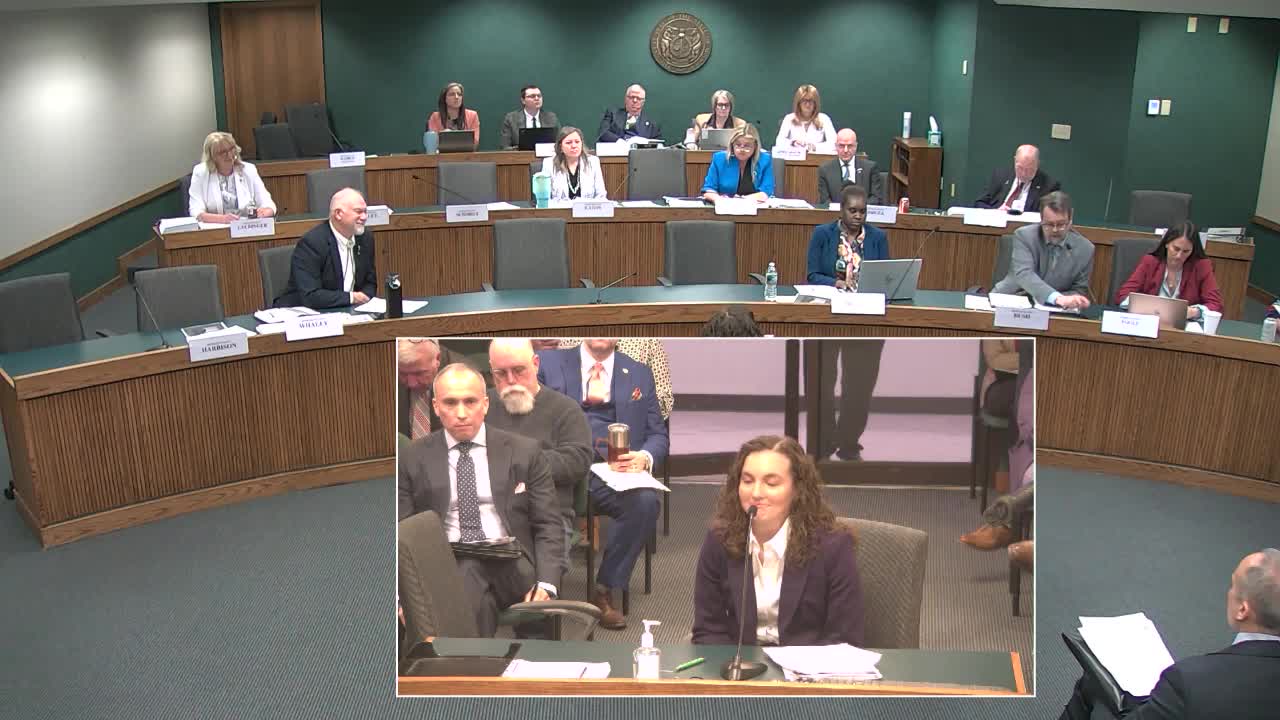
Committee takes testimony on bill to require warning signs against assaulting health workers
Summary
Representative Phelps presented House Bill 12 13 to require printed signage in health-care facilities warning that assaulting health-care professionals is a criminal offense. Hospitals and health-care associations testified in support but urged wording and scope changes; committee members raised EMTALA and scope concerns.
The House Committee on Health and Mental Health heard House Bill 12 13, sponsored by Representative Phelps, which would require health-care facilities to post a printed sign stating that assaulting a health-care professional while the worker is performing official duties is a serious crime.
Representative Phelps said the bill is a "common sense first step" to protect health-care workers and cited published surveys and academic research to describe the frequency of workplace violence in emergency departments. He described the sign text as: "Warning, assaulting a healthcare professional who is engaged in the performance of his or her official duties, including striking a healthcare professional with any body fluid is a serious crime that may be punishable as a class..." (language in the transcript ends mid-sentence).
Committee members raised legal and practical questions. Representative Fogel asked whether hospitals could already post such signs voluntarily and whether a state statute might conflict with federal EMTALA rules. Representative Phelps said he had consulted hospitals and that some hospital counsel initially worried about EMTALA, but that at least one hospital CEO reviewed the bill language and offered support. Phelps said his original intent was signage in ER and obstetrics waiting rooms but that he was open to narrower or different placement language.
Health-care groups and hospital systems largely testified in support but recommended edits. Sarah Schleimer (representing the Missouri College of Emergency Physicians and the American College of Obstetricians and Gynecologists) said sponsors were pursuing an approach intended to avoid creating an EMTALA conflict and described the bill as a starting point for additional measures to protect workers. Rob Monsis of the Missouri Hospital Association recommended removing the final clause that specifies a class of misdemeanor and instead stopping the sign language after the words "serious crime," noting there are already statutes that provide varying penalties for assault.
Other supporters who testified included representatives of SSM Health, CoxHealth and BJC HealthCare, the Missouri State Medical Association and individual clinicians. An emergency nurse who testified, David Barnes, described repeated on-the-job assaults and urged support for measures to protect staff.
Members suggested clarifications: narrowing the statutory definition of which "health-care facilities" must post signs, specifying the placement and size of signage, and removing or changing the phrase that limits the offense to a class A misdemeanor so the sign does not understate existing penalties. Representative Whaley asked whether the bill unintentionally limited more serious existing penalties; Monsis and Phelps said they would consider edits.
No committee vote is recorded in the transcript. The hearing record shows broad support from hospitals and clinical associations with recommended technical edits and requests to tighten location and wording.