Get Full Government Meeting Transcripts, Videos, & Alerts Forever!
Get email alerts on the Professional Registration topic
No spam. Unsubscribe anytime.
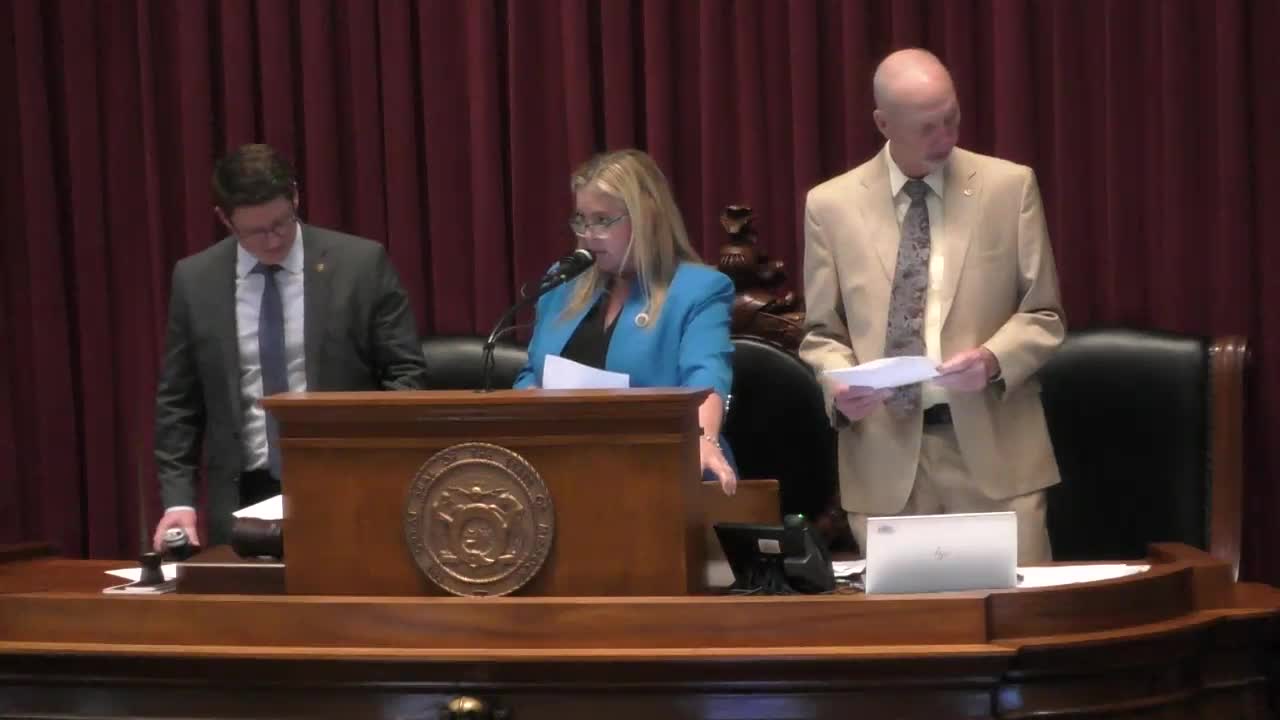
House clears bill letting social-work students begin licensure process during accreditation; large amendment bundles other professional-registration changes
Summary
The House adopted House Committee Substitute for House Bill 2 68, which allows graduates of new MSW programs to sit for licensure and begin supervised hours while programs pursue full accreditation; a large floor amendment bundled additional professional-registration updates into the bill.
The Missouri House on March 20 adopted a committee substitute for House Bill 2 68 that addresses credentialing barriers for social work education and adds a package of related professional-registration provisions.
The central change in the sponsor’s bill, offered by the lady from Buchanan, allows graduates of new master’s-level social-work programs that are in the accreditation pipeline to sit for the licensing exam and begin the required 3,000 hours of supervised experience while the program completes full accreditation. The sponsor framed this as a fix to a “chicken-or-egg” problem: programs cannot reach accreditation without students, and students cannot begin licensure steps while programs are waiting for accreditation.
On the floor the sponsor accepted a broad amendment (described as a 62-page package) adding several other professional-registration bills to the measure. Those additions include technical updates for funeral directors and embalmers, chiropractor and massage therapist emergency suspension authority, clinical fellowship provisions for speech‑language pathologists, dietitian licensure language including a compact, reciprocity for spouses of law enforcement officers, updates to dentistry law and criminal-compliance provisions. The amendment handler and the sponsor said most of the incorporated bills had unanimous or strong committee support; some members objected to the size of the omnibus amendment and raised single‑subject and fiscal-note concerns.
Supporters urged the House to adopt the package to improve licensure pathways and streamline professional-registration statutes; critics warned that large omnibus floor amendments reduce transparency and make it harder for members to vet fiscal impacts. The House adopted the amendment and the committee substitute and ordered the bill perfected and printed.