Get Full Government Meeting Transcripts, Videos, & Alerts Forever!
Get email alerts on the Regional Sports Complexes topic
No spam. Unsubscribe anytime.
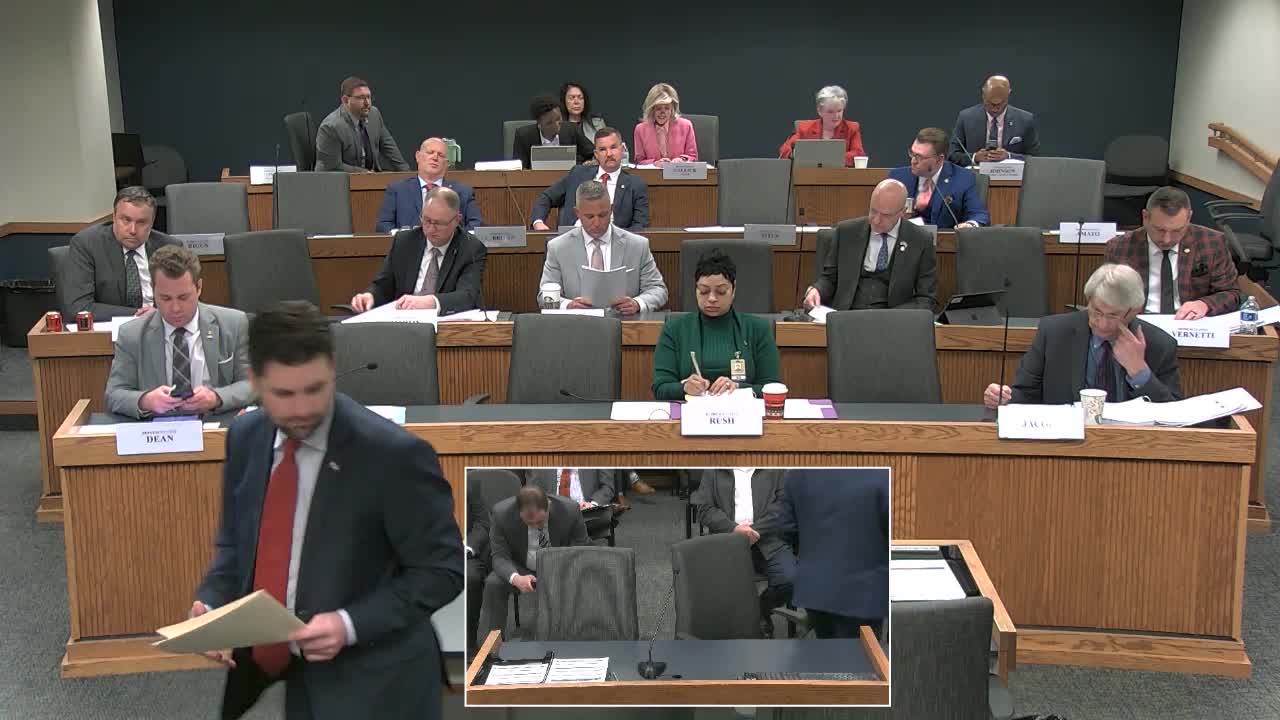
Committee hears testimony on bill to authorize regional sports-complex incentives for St. Charles County; supporters cite economic impact, opponents press for透明
Summary
House Bill 12 29 would authorize the Department of Economic Development director to approve up to 50% of new state sales taxes generated by a project for up to 20 years, subject to appropriation, with a $10 million statewide annual cap and a $5 million cap per project; committee heard proponent testimony and questions but took no vote.
The Economic Development Committee heard testimony on House Bill 12 29, a bill to authorize a program to encourage development of regional sports complexes (as presented, the measure would apply only to St. Charles County under current statute because it is the only county with a sports authority configured under existing law). Proponents described the bill as a tool to attract regional and national tournaments and related private investment; critics and one public advocate urged stronger transparency and auditing safeguards before funds are committed.
Sponsor and proponents described how the program would work: a developer could apply to the Department of Economic Development director for up to 50% of the incremental state sales tax generated by the project for up to 20 years, the sponsor said. The sponsor noted the award "does not have to be awarded" and "will be subject to appropriation and approval by the director of economic development." The sponsor also said the program would be limited by a statewide appropriation cap of $10,000,000 per year and a per-project cap of $5,000,000, and that the program is intended to help large projects secure private investment without overburdening taxpayers.
Robert Gennis of the Saint Charles County Convention and Sports Facilities Authority testified in favor, saying the authority had a successful convention-center project previously and sought to duplicate that success with a new sports complex. Gennis said the planned campus would be more than 100 acres and include indoor and outdoor facilities, hotels and retail. He told the committee the program is "20 years, and there is a, $10,000,000 cap, per year throughout the state and 5,000,000 per project," and that the program would be subject to annual appropriation by the General Assembly.
Economics witness Steve Powell (Destination Services) presented research his firm conducted, describing surveys of sporting event managers and participants and projecting economic impacts. Powell told the committee his modeling estimated about 300,000 additional visitors annually to St. Charles County and a projected direct economic impact of about $153,120,000 per year from the facility, with additional sales tax estimated at roughly $2,000,000 to the county and $6,400,000 to the state (figures presented as projections from Powell’s research). Powell and Gennis both said private investment and ancillary development (hotels, retail, housing, apartments) would be expected to follow the facility.
Former legislator Fred Dyer and other local supporters described the long-term tourism and tax benefits the convention-sports authority has produced and urged committee approval. State Public Advocate Arnie C. Dynoff testified in support "on its face" but urged additional conditions: stronger auditing and transparency, public disclosure of consultant contracts, and assurances on return on investment and job creation. Dynoff also flagged an ongoing local dispute and court proceedings concerning ownership and control of existing convention and sports facilities in the city of St. Charles and urged clarity and transparency before awards are granted.
Committee members questioned sponsors on site availability, project budget and funding. Gennis estimated the full project budget at $120–$150 million and said the authority planned to attract private investment to cover the remainder of costs beyond program support and other public financing tools. Representative Martin asked whether a clawback provision would exist if projections fell short; the sponsor said there is currently no clawback in the bill and that the application requires disclosure of methodologies and income projections; the sponsor said he would be open to discussions about clawback language.
Representative Thompson and others cited the Kansas Lenexa model (a soccer-focused complex) as an example of successful regional sports development; committee members asked clarifying questions about which tax base the program would draw from (the sponsor said the calculation uses the general revenue portion of state sales tax, not local taxes). The hearing concluded with no recorded vote; committee chair closed the hearing and moved to the next items on the agenda.