Get Full Government Meeting Transcripts, Videos, & Alerts Forever!
Get email alerts on the Expungement Automatic Record Clearing topic
No spam. Unsubscribe anytime.
Committee approves phased automatic expungement substitute for HB 953; creates advisory committee and phased implementation timetable
Summary
The committee adopted House Committee Substitute No. 2 for House Bill 953 (expungement/record-clearing), including a phased approach to automatic expungement and creation of an advisory committee; the substitute passed committee by roll call (12 ayes, 0 nos, 1 present).
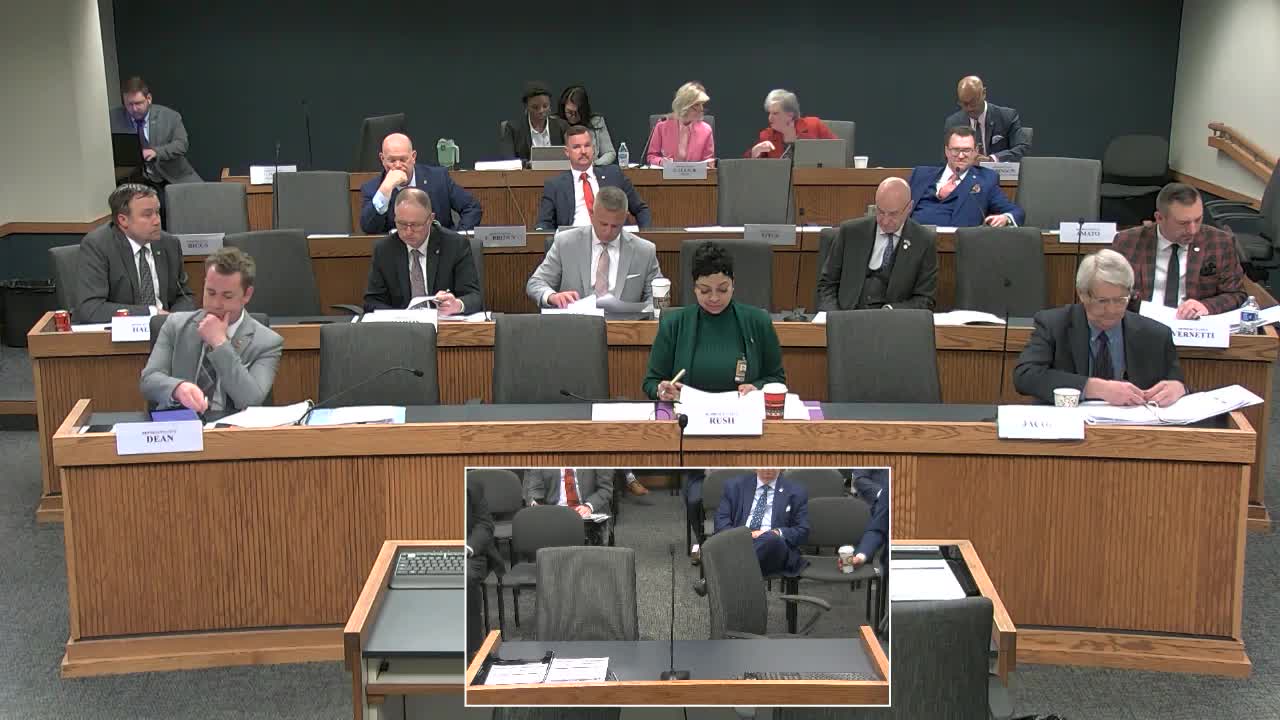
Chairman Gallick moved House Committee Substitute No. 2 for House Bill 953 be voted do pass after adopting House committee amendment 0.02h. The committee discussed provisions that would phase in automatic expungement and create an advisory committee to guide implementation; the substitute passed by roll call (12 ayes, 0 nos, 1 present).
The sponsor (identified in the transcript as the bill presenter) described the substitute as a rewrite intended to address fiscal-note concerns and to rely on an expanded IT infrastructure to reduce the need for manual record review. The sponsor said the amendment phases in automatic expungement: "By February, it'll be implemented for anyone with a conviction after August 20 eighth of 20 24" and said the goal was a person-based system rather than a case-based system (the transcript reads that phrasing). The sponsor also described new statutory language directing the Supreme Court-recommended structure: "The joint committee shall establish an advisory committee on expungement and record clearing," with an advisory report due "by September first of 20 26," per the sponsor.
Other changes described in the substitute include a streamlined petition process (the sponsor said a petitioner could still pursue petition-based expungement during the phased-in period) and limitations on certain offenses from eligibility for automatic expungement; the sponsor stated, "***** offenses aren't eligible for automatic expungement" and noted higher-value white-collar offenses over $20,000 would also be excluded. Representative Dean and Representative Johnson asked detailed questions about employer immunity language and petition streamlining. Representative Dean asked about employer immunity for repeat offenses; the sponsor said the bill’s particulars address ineligible offenses and added that discussions had included banking and insurance industry lobbyists.
The committee adopted the amendment, rolled it into House Committee Substitute No. 2 for HB 953 and then voted the substitute do pass. The roll call recorded 12 ayes, 0 nos and 1 present; the committee chair announced, "By your vote of 12 ayes, 0 nos, and 1 present, we have voted House committee substitute number 2 for House Bill 953 do pass." The transcript shows that committee debate focused on implementation timing, the phased approach to automation, creation of an advisory body, and making the petition route available during the transition period.
The bill advances out of committee; the record does not show floor scheduling or final enactment.