Get Full Government Meeting Transcripts, Videos, & Alerts Forever!
Get email alerts on the Childcare Safety topic
No spam. Unsubscribe anytime.
Missouri committee debates bill to require QR codes linking parents to childcare inspection reports
Summary
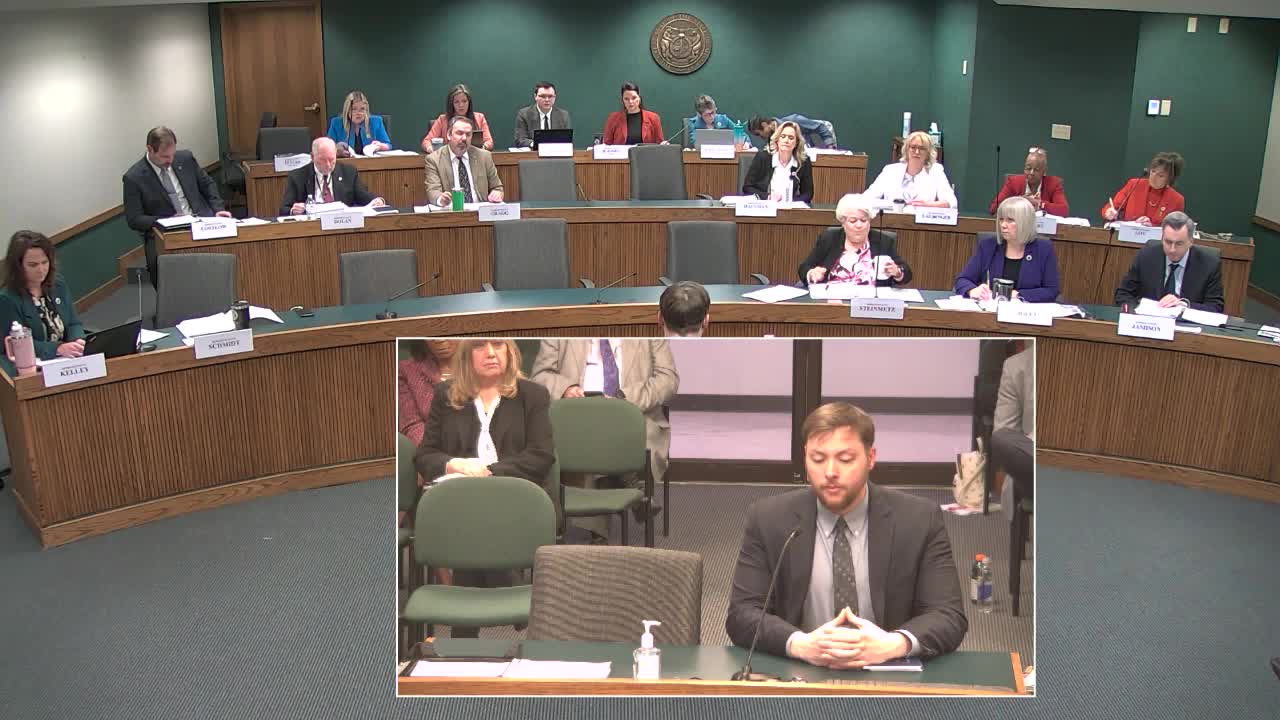
The House Committee on Children and Families held a public hearing on House Bill 637, a measure that would require childcare facilities to display a QR code linking to state inspection reports, substantiated complaints and corrective actions.
The House Committee on Children and Families held a public hearing on House Bill 637, a measure that would require childcare facilities to display a QR code linking to state inspection reports, substantiated complaints and corrective actions.
Sponsor Representative Mark Matheson said the bill is intended to make an existing state resource easier for parents to use. “Parents don’t know that [the website] exists,” Matheson told the committee, describing a searchable state database of inspections and substantiated child-endangerment complaints and saying the QR code would speed access.
The bill’s backers told the committee parents must be able to see inspection reports before leaving a child at an unfamiliar facility. Amy Robertson, a board-certified behavior analyst and Missouri First Steps provider, described multiple substantiated complaints at one facility in St. Charles County in 2024, including instances she said involved a missing child and humiliating treatment. “If I had only known,” Robertson said, “the families in that facility are blissfully unaware of the fact that any of these violations exist because they don’t know that this website exists.”
State and provider witnesses and multiple lawmakers pushed back on how raw inspection lists might be interpreted. Lawmakers including Representatives Loy, Prouty and Schmidt warned that inspection reports mix truly dangerous incidents with minor or technical violations — examples cited to the committee included a coat hook spacing finding and a cracked tile — and urged the committee to avoid disadvantaging small-business providers. “If parents are checking this section, maybe we need to give it all a level,” Representative Loy said, proposing a severity scale so parents could quickly see which items indicate immediate safety risks.
Perry Goral, chief of governmental relations for the Department of Health and Senior Services, told the committee the site already exists at healthapps.dhss.gov and that records go back at least to 2013 for some facilities. Goral said the fiscal impact of the bill as written is limited because it would simply require creation and display of a QR code that links to the existing site; he said the department’s office of childhood would administer the placard and suggested technical fixes to make the resource easier to find.
Committee members and providers also discussed implementation details that could be handled in rulemaking or a committee subcommittee: whether the Office of Childhood or facilities would be responsible for producing the placard, how far back reports should be shown, whether facilities must notify enrolled families of serious incidents, and whether inspection items should be categorized by severity. Representative Schmidt and others urged quick follow-up work to reconcile accuracy concerns with the goal of making the information accessible.
No formal action on the bill was taken during the hearing. Committee members said they expect further discussions with the Office of Childhood and the Department of Health and Senior Services and indicated willingness to pursue amendments or a committee sub to clarify categories and responsibilities before any rulemaking or statutory change is finalized.
The committee concluded public testimony and moved into executive session later in the meeting.