Get AI Briefings, Transcripts & Alerts on Local & National Government Meetings — Forever.
Proposal to create Missouri Bitcoin reserve draws support and opposition at hearing
Summary
Representative Ben Keithley introduced HB 1217 to create an optional Bitcoin strategic reserve fund under the state treasurer; supporters described it as a hedge and optional investment vehicle, while environmental advocates and the Sierra Club opposed the measure citing proof‑of‑work energy and water impacts and concerns about taxpayer exposure.
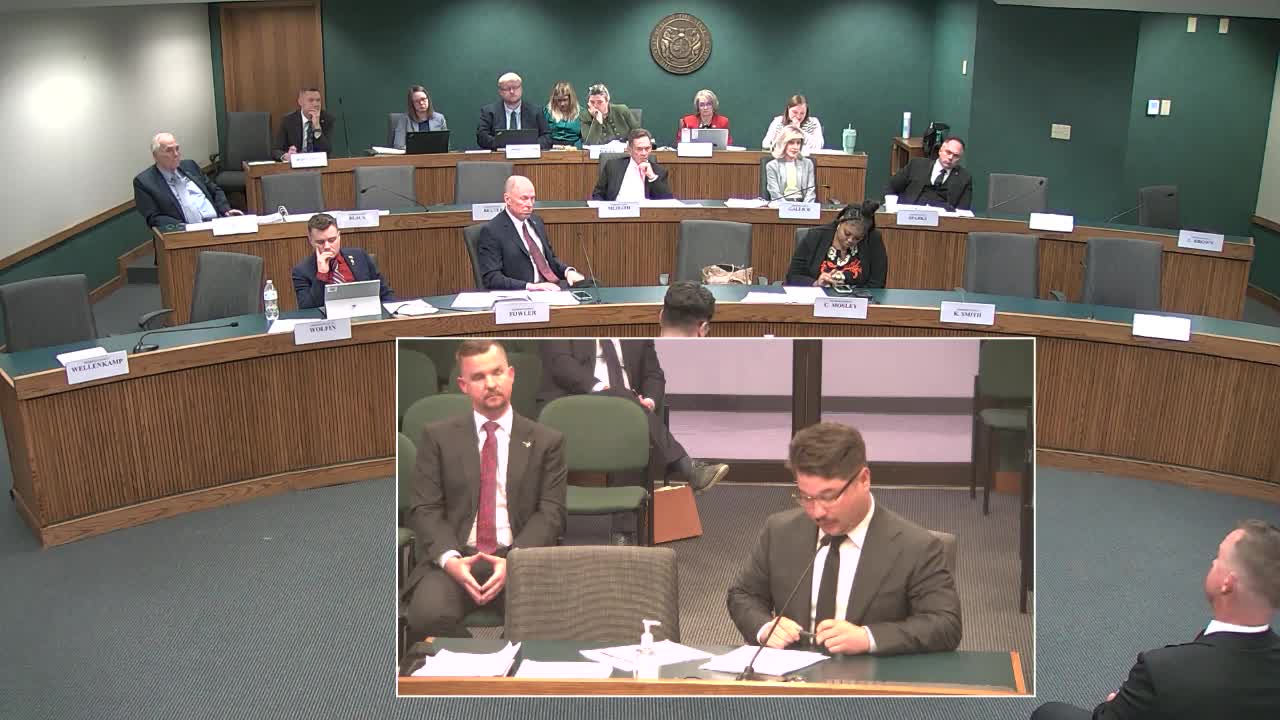
Representative Ben Keithley, District 101, introduced House Bill 1217 proposing a Missouri Bitcoin Strategic Reserve Fund administered by the state treasurer. Under the bill as presented, the fund would be optional, could receive legislative appropriations or donations (including in cryptocurrency), and could accept taxes or fees paid in cryptocurrency with conversion and transaction costs handled per statute or rules.
Keithley said the fund would provide the state another tool to hedge against inflation, diversify investment portfolios and allow Missouri to hold and use cryptocurrency in a controlled way. He told the committee that the treasurer and the legislature would retain discretion over whether and how monies are invested in the fund and that accepted cryptocurrency could be converted and managed under custodial arrangements.
Opposition testimony came from Peter Schneeberger of the Sierra Club Missouri chapter, who told the committee the state should not create a Bitcoin reserve. Schneeberger argued proof‑of‑work cryptocurrencies like bitcoin consume large amounts of electricity and water, produce substantial greenhouse‑gas emissions and cause thermal pollution; he described the environmental and public‑policy risks and called further state support for Bitcoin “a giveaway to Silicon Valley billionaires.”
Committee members questioned how the fund would be capitalized and whether the treasurer would be required to invest state monies in cryptocurrency. Representative Walsh Moore expressed hesitation about state investment in volatile assets; Keithley responded that the fund is optional and that funds would be invested at the treasurer’s discretion and that legislative action would be required to appropriate General Revenue to the fund.
No committee vote was taken. The hearing highlighted competing views: sponsors framed HB 1217 as an optional financial tool for diversification, while opponents described environmental costs and financial‑risk concerns that, in their view, make state backing inappropriate.