Get Full Government Meeting Transcripts, Videos, & Alerts Forever!
Get email alerts on the Healthcare Sales Tax Exemption topic
No spam. Unsubscribe anytime.
Committee hears bill to expand Missouri sales-tax exemption to modern durable medical equipment
Summary
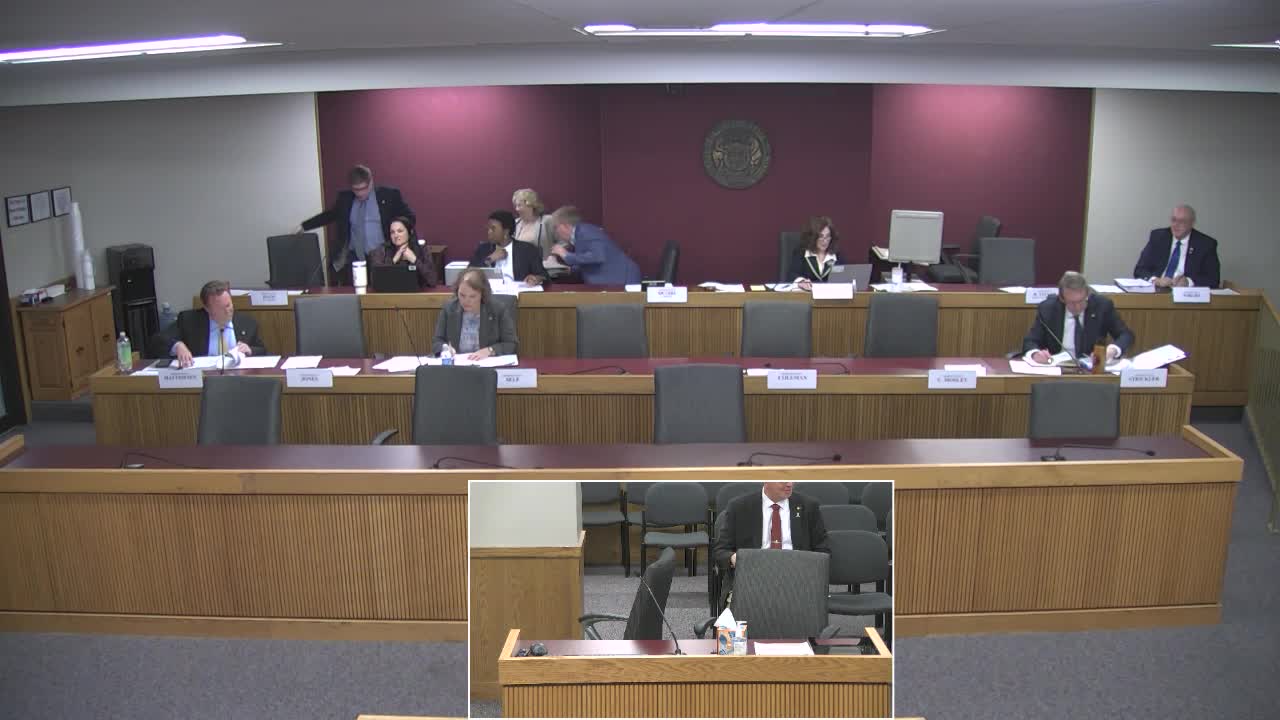
Representative Mike McGurl told the House Ways and Means Committee that House Bill 653 would expand Missouri’s sales-tax exemption for durable medical equipment to include newer devices such as portable neurostimulation units used by some cancer patients.
Representative Mike McGurl presented House Bill 653 to the Ways and Means Committee, saying the measure would extend the state's existing sales-tax exemption for durable medical equipment (DME) to newer devices developed after the 1970–1980 regulatory frame. "What it does is people with certain, particularly cancer treatments, brain cancer, this device helps alleviate some of their pain or to be able to function in their daily life," McGurl said, describing portable devices and other modern medical equipment that suppliers and patients treat as DME. "This bill ... will alleviate the sales tax on that equipment just like any other durable medical equipment."
Ray McCarty, president of Associated Industries of Missouri, testified in support and described a device used by some patients with inoperable brain tumors as portable, skull‑mounted electrodes that "adds approximately 7 months to these, terminally ill cancer patients' lives." McCarty traced the dispute to statutory language that limits the exemption to items covered by the Medicare program as of about 1980; he said stakeholders and earlier federal guidance showed DME definitions dating back to the 1970s. "Durable medical equipment has been defined as including these devices since at least 1972," he told the committee.
Zach Wyatt, legislative director for the Missouri Department of Revenue, said the department supports the bill and that the fiscal note used conservative patient estimates because exact counts were not available. Committee members pressed on the fiscal estimate and which devices and accessories would qualify; McCarty and McGurl said qualifying items would be those provided through DME suppliers and those that meet longstanding federal definitions (reasonable, necessary, durable and not typically used absent illness). The hearing record shows no committee vote and no opposition witnesses; the Department of Revenue registered support on the record.