Get Full Government Meeting Transcripts, Videos, & Alerts Forever!
Get email alerts on the Victims Restitution topic
No spam. Unsubscribe anytime.
Restitution overhaul advances after debate over victims’ rights and collectability
Summary
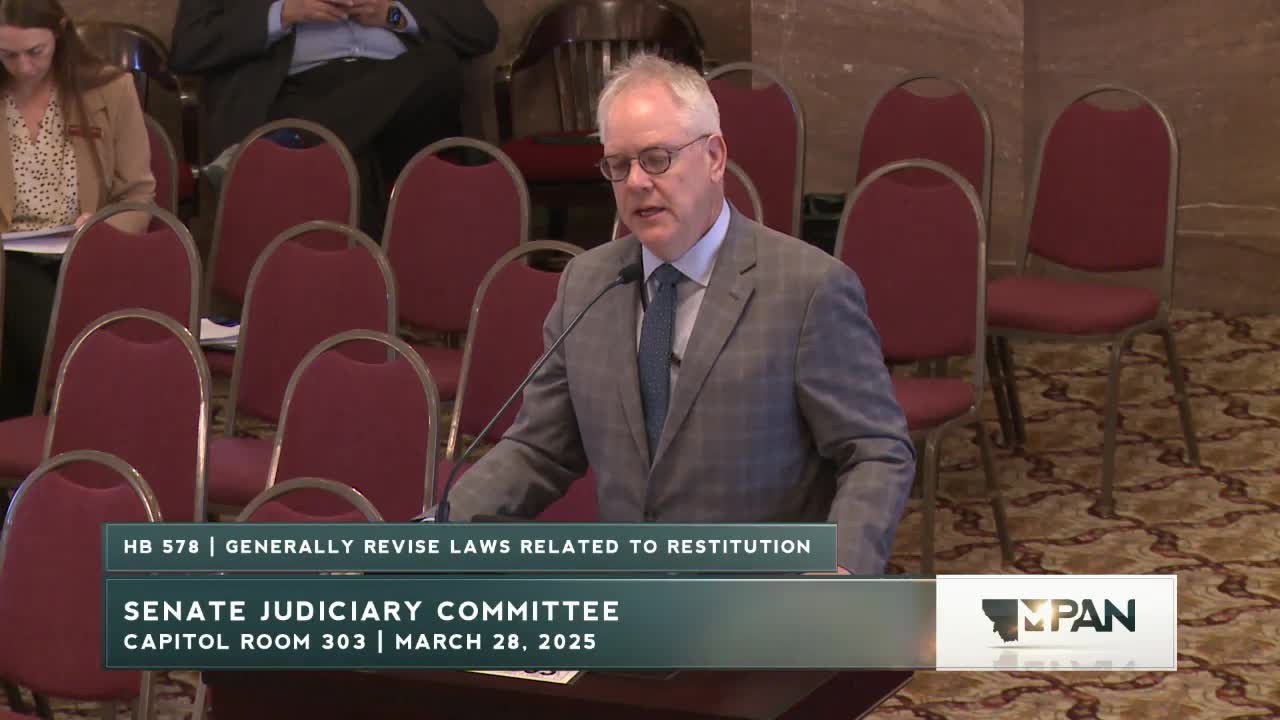
The Senate Judiciary Committee voted to concur on House Bill 5 78, which removes provisions allowing courts to limit restitution at sentencing based on an offender’s present ability to pay, in a move supporters described as restoring victims’ rights.
Rep. Bill Mercer told the Senate Judiciary Committee House Bill 5 78 would reverse State v. Lodoll and related precedents by removing language that allows courts to limit restitution at sentencing based on an offender’s present financial resources. The sponsor said the Legislature had intended that restitution orders survive sentencing and that offenders should remain obligated to make victims whole over time.
Brad Feldheim, representing the Attorney General’s Office and the Department of Justice, testified the Supreme Court substituted its own restitution process for the Legislature’s intent and that the bill is necessary to restore statutory direction. He described the Lodoll decision as "problematic" and said it elevated defendants’ interests over victims'.
Opponents included the ACLU of Montana, researchers who study court debt, and Catalyst Montana (legal‑aid‑oriented policy group). They warned that removing ability‑to‑pay considerations could increase uncollectible restitution, create long‑term debt burdens that harm rehabilitation and victims, and that current administrative systems (including the statewide payment distribution software) sometimes direct only part of payments to victims.
Nicole Gomez of Catalyst Montana noted that local courts’ payment‑distribution systems can split payments (for example, restitution vs. fees) and that administrative changes might increase the share victims receive without removing judicial flexibility. Leah Nelson, a researcher, recommended studying collection practices and court payment systems before changing judicial discretion.
After debate, the committee voted to concur on House Bill 5 78. The sponsor said the bill preserves victims’ rights to restitution and leaves a later procedure available for defendants to petition for relief after one year.