Get Full Government Meeting Transcripts, Videos, & Alerts Forever!
Get email alerts on the Cryptocurrency Kiosks topic
No spam. Unsubscribe anytime.
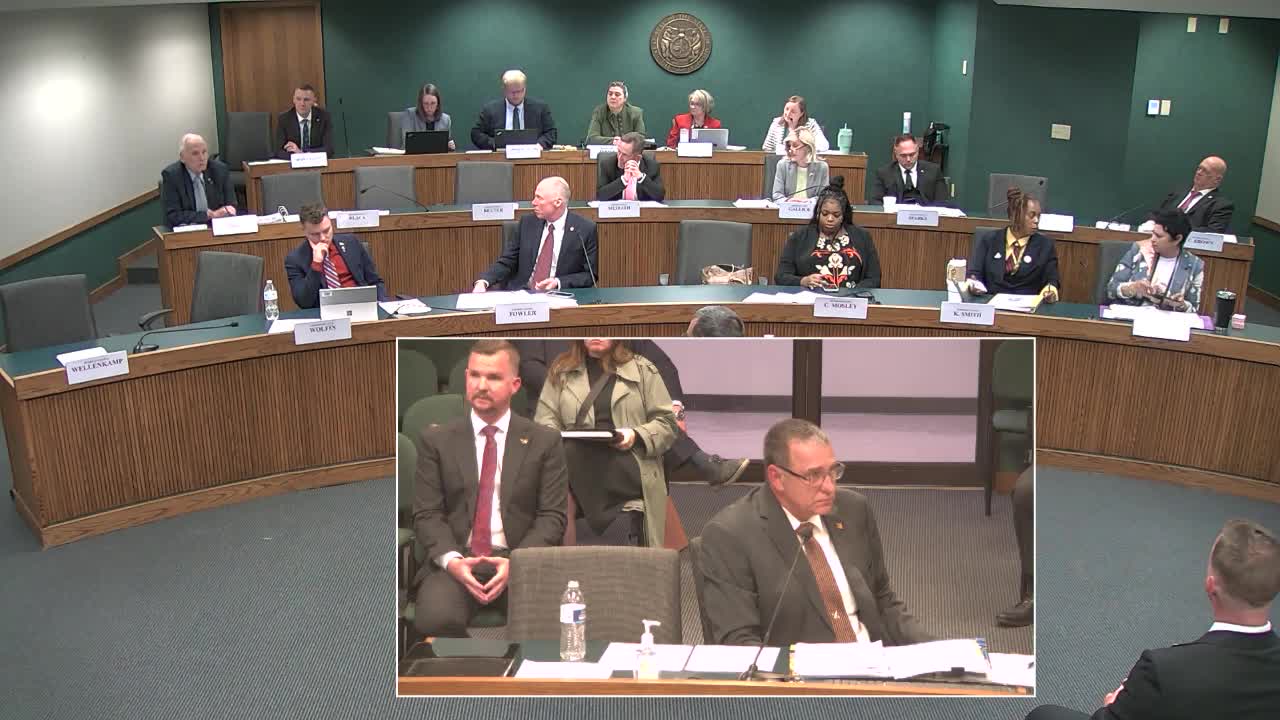
Lawmakers hear bill to license and regulate cryptocurrency kiosks in Missouri
Summary
Rep. David Castile presented HB 1428 to designate the Division of Finance as regulator of virtual-currency kiosks, requiring licensure, visible fee disclosures, blockchain-wallet screening, and live customer service; CoinFlip's general counsel testified in favor, citing federal Anti‑Money‑Laundering obligations and state licensing gaps.
Representative David Castile presented House Bill 1428, the "Virtual Currency Kiosk Consumer Protection Act," which would require licensure for operators of virtual‑currency kiosks, require clear fee and scam disclosures on machines, mandate blockchain‑wallet screening to block high‑risk addresses, and require live customer service for kiosk transactions.
Castile told the committee the bill aims to protect consumers who use cash to buy or sell major cryptocurrencies at kiosks, and that Missouri currently lacks licensing or regulatory standards specific to those machines. He said the bill would designate the state Division of Finance as the regulator and require robust consumer protections.
Larry Lipka, general counsel for CoinFlip, testified in support. Lipka said CoinFlip operates about 100 machines in Missouri and a fleet of roughly 6,000 kiosks worldwide. He told lawmakers that while federal laws — including the USA PATRIOT Act and the Bank Secrecy Act — already apply to kiosk operators, Missouri’s financial regulator has not treated virtual‑currency kiosk operators as money transmitters and that a state licensing regime would give Missouri a mechanism to vet operators and protect consumers.
Lipka described practices he said legitimate kiosk operators employ: identity verification for certain transactions, OFAC sanctions checks at the federal level, suspicious activity reporting and currency transaction reporting when thresholds are met, use of blockchain analytics to block transactions to high‑risk wallets, robust in‑house compliance programs and live customer service to halt suspicious purchases. He said the industry finds live customer service effective: CoinFlip stopped about 300 transactions in a recent four‑month period after customers heeded warnings and called support.
Committee members asked about the core problem the bill aims to solve, where federal authorities stand and the relevant reporting thresholds. Castile and Lipka said federal requirements apply but do not substitute for a state licensing and oversight regime that would screen operators’ ownership and compliance programs. Lipka noted that ATM‑style kiosks operate in retail locations and that requiring license review is the state’s primary tool to screen ownership and operations.
No formal action was taken at the hearing. Committee members indicated they may refine definitions and cross‑reference federal law (including the USA PATRIOT Act and Bank Secrecy Act) and consider the appropriate state licensing framework.