Get Full Government Meeting Transcripts, Videos, & Alerts Forever!
Get email alerts on the Foreign Ownership topic
No spam. Unsubscribe anytime.
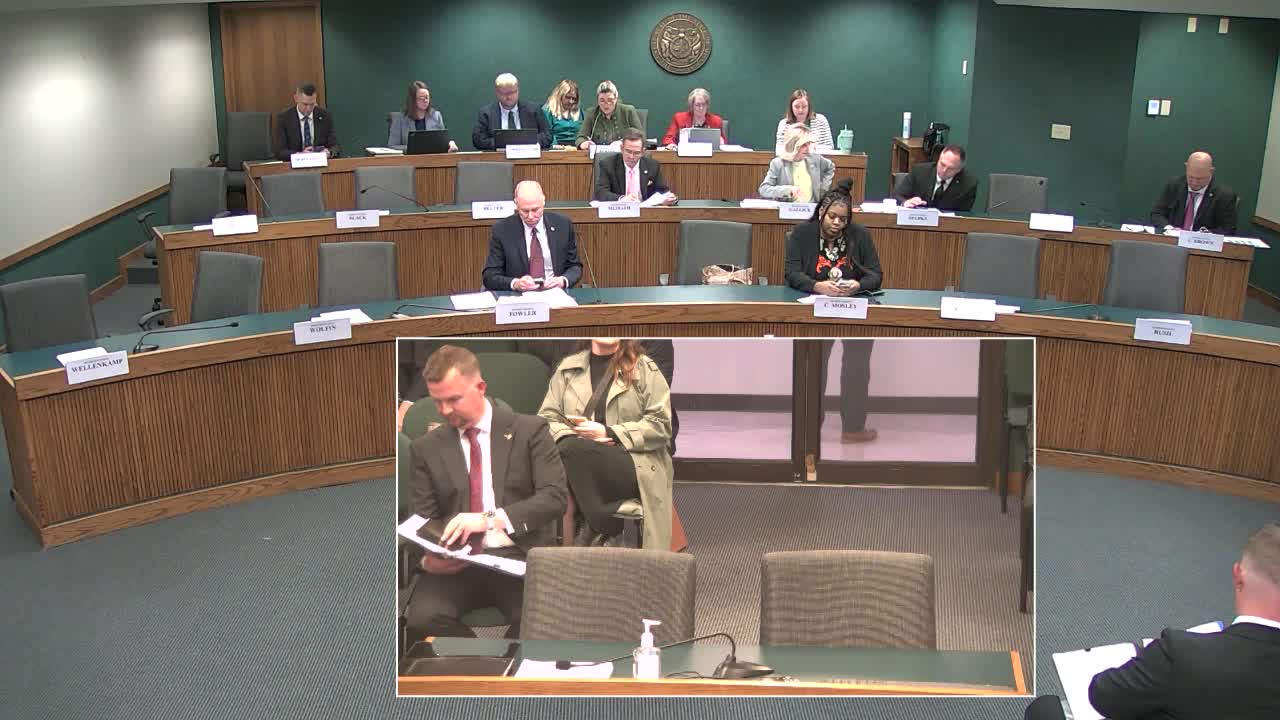
Missouri committee hears bill to limit foreign ownership of state land
Summary
Representative Bill Irwin, District 55, introduced House Bill 993 on the foreign ownership of land, saying the measure would prevent “enemies of The United States Of America” from owning land in Missouri and reduce allied ownership caps.
Representative Bill Irwin, District 55, introduced House Bill 993 on the foreign ownership of land, saying the measure would prevent “enemies of The United States Of America” from owning land in Missouri and reduce the share of state land that U.S. allies may hold from 1 percent to 0.5 percent.
The bill would add divestiture authority for the Missouri attorney general and, according to testimony, tie state land reviews to federal sanctions screening such as the Office of Foreign Assets Control (OFAC). Backers told the committee the change is aimed at national-security risks and to protect military bases and critical infrastructure in Missouri.
Why it matters: Proponents cast HB 993 as a national-security and infrastructure-protection tool that would restrict land ownership by countries and entities the federal government identifies as adversaries. Opponents and some members pressed the sponsor on how the bill would interact with federal lists, how resident aliens and allied investment would be treated, and whether the OFAC process and federal authorities would be invoked in state enforcement.
Representative Irwin said the measure is “really easy to understand” and summarized the bill’s intent: “Bottom line, no enemies of The United States Of America can own Missouri land.” He said the bill would also shrink the allowable acreage held by allied countries and provide the attorney general with authority to pursue divestiture and enforcement.
Mike Hay (witness) told the committee HB 993 specifically references 15 CFR 7.4 and the Committee on Foreign Investment in the United States’ list of adversaries. Hay named countries cited in that federal guidance, saying it “lists the enemies of The United States, China, Russia, Iran, Cuba, North Korea, the Maduro ... regime in Venezuela and the Hong Kong administrative district.” He also testified that OFAC tools are already used in Missouri banking and land-title practices and said giving the state attorney general access to OFAC screening would allow a faster, state-level check of transactions.
Committee members pressed the sponsor and witnesses on several points. Representative Washmore (asked repeatedly) urged use of OFAC rather than a static country list, arguing OFAC’s screening can reveal shell companies operating through allied countries. Representative Washmore also raised concerns about how the bill treats resident aliens and whether permanent legal residents who are nationals of listed countries could buy land; the sponsor pointed committee members to Missouri statute 442.586 and case law tied to the 14th Amendment, saying bona fide resident aliens who establish permanent residency retain the right to hold agricultural land under existing statute.
Other clarifications offered in testimony: HB 993 would require periodic reporting on certain properties, including a five‑year check of property status; the bill’s drafting draws on prior measures such as HCSHB 1957; and supporters said the state must coordinate with federal agencies, including Treasury and the State Department, to make the enforcement mechanism effective.
Supporters at the hearing included Mark Faganbaum of the Missouri Farm Bureau, who said the organization’s policy supports restricting purchases of farmland by adversarial countries. Several committee members and other supporters framed the bill as protecting Missouri agriculture, military installations and supply-chain resilience. No formal committee votes were recorded at the hearing.
The committee indicated it will continue review, including follow-up on how OFAC screening would be integrated into the bill’s enforcement and how statutory language addresses bona fide resident aliens and allied commercial investment.