Get Full Government Meeting Transcripts, Videos, & Alerts Forever!
Get email alerts on the Water Reporting Privacy topic
No spam. Unsubscribe anytime.
Bill to shield names of major agricultural water users draws sharp debate over transparency
Summary
A bill that would remove personal names, mailing addresses and contact information for major agricultural water users from public records drew support from farm groups and opposition from media and environmental advocates who said it would erode sunshine law and hamper drought response.
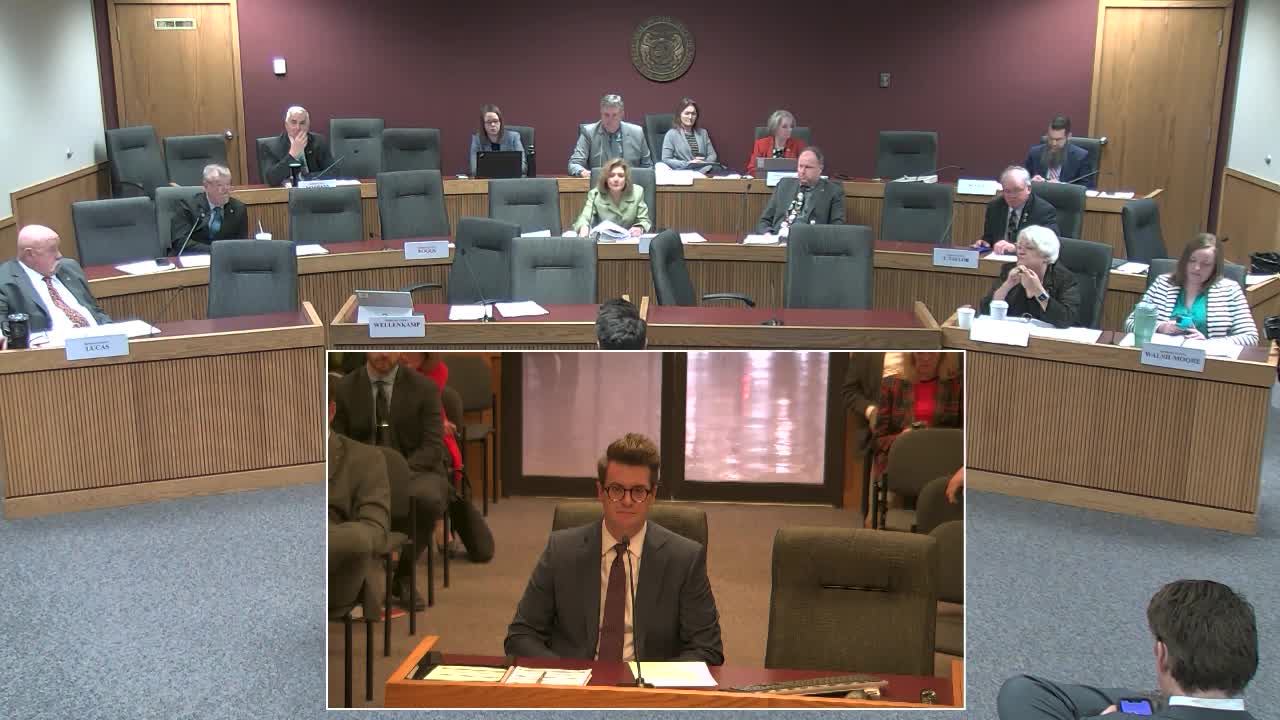
Representative Dane Deel (District 125) told the House Committee on Conservation and Natural Resources that House Bill 5-45 seeks to protect farmers’ personal information while improving reporting participation for large agricultural water users. The bill would make a filer’s name, mailing address and contact information confidential for major agricultural water users while preserving aggregate and well-location data, according to sponsor remarks in committee.
Deel said the change is intended to increase producer participation in reporting so that regulators and policymakers can get better aggregate data on water use. He told the committee that current reporting exists but that some producers decline to submit data because they do not want personal information publicly available. Representatives of Missouri Soybean, Missouri Farm Bureau, Missouri Corn Growers and other agriculture groups testified in support, saying the bill would protect farm families’ privacy while encouraging fuller reporting.
Opponents argued the amendment would weaken Missouri’s Sunshine Law and undermine public oversight of a scarce public resource. Chad Stebbins of the Missouri Press Association told the committee: “We believe it erodes Missouri's sunshine law by making important and legitimate public information a secret,” and argued that “the public has a right to know who the major water users are.” Melissa Vatterat of the Missouri Coalition for the Environment and Liberty Link Missouri’s president offered similar objections, saying neighbors and regulators need access to identify and respond to local water impacts.
Committee members pressed the sponsor on details. Representative Burton and others asked whether the change would reduce transparency needed during droughts. The sponsor replied that aggregate county-level totals and well locations would remain available and that the bill targets only the user’s personal contact information. Representative Washmore and other members asked whether the bill scope applies only to agriculture; the sponsor said the committee intends to match language that focuses the confidentiality change on agricultural users.
Supporters said the bill would encourage reporting by producers who fear harassment or unwanted publicity. A representative of community lenders and agriculture organizations said growers told them they would not report because of privacy concerns. A Missouri Farm Bureau witness said the bill is a “step in the right direction” to protect farmers’ personal information.
Opponents warned that the bill could also protect large nonagricultural users, such as data centers, if the language is not carefully limited; the press association witness noted an average data center’s water use figure and suggested the public interest in water transparency extends beyond farms.
No committee vote was recorded during the hearing. Committee members requested final statutory language and clarifications on whether entity names (LLCs) would be treated differently from individual farm owners and asked staff to refine the bill text to ensure it targets the intended subjects without unduly limiting public access.