Get Full Government Meeting Transcripts, Videos, & Alerts Forever!
Get email alerts on the Health Right To Try topic
No spam. Unsubscribe anytime.
Senate committee hears bill to license 'experimental treatment' centers under Montana's right-to-try framework
Summary
A Senate Public Health Committee hearing on Senate Bill 535 drew industry proponents who said the bill would provide regulatory clarity for experimental treatment centers and medical innovators, and medical groups who said the bill is unclear and could weaken patient protections. No vote was taken.
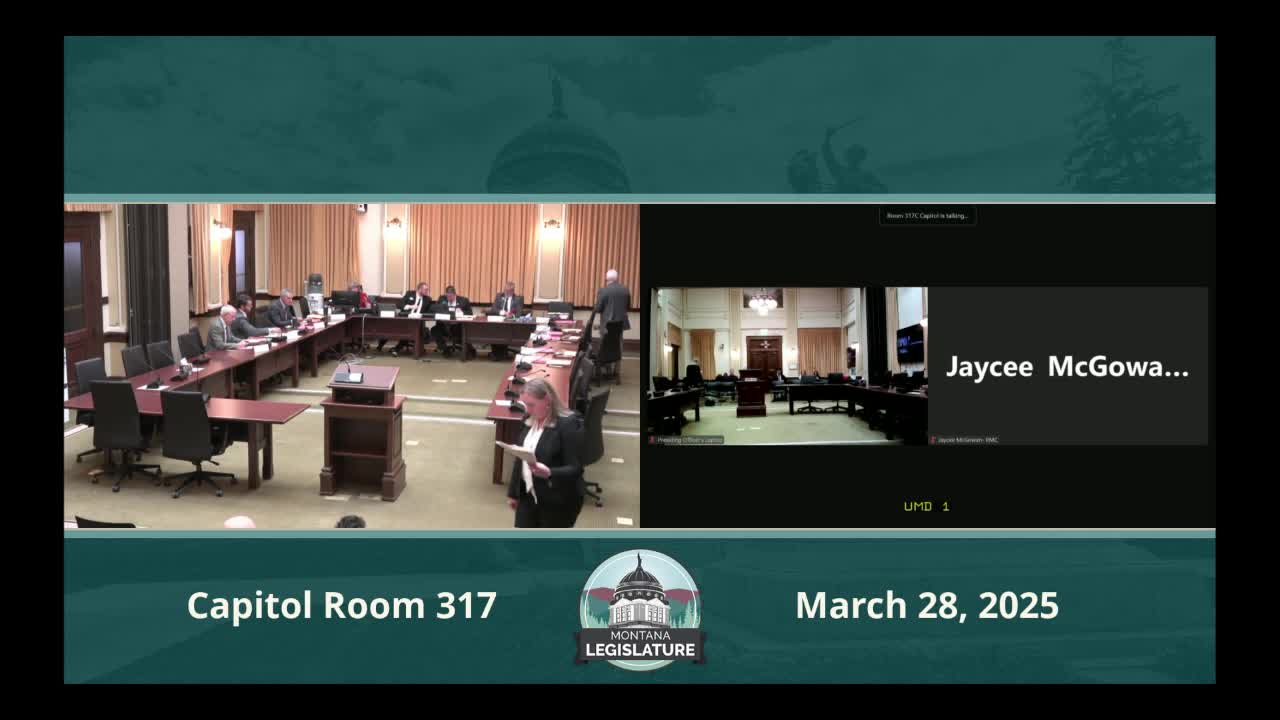
The Montana Senate Public Health Committee opened a hearing March 28 on Senate Bill 535, legislation to create a licensing and oversight framework for so-called experimental treatment centers and to clarify elements of Montana's expanded medical "right to try."
Sponsor Sen. Ken Bogner, R-Miles City, told the committee the bill builds on last session’s SB 422 and aims to remove barriers that currently deter providers and companies from offering experimental or preventive therapies in Montana.
Supporters from the longevity and biotech industries described the bill as a practical regulatory path that would allow companies and providers to operate in Montana under clear standards. Jesse Luther, appearing for the Alliance for Longevity Initiatives, summarized the bill’s main elements, including a licensing process, patient requirements, and enhanced informed-consent procedures. "Healthcare professionals want to use expanded right to try, but feel just a little more comfortable with some clarity and some operational efficiency, which this bill addresses," Luther said.
The bill would require facilities to apply for a license and pay a $10,000 application fee and a $5,000 annual renewal fee. Sections described by proponents would authorize the Department of Public Health and Human Services to adopt operational standards and safety protocols by rule; permit either Montana-licensed providers or out-of-state licensed physicians to practice under the supervision of a Montana-licensed medical director; require patients to have evaluated FDA‑approved treatments before accessing experimental ones; and require an enhanced, interactive informed-consent process rather than only written forms.
Proponents also told the committee the bill includes limited immunity for providers offering experimental treatments while preserving liability for gross negligence or willful or wanton acts. Venture investors and company founders said the statutory clarity would make Montana more attractive for early-stage biotech companies and research activity.
The Montana Medical Association’s CEO Jean Branscum opposed the bill as written, saying physicians and patient groups had not been given a clear explanation of what the measure would change and expressing concern about unintended consequences for existing clinical research and hospital-based institutional review boards. Branscum said the bill deletes language that, in her view, was consumer-friendly and that lack of licensure for some providers could limit the ability of licensing boards to investigate patient complaints. "We support medical research, but we find this bill unclear," Branscum said.
Committee members asked whether companies intended to build full-time treatment centers in Montana and whether the model was similar to other states that draw medical tourists. Proponents said the statute would make that an option and that some companies have already expressed interest in establishing operations in Montana. Sen. Bogner told the committee he was "happy to work" with members to refine the bill.
No formal committee vote or final action on SB 535 was recorded in the hearing transcript. Committee discussion continued with technical and policy questions from several senators.
The measure would change statutory definitions in the right-to-try framework, delegate operational rulemaking to DPHHS, and create a licensing structure coupled with enhanced informed consent and limited provider immunity. Supporters said these elements are intended to speed patient access to experimental therapies and to encourage industry investment; opponents said the language, as drafted, could reduce oversight and create gaps in consumer protections.
The committee’s executive action packet referenced a small sponsor amendment for cleanup language on licensure and provider definitions; sponsor representatives said they planned to offer that amendment.