Get Full Government Meeting Transcripts, Videos, & Alerts Forever!
Get email alerts on the Public Safety Mental Health topic
No spam. Unsubscribe anytime.
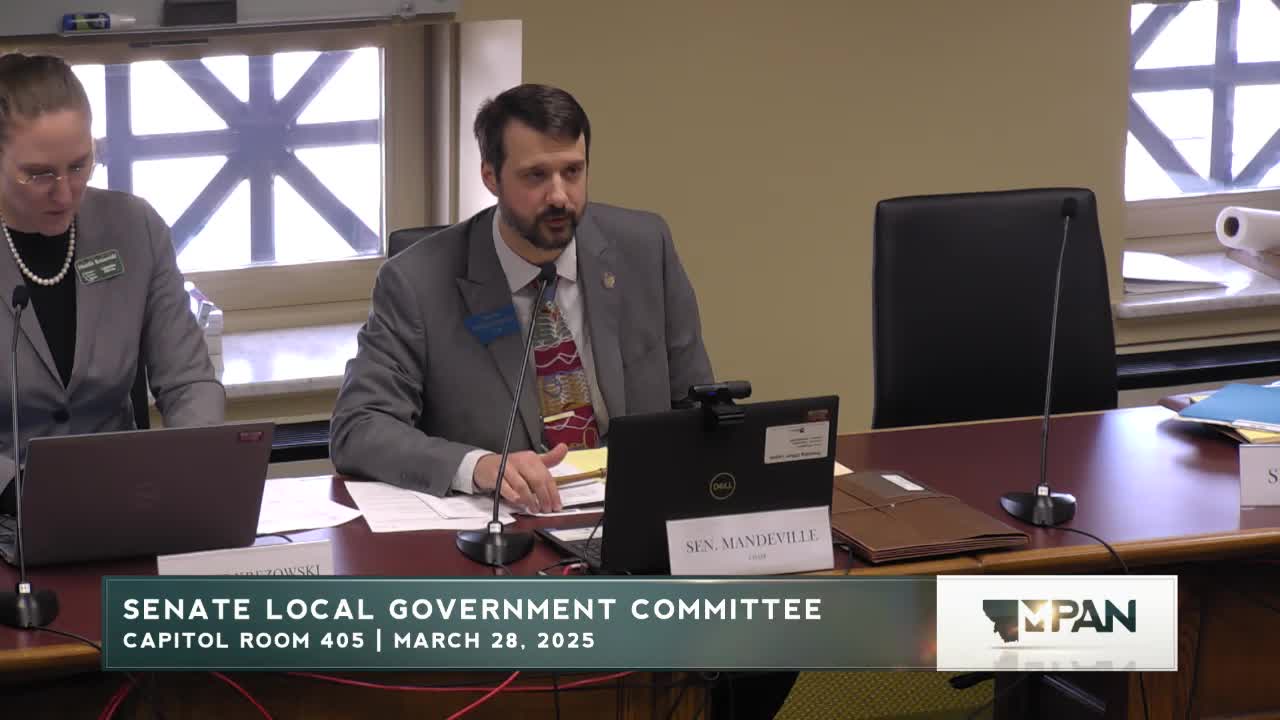
Committee hears support for HB 621 to protect confidentiality in first-responder peer support programs
Summary
Lawmakers heard testimony supporting House Bill 621, which would allow police, fire, EMS and other emergency agencies to create peer-to-peer support programs with specified confidentiality protections and limited exceptions.
Representative Steve Gist introduced House Bill 621 on behalf of first responders and agencies across Montana. The bill would authorize law enforcement, fire, EMS and other emergency-service agencies to establish peer support programs whose communications are afforded confidentiality, with narrowly drawn exceptions.
Supporters told the Senate Local Government Committee that peer support teams help first responders address cumulative stress, post-traumatic stress and other mental-health challenges. "This bill is to keep that fear from becoming some first responder's fate because they were too afraid to share what's going on with them," said Jeff Bragg of the Cascade County Sheriff's Office. Bragg and other proponents described officer-involved shootings, suicides and family breakdowns as real harms that peer support seeks to prevent.
Bill sponsor Representative Steve Gist described the measure as a baseline for peer support programs and urged the committee to advance it. "Peer to peer helps first responders stay in the game, stay employed, stay happily married, stay out of drugs, stay out of alcohol," Gist said in his closing remarks.
Witnesses from statewide organizations — including the Montana Police Protective Association, the Montana Sheriffs and Peace Officers Association and the Montana State Firefighters Association — said confidential peer-to-peer conversations encourage employees to seek help without fear of later being compelled to disclose traumatic material in court. Dan Smith of the Montana Police Protective Association and Nannette Gilbertson of the Montana Sheriffs and Peace Officers Association both testified in support.
Testimony outlined the bill's confidentiality carve-outs: conversations would not be protected when the peer-support participant has committed or plans to commit a crime or indicates intent to harm themselves or others. Proponents also emphasized that programs should permit people to use multiple peer supporters and be integrated with existing wellness and chaplaincy services.
Committee members asked few questions during the hearing. No formal vote or amendment was recorded in the transcript; the hearing closed with the sponsor offering brief remarks and the committee moving on to the next agenda item.