Get Full Government Meeting Transcripts, Videos, & Alerts Forever!
Get email alerts on the Wildfire Response topic
No spam. Unsubscribe anytime.
Bill would direct state to act sooner on fires near federal boundaries; DNRC urges clearer coordination
Summary
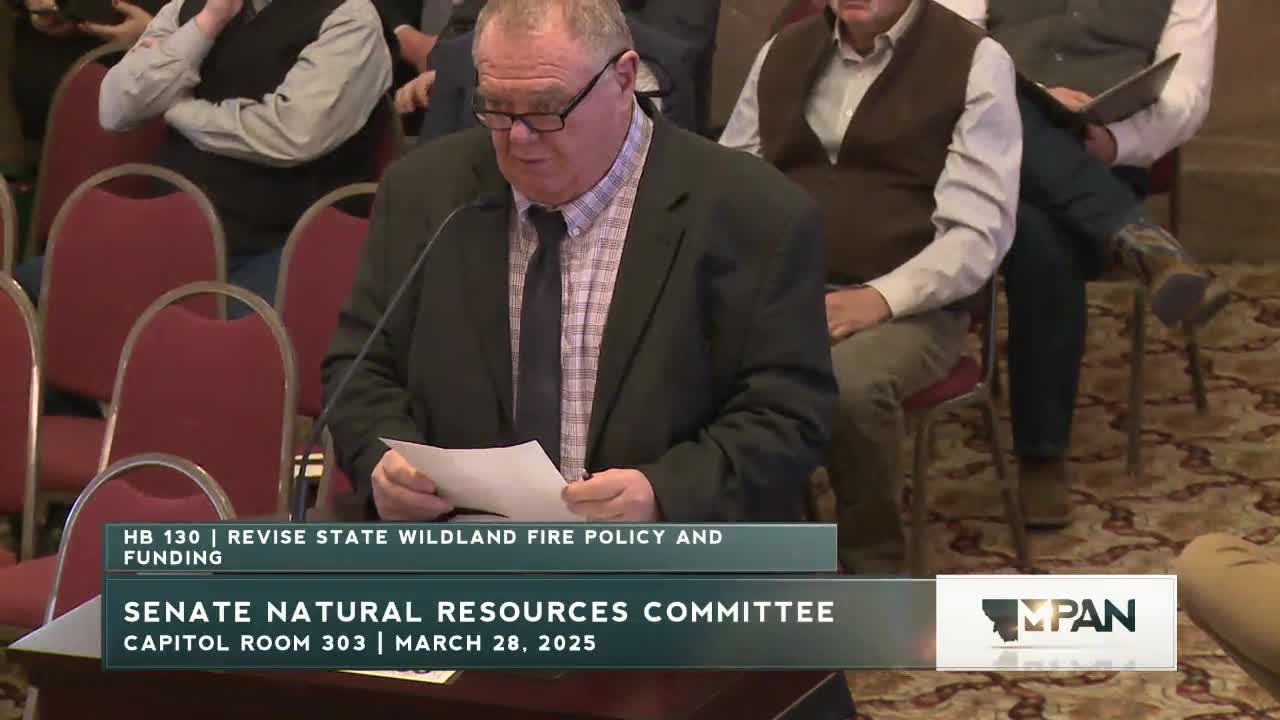
House Bill 130 directs the Department of Natural Resources and Conservation to pursue faster, coordinated initial attack on wildfires that threaten private property near federal lands. DNRC and multiple stakeholders testified in support; lawmakers questioned liability and interagency coordination.
House Bill 130 would provide legislative direction for the Department of Natural Resources and Conservation (DNRC) to take “safe and aggressive initial attack” on wildfires that threaten private property, state land and communities when federal response is ambiguous or delayed.
Sponsor Representative Lou Jones framed the proposal as a targeted tool for “boundary fires” — small fires that start near the edge of federal lands where interagency authorization can delay response. Jones said the bill’s wording was developed with agency input to allow DNRC to act more quickly in those specific circumstances.
DNRC director Amanda Kaster testified in support, emphasizing the state’s scope of responsibility and last season’s record of aggressive initial attack: “Last year, we kept 95% of fires within our jurisdiction under 10 acres or less. ... Enough is enough. Montanans are sick and tired of the smoke lingering in our air for weeks on end from fires that sit on the landscape and threaten the livelihoods… They are sick of hearing that a federal partner is ‘fully suppressing a fire’ when all that entails is sitting and monitoring the activity.”
Why it matters: Supporters said quicker action on boundary fires can protect homes, infrastructure and the state’s smoke exposure. Opponents and some committee members asked whether the state would assume liability if DNRC firefighters or contractors acting under the new direction were harmed while operating on federal land.
Key points from the hearing
- DNRC role and resources: Kaster said DNRC protects roughly 60 million acres and relies on a combination of state crews, aviation and county cooperatives. The department requested legislative clarity so it could negotiate cooperating agreements with federal partners and pursue cost recovery when the federal government bears responsibility.
- Liability and interagency agreements: Committee members pressed the agency on liability exposure if state personnel act on federal lands. DNRC and the deputy state forester emphasized the intent to coordinate closely with federal partners and noted the master cooperating agreement is due for renegotiation in 2026. The sponsor and DNRC said the bill is intended to set legislative expectations to be implemented through those agreements.
- Support from stakeholders: Testimony supporting the bill came from industry and producer groups including the Montana Logging Association, Montana Farm Bureau Federation and Montana Stockgrowers Association, who said faster suppression protects resources and reduces costs.
What the committee did: The hearing closed with sponsors and DNRC urging further work during renegotiation of interagency agreements. No committee final vote on the bill was recorded in the transcript segment provided; the hearing moved on to the next item.
Ending
Supporters said the bill is intended to provide clear legislative direction for boundary-fire response while preserving firefighter safety and coordinated agreements with federal agencies. Lawmakers asked for explicit clarification on liability and the practical steps DNRC would take to coordinate response and avoid legal exposure.