Get Full Government Meeting Transcripts, Videos, & Alerts Forever!
Get email alerts on the Voting Access topic
No spam. Unsubscribe anytime.
Bill to let disabled Montanans return ballots electronically splits election and disability groups
Summary
House Bill 488 would let voters with disabilities return voted absentee ballots using an encrypted electronic transmission approved by the Secretary of State; disability advocates urged the change as a privacy and access fix, while the Secretary of State’s elections director warned federal agencies consider electronic ballot return high risk.
Representative Julie Darling opened the hearing on House Bill 488, which would allow a disabled elector to return a voted ballot by an encrypted electronic transmission system approved by the Secretary of State and would require the Secretary of State to adopt encryption and security standards for electronic transmission systems.
Advocates with the National Federation of the Blind, independent living centers, Disability Rights Montana and other organizations described barriers blind and otherwise disabled voters face when returning absentee ballots. Jacob Krzovich of the National Federation of the Blind told the committee it can take him "approximately two hours" to travel to vote and that he lacks the same convenient absentee options used by most Montanans. Several proponent witnesses emphasized that the proposal would not be online voting — ballots would be returned electronically to election officials, printed and processed through the same local procedures used for overseas and military ballots.
County election administrators and clerks said the proposed electronic ballot return process mirrors the existing UOCAVA (Uniformed and Overseas Citizens Absentee Voting Act) return process used for military and overseas voters: counties receive an emailed or portal submission, print the ballot, run it through a resolution board and transcribe it for tabulation. Lewis and Clark County Elections Supervisor Connor Fitzpatrick told the committee those procedures already exist in many counties and urged a due‑pass recommendation.
Opponents included the Secretary of State's elections director, who said the office supports accessibility but is not confident that secure, private electronic ballot return is achievable now. Austin James testified that federal partners including CISA and NIST have concluded electronic ballot return presents high security and privacy risks; he described a recent incident in which a Washington, D.C. firm distributed a mailer with a QR code that briefly bypassed parts of the UOCAVA process and said the office tightened procedures after that event.
Verified Voting, a national nonprofit, testified in opposition and cited NIST and other risk assessments concluding electronic ballot return carries significant risks to ballot secrecy, integrity and verifiability. County election officials who testified in support said they would use the same safeguards applied to UOCAVA ballots and work with the Secretary of State on technical standards.
Definition and eligibility: HB 488 as discussed would limit use to an elector who affirms they meet the statutory definition of an individual with a disability (temporary or permanent). Witnesses said the existing electronic ballot request system was limited to voters who affirm disability under state law and that UOCAVA registrants must reapply each election cycle. Committee members raised questions about the practical verification of temporary disabilities and about whether expanded electronic return could be used beyond the intended population.
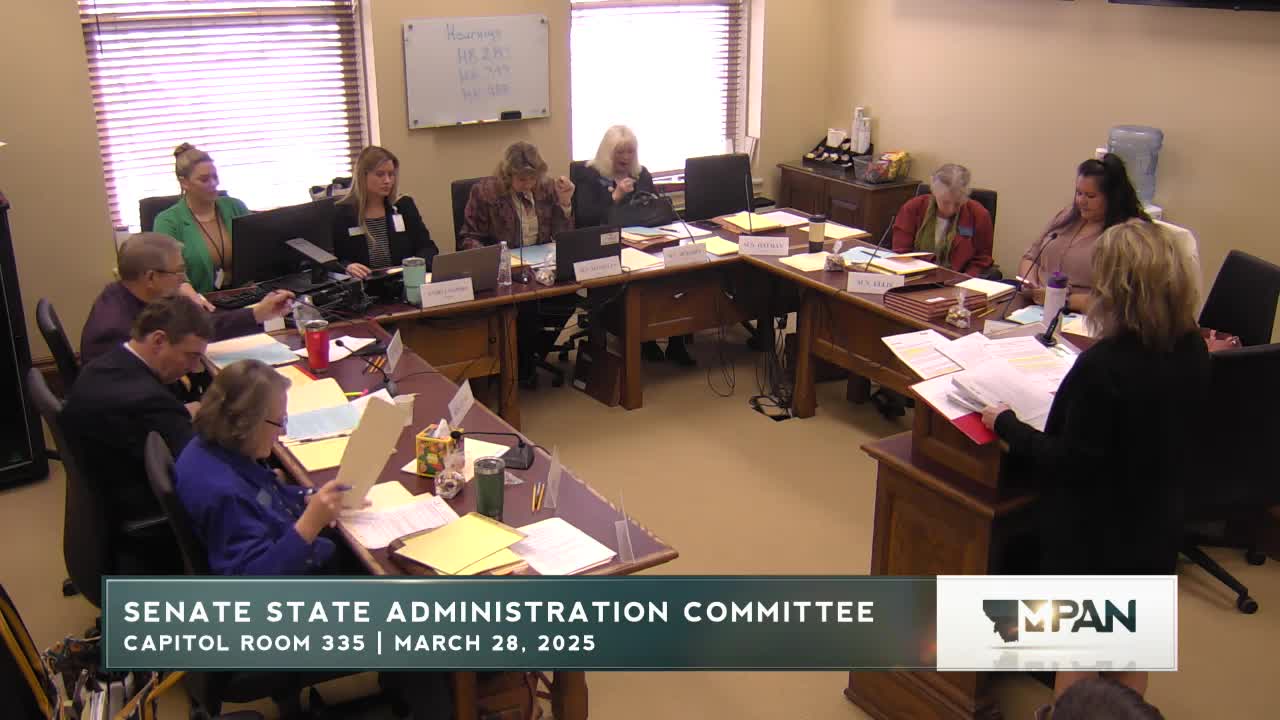
Committee process and outcome: the hearing included many proponents and several opponents; the Secretary of State’s office asked the committee to reject the bill until stronger national standards exist. County election administrators said they support the bill and would follow secure procedures similar to those used for overseas voters. The transcript records no committee vote; sponsor Darling asked for a green vote.