Get Full Government Meeting Transcripts, Videos, & Alerts Forever!
Get email alerts on the Pedestrian Crossings topic
No spam. Unsubscribe anytime.
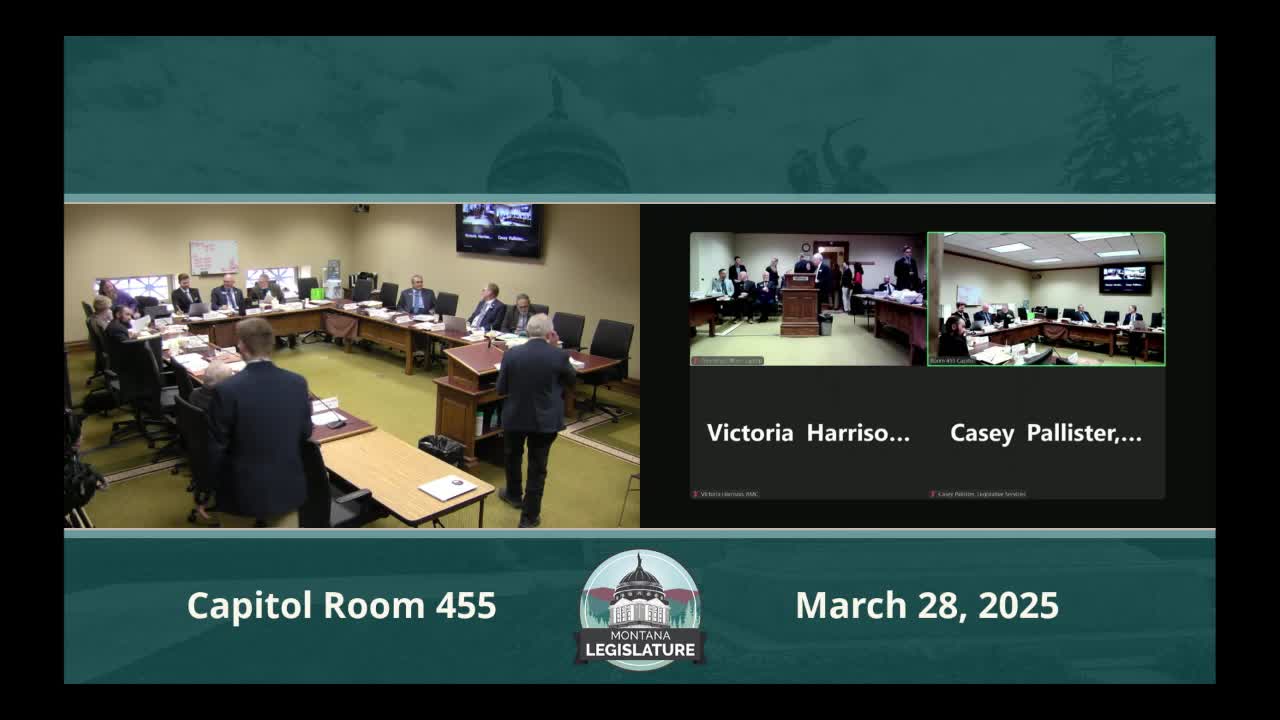
Committee hears bill defining driver duties, penalties for pedestrian-activated crosswalk devices
Summary
Senate Bill 471, sponsored by Sen. Dave Fern, would clarify driver responsibilities at pedestrian-actuated devices (flashing yellow beacons), raise fines and make drivers liable for damage to devices; the bill cleared its hearing with informational testimony and a zero fiscal note after revisions.
Senator Dave Fern, sponsor of Senate Bill 471, told the House Transportation Committee the bill aims to clarify what drivers and pedestrians must do when encountering pedestrian-activated warning devices (often called RRFBs or flashing yellow beacons). Fern said the devices are increasingly common and that Montana needs clearer rules so drivers and pedestrians — including cyclists — know when to stop, yield or proceed.
The bill would make it a violation when a pedestrian-actuated device is activated and a driver fails to yield; it also adds a provision making a driver who damages a pedestrian-actuated device liable for replacement or repair costs, subject to due process. In his closing remarks, Sen. Fern told the committee the original fiscal note — which reflected a larger cost when he had proposed red lights instead of yellow — had been revised; the department provided a zero fiscal note after the change from red to yellow signals.
Informational witnesses raised design and consistency issues. Stan Brelin, traffic operations engineer for the Montana Department of Transportation, said nationwide guidance in the Manual on Uniform Traffic Control Devices treats flashing yellow as a yield/caution signal, not a stop condition. Brelin said the bill initially included language that would require a stop on flashing yellow, which could conflict with established traffic-control standards; that language was revised. Brelin also advised the committee that design guidance seeks to remain consistent with nationwide practice to avoid driver confusion.
Committee members asked whether the violation in the bill would be a misdemeanor or an infraction. The chair explained that under Montana law moving-violation offenses are classified as misdemeanors rather than infractions; the bill’s sponsor said the misdemeanor classification was chosen to convey heightened safety protections for pedestrians when the device is activated.
Representative Staffman asked whether the bill should expressly address cyclists and similar users; Sen. Fern said he would prefer cyclists dismount and walk across at the device so they receive the pedestrian protection described in the bill, but said that detail could be adjusted in drafting.
The hearing closed with no fiscal expenditure required as drafted and informational witnesses available for follow-up questions. The committee did not take final action on SB 471 during the meeting recorded in this transcript; the bill was left in committee pending any executive action scheduling.